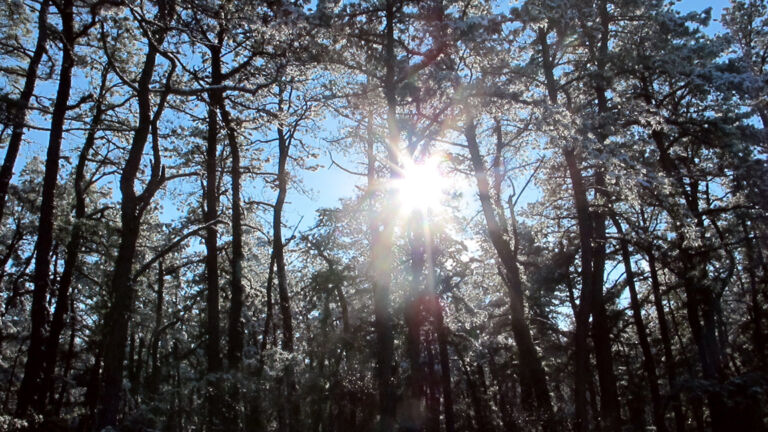
Credit: (Shawn Burns via Pinelands Preservation Alliance)
Covering more than 1 million acres, New Jersey’s Pinelands have seen some measures taken to respond to climate change, but a new report indicates much more is needed to protect the region from the biggest threats, like fires and floods.
The nonprofit Pinelands Preservation Alliance, which advocates for preserving the natural and cultural resources of the Pinelands, released its annual State of the Pinelands report on Monday, and it started with accomplishments over the last half-century in protecting the vast wilderness in southern New Jersey.
Still threatened
More than 40 years ago, Congress created the 1.1 million-acre New Jersey Pinelands National Preserve and the state limited development there. These protections did not stop construction, which today includes warehouses that threaten shallow aquifers. Read more.
The PPA said the Pinelands Commission, a unit of state government that oversees the partially protected region, has started prescribed burning to cut the risk of wildfires in the extensive forests of South Jersey. It has also discouraged creating new paved surfaces that worsen flooding, and helped to protect a vast aquifer that underlies the Pinelands.
But a shortage of state funding has limited the commission’s ability to respond to the natural changes that result from a buildup of greenhouse gases in the atmosphere, the alliance said. That’s leaving the Pinelands’ natural species of fauna and flora — some of which are unique to the region — more exposed to wildfires, floods, droughts, and in coastal areas, sea-level rise, the report said.
‘Little progress’
The Pinelands Commission has acknowledged the threats of climate change and set up a committee in 2021 to work on the challenges. But the panel has done little so far, while Gov. Phil Murphy last year denied a commission request for a staff member to manage its work on the issue, the 20-page report said.
 Credit: (NJ Pinelands Commission)
“The Pinelands Commission has made little progress to back up these gestures with substantive action,” according to the report, which also marked the 35th anniversary of the Pinelands Preservation Alliance’s founding.
It accused Murphy, now in the last year of his governorship, of failing to recognize the threat that climate change poses to the Pinelands. The governor appoints seven of the commission’s 15 seats, with the approval of the state Senate.
“Although he is very vocal about climate change and has publicly supported efforts to switch to 100% renewable energy by 2035, Governor Murphy doesn’t seem to recognize the importance of on-the-ground efforts to combat climate change in the Pinelands,” the report said.
Murphy’s office declined to comment on the PPA report.
Calls for more funding
The Pinelands National Reserve, the nation’s first, was established by Congress in 1978. It covers 1.1 million acres in South Jersey, or about 22% of the state’s land area. New development is controlled by a Comprehensive Management Plan that’s implemented by the commission.
Doug O’Malley, director of the nonprofit Environment New Jersey, endorsed the PPA’s call for more state funding for the Pinelands Commission, especially now that Murphy’s proposed budget for fiscal 2026 is under consideration by the Legislature.
As a result of climate change, the Pinelands faces a higher fire risk, which now comes earlier than March 15, the traditional start of the fire season, the report said.
“The protection of more than 1 million protected acres of New Jersey is not a static job — but state funding for the Pines and the Commission has been stagnant,” O’Malley said in a statement.
“With the growing risk of wildfires and extreme weather, the Commission needs more robust staffing and funding,” he said. “The current proposed Murphy Administration budget doesn’t get the job done — the Commission needs more resources to hold the line and have the ecological expertise to protect the Comprehensive Management Plan.”
 Credit: (Jennifer Eddins via Pinelands Preservation Alliance)
The commission declined to comment. It has been going through transition, as among its upcoming tasks is replacing Ed Lloyd, a respected environmental lawyer who died in 2023 after serving more than 20 years as a commissioner.
Evidence of climate change
The report detailed how climate change has already impacted the region.
As a result of climate change, the Pinelands faces a higher fire risk, which now comes earlier than March 15, the traditional start of the fire season, the report said. It is also seeing more sea-level rise as tides more often encroach on low-lying areas. One result is the loss of salt-sensitive species such as the Atlantic white cedar.
The region is also more subject to droughts, such as that in the fall of 2024 when only 0.6 inches of rain fell on the PPA’s Rancocas Creek Farm over 87 days, a sharp contrast to record rainfall in the spring, six months before. And warmer winters mean higher survival rates for some insects that are normally killed by cold, increasing the risk of infestation.
In a bright spot, PPA welcomed a new plan from the Department of Environmental Protection to manage access to Wharton State Forest, the state’s biggest park.
“It is clear that climate change is not just a far-off problem for the future, but rather an issue that permeates every facet of our modern lives,” the report said. “New Jersey has to use all of its resources and focus its efforts on addressing this threat.”
Alison Mitchell, executive director of the nonprofit New Jersey Conservation Foundation, said the report shows that environmental groups including the Pinelands Preservation Alliance will need to lead the effort to protect the region from climate change, development and fossil fuel energy infrastructure.
“The work of the Pinelands Preservation Alliance and other conservation partners will be critical in years to come to protect one of the most important natural ecosystems on the East Coast,” Mitchell said in a statement.
Pinelands and pipelines
To fight against climate change, New Jersey will have to invest more in renewable fuels and less in fossil fuels in future, the PPA said. It hailed its successful fight against a 22-mile section of natural gas pipeline that was approved by the commission in 2017, but was then withdrawn as renewables became more available. But PPA lost a legal battle against the Southern Reliability Link pipeline that was completed in 2021.
In a bright spot, PPA welcomed a new plan from the Department of Environmental Protection to manage access to Wharton State Forest, the state’s biggest park. Offroad drivers have for years antagonized other forest users such as hikers and birdwatchers, but since 2024, they now have had a clear map of where they are and are not allowed to drive.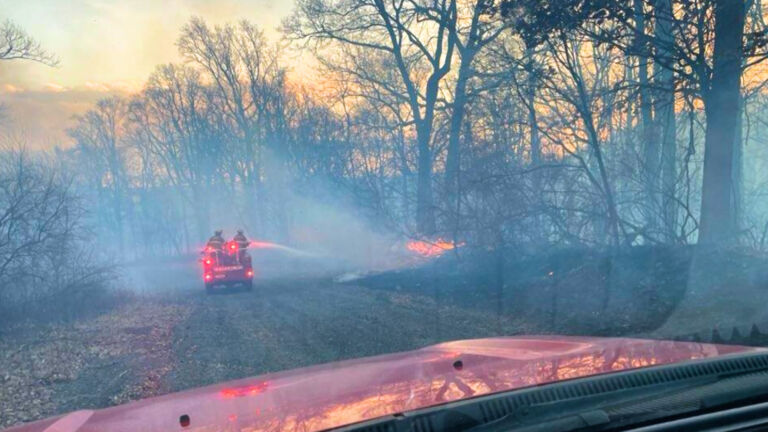
“It balances the need to use vehicles to access some of these special places, and the need to protect them,” said Jason Howell, the PPA’s Public Lands Advocate, speaking live from a Wharton State Forest site during a video call Monday to unveil the report.
“We want to bring people into the forest where they feel safe and secure, and to protect these places, so the current map achieves that balance quite well.”
To advance the commission’s work on climate change, the PPA called for the restart of a committee charged with working on the issue after it was earlier rolled into another panel. The commission should also work to ensure no net loss of trees in the Pinelands to help offset the effects of climate change, said Jaclyn Rhoads, the PPA’s new executive director, during the video call.
The commission’s work is also impeded by the halt in operations of the Pinelands Municipal Council, which was meant to be a forum for leaders of Pinelands municipalities to advise the commission but which has not met for more than two years, the PPA said. It called for a restart to foster communication and idea-sharing.
Rhoads said PPA will continue to seek protections for the Pinelands from both existing and emerging threats that also include residential and commercial development, and warehousing.
“Some persistent threats are perennial, like sprawling development,” she wrote in the report. “Others are dynamic, like the growing menace of climate change. And some, like the seemingly endless multiplication of warehouses, were not even in the discussion a few years ago.”