

A landmark of preservation, Pinelands sees renewed threats
Development pressures continue but oversight lags, advocates warn
This article is part of a series: “Water’s Edge: Trials and tributaries of the Delaware River Watershed.” Register here for a free, virtual roundtable on March 1.
After spending eight months exploring the woods of South Jersey, John McPhee set down his experiences in a landmark memoir that helped propel the environmental movement.
“The Pine Barrens,” published in 1967, first in The New Yorker magazine and later as a book, introduced many readers to a million-acre region of impossibly pure waters, indigenous animals and plants found nowhere else, and the largest unbroken stretch of forest between Maine and the Florida Everglades.

Pine Barrens treefrog
Scientific name: Hyla andersonii
NJ location: Scattered throughout the Pine Barrens.
Problem: The very acidic wetlands — among cedar swamps and cranberry bogs — that it needs for survival are being encroached upon by development and threatened by pollution and climate change.
In the last pages of his book, McPhee wonders about the survival of the Pines and “the cross purposes of all the big and little powers” that would have to come together to save them from the thrust of modern commerce and development.
“…it would appear that the Pine Barrens are not very likely to be the subject of dramatic decrees or acts of legislation,” he wrote. “They seem to be headed slowly toward extinction.”
McPhee’s book prompted such an outcry that the powers did coalesce around a plan to save the woods, and in 1978 Congress voted to create a 1.1-million acre New Jersey Pinelands National Preserve. A year later, New Jersey Gov. Brendan T. Byrne signed a law that limited development and brought a range of new protections to the region.
But more than 40 years on there are mounting threats to the future health of the Pinelands preserve.
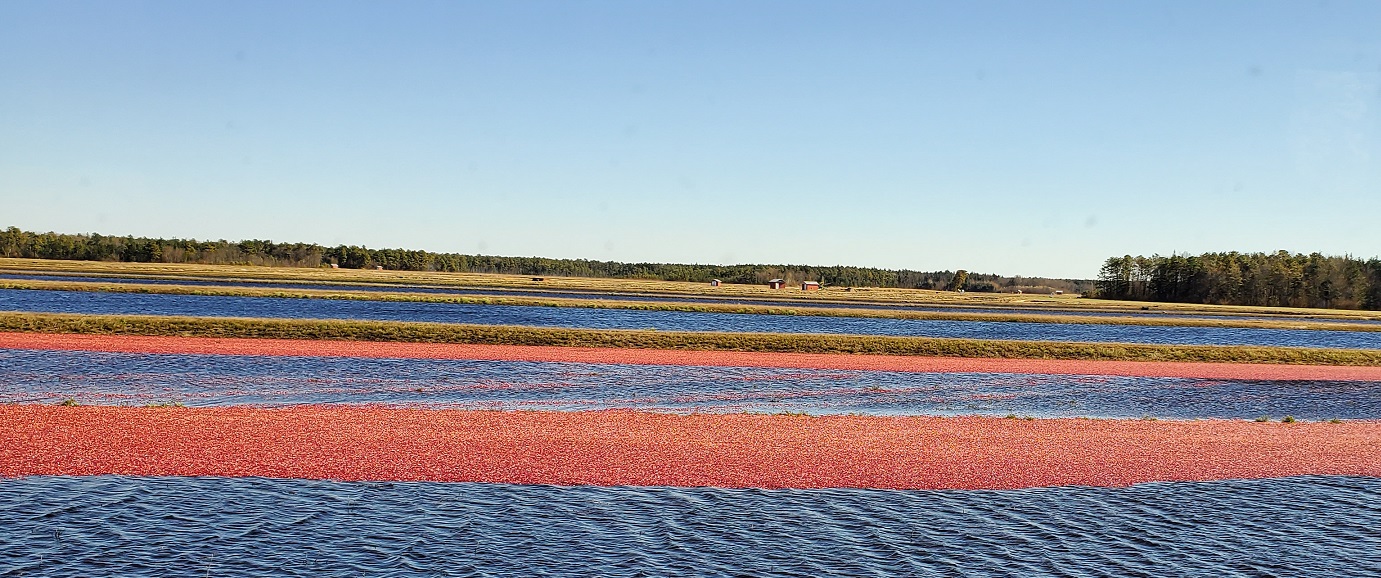
Rising seawater chokes the life from marshes and cedar forests. Development taxes the shallow aquifers that hold the state’s purest water. Clear-cut footprints of mega-warehouse projects reshape the woodland landscape. Higher temperatures and fertilizer runoff alter the soil chemistry and threaten the production of cranberries, a cool-weather crop that is the Pines’ signature harvest.
The threats grow
Environmental stresses in the Pinelands and its aquifers, which underlay more than one-third of New Jersey, affect the water quality of the Delaware River and Bay region. Pinelands streams like the Rancocas Creek and the Salem and Maurice rivers, empty directly into the Delaware.
‘There are a lot of threats to the Pines, but the biggest one is from Trenton.’
— Leslie Ficcaglia, former member of New Jersey Pinelands Commission
The Pinelands is not alone in facing dangers from stressors such as warehouses, fertilizer runoff and unchecked development.
In this series, “Water’s Edge: Trials and tributaries of the Delaware River Watershed,” NJ Spotlight News looks at what many take for granted: the complicated watershed that channels water to creeks and streams and eventually to the great river.
As in other regions where regulation is seen as key to solving some of the challenges to watersheds and the regions that depend on them, leading environmental advocates in New Jersey also see a slackening of the state’s will to preserve the Pinelands, a creeping surrender to corporate interests looking to carve away slices of the preserve to accommodate commercial ventures and industrial infrastructure.
The Pines and its precious aquifers, they say, have lost too many champions like Byrne.
“There are a lot of threats to the Pines, but the biggest one is from Trenton,” said Leslie Ficcaglia, a former member of the New Jersey Pinelands Commission, a state agency created to preserve and manage the region.
In 2014, Ficcaglia found herself kicked off the commission after she and six other board members voted against a 22-mile gas pipeline through the Pines. She had served on the commission’s 15-member board for 18 years with the full backing of preservationists and public officials in Cumberland County, where she lived and worked.
What Christie did, what Murphy tried
Ficcaglia said former Gov. Chris Christie, a Republican who backed the pipeline, was behind her dismissal. In 2011, Christie had appointed a former lobbyist with the New Jersey Builders Association as executive director of the agency, a move critics said had paved the way for new development that might harm the fragile ecosystem.
“Being on the commission is a sacred trust to preserve the unique and precious place we call the Pinelands,” Ficcaglia said in an interview with NJ Spotlight News. “More and more it seems we have members whose primary interest is far from preservation. I’m not sure the political leaders in this state have the will to fight off all the corporations and special interests that want a piece of the Pines.”
In December 2021, Gov. Phil Murphy stunned the environmental community when he appointed a lobbyist from the Chemistry Council of New Jersey to sit on the commission. Murphy pulled the nomination during the ensuing controversy but went on to appoint a pair of corporate lobbyists who work for firms that critics say have a direct financial stake in developing the Pinelands.
“It makes me very, very sad,” said Jeff Tittel, former director of the New Jersey Sierra Club, among the strongest independent voices in the state’s conservation community. “I’d never thought I’d see the day when corporate lobbyists with clear money interests in developing the Pinelands were sitting on the board.
“I’m pessimistic for the future,” he said. “Between the environmental threats and the political games, the Pinelands as we know it just can’t survive.”
Dreams and schemes
To be sure, threats to the Pinelands are nothing new. For decades, the region has been stressed by the demands of a booming population in central and South Jersey. More than 22 million people live within an hour’s drive of the preserve.
The Pines have also long survived the efforts of dreamers and schemers who would exploit the region, businessmen such as Philadelphia industrialist Joseph Wharton, who bought up 150 square miles of the region in the mid-1870s in hopes of creating drinking water reservoirs for his parched city.

In the mid-1960s, a group of entrepreneurs proposed building a supersonic jetport in the heart of the Pines that would have been the largest airport in the world and centerpiece for a new city of a quarter-million people.
“The Pines have faced core threats since the commission was created, and those threats are increasing as the area becomes more and more a conduit for industrial uses,” said Doug O’Malley, director of the nonprofit Environment New Jersey.
But now, in addition to the political and population pressures, there’s a whole new range of existential threats that come with a rapidly warming world.
‘I’m pessimistic for the future. Between the environmental threats and the political games, the Pinelands as we know it just can’t survive.’
— Jeff Tittel, former director, New Jersey Sierra Club
O’Malley threw out a litany of climate-related issues affecting the Pines and their changing ecology. Among them:
More droughts. More damaging forest fires. The spread of invasive species. The loss of precious groundwater. The rise of saltwater and intrusion of minerals like sulfur. The diminution and death of wetlands and the destruction of the habitats that dominate the Pines.
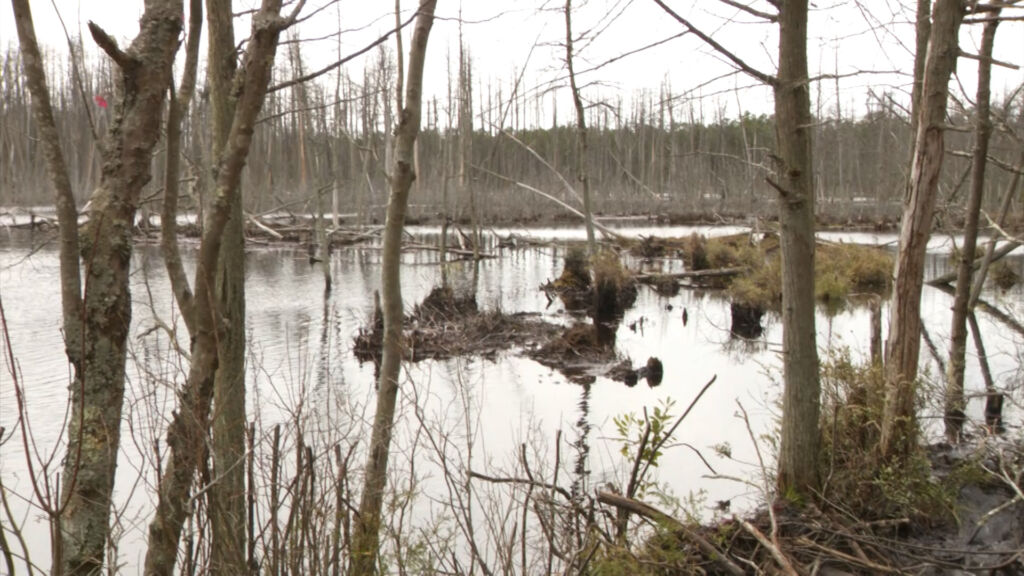
Primeval strands of white cedar that thrive in the Pines’ bogs have been killed by encroaching seawater.
Ghost forests
“There are now whole ghost forests in some southern stretches of the Pinelands,” O’Malley said. “All these stresses are real and growing.”
As recently as a half-century ago, the natural reservoir lying beneath the Pinelands was seen as a bottomless source of fresh water. The Kirkwood-Cohansey Aquifer contains an estimated 17.7 trillion gallons, enough to cover all of New Jersey to a depth of 10 feet.
That’s equal to about half the annual water consumption of the United States, authorities say.
A 1966 U.S. Geological Survey study cited by McPhee described the water as “bacterially sterile, odorless, clear; its chemical purity approaches that of uncontaminated rainwater or melted glacier ice.”
The aquifer is shallow and can be tapped by digging just a few feet through the sandy soils that permeate the area. The sands of the forest floor are extremely porous and allow for quick recharging of the groundwater. Scientists estimate that the Pinelands floor can absorb more than 6 inches of rain an hour.
The permeable soil is also susceptible to fertilizers, pesticides and other hazardous substances, and recent decades have witnessed an alarming rise in polluted sites in or near the preservation area.
Superfund sites
Dozens of federally designated Superfund sites sit over the aquifer in Burlington, Atlantic and Cumberland counties alone.
In 2021, the state Attorney General’s Office sued the federal government over the use of toxic chemicals that contaminate the groundwater near the 42,000-acre Joint Base McGuire-Dix-Lakehurst in Burlington County. The suit is still pending.
The chemicals, from foams used by the military to fight petroleum fires, were found in drinking water wells near the base. Nineteen ponds and streams on the base were found to have some evidence of hazardous foam contamination, the government announced in 2017. The contaminants included so-called forever chemicals known as PFAS, a group of water-resistant, toxic substances that were used in a variety of consumer goods and commercial products.

“Once this stuff gets into the aquifer it lasts for a long time,” said Tittel of the Sierra Club. “For years it will continue to affect animal life of the Pines, including oysters and shellfish in its bays and marshes, in ways we don’t even understand. The Pines waters are intricately connected and interdependent; what infiltrates one part of the aquifer works its way all around.”
In recent years, the bottomless supply of fresh water has also shown signs of depletion as rising seas bring in more saltwater and developers raise more houses and commercial centers. A 2015 study by researchers at Rowan and Rutgers universities found that more than 4,400 acres of coastal marshland in New Jersey, including along the Delaware Bay, were lost between 1986 and 2015 due to rising sea levels and coastal erosion.

Cranberry
Scientific name: Vaccinium macrocarpon
NJ location: It can grow across the Northeast U.S. but is especially found in the sandy well-drained soils common in the Pine Barrens.
Problem: Cultivation is threatened by the excessive heat, drought and extreme weather associated with climate change.
“Water levels in almost all of the aquifers in South Jersey are declining at alarming rates,” announces the website of the Pinelands Preservation Alliance, a nonprofit that has been a leader in efforts to protect the region.
According to the Alliance, some 3,000 wells pump an estimated 35 billion gallons from the aquifer every year. ”Depending on the locations of wells and the rate of pumping, groundwater withdrawals can be disastrous to the ecosystem,” the Alliance said. “They can actually dry up streams and wetlands.”
Just because the Pinelands is officially “preserved” does not mean there is no new growth. When the state created a comprehensive management plan for the area in the early 1980s, it aimed to control and channel growth rather than freeze it, by setting out designated “growth areas” within the Pines.
A 2013 analysis by the Alliance found that growth rates in and around the officially designated growth areas were higher than rates for New Jersey as a whole. While the state management plan appeared to have worked well in preserving deeply wooded areas of the Pinelands watersheds, it was lacking in other areas, the analysis found.
Water quality versus development
“Development is slowly degrading water quality and … draining wetlands” in some Pineland locales, the analysis concluded, as impervious surfaces spread and septic systems that pump harmful nitrates into the soil multiply.
Warehouse sprawl within and adjacent to the preservation area is a key contributor to this growth as suppliers scramble to meet the demands of online commerce. A recent survey by Newmark, a commercial real estate adviser, found 9.8 million square feet of warehouse was under construction in South Jersey alone. Most of the new construction is slated for outside protected areas in the Pines. But a 2022 report by the State Planning Commission noted a significant increase in warehouse applications within the protected Pineland areas.
The wave of new proposals has alarmed environmental advocates and residents who have watched green fields, woodland and other open spaces devoured at an unprecedented clip. These advocates argue that designated “growth zones” within the million-acre preservation area, as well as border areas that lie partly in the preserve, are magnets for unwieldy development that threatens the Pines as a whole.
While the Pinelands Commission has maintained a relatively strong hand in preserving the woods and wetlands outside these growth zones, critics say that it has been less effective managing indigenous growth from communities in these special zones.
“It never ends, we’re constantly fighting to protect some stand of pine trees or other from being clear-cut,” said Marc Covitz, a board member of the Crosswicks-Doctors Creek Watershed Association, a group that seeks to protect the 253-square mile drainage area in central New Jersey.
What happened in Jackson Township
In recent years, Covitz and his fellow activists have watched hundreds of acres of Pines fall to developers in Jackson Township, Ocean County, where Great Adventure and other recreational ventures continue to spread.
One of those developments, Venture Crossing, cut 75 acres of woodland to clear the way for a new sports complex, a retail center, restaurants and hotels and 1.2 million square feet of warehouses.
Yet another proposal for the Route 537 corridor in Jackson is a plan to build a 6,000-seat stadium and other amenities in the Prospertown Lake wildlife management area. That plan would sacrifice another 200 acres of prime Pinelands forest.
“They’re talking about cutting down pristine woods,” Covitz said. “All these proposals will further degrade this unique area and its waters. We’re at a critical stage now. Either we’re going to protect these areas or we’re not. You can’t have it both ways.”

In important ways, New Jersey’s efforts to preserve the unique ecosystem of the Pinelands have proven successful. Despite the overwhelming pressure from developers and the stresses on the environment, large tracts of the Pines have survived more or less unspoiled. New construction has been essentially banned in nearly 300,000 acres in the heart of the preserve.
Naturalists the world over come to South Jersey to study a Noah’s Ark of flora and fauna, including 43 species of threatened and endangered animals alone, several kinds of insectivorous flowers and 27 species of wild orchid. Rarities like the Pine Barrens treefrog and the Pickering’s morning glory are found in few, if any, places outside the Pines.
And the region still boasts some of the largest continuous tracts of forest in the eastern United States, a fact noted by the United Nations when it designated the Pinelands as a biosphere of international importance in 1988. Many restored villages, settlement sites and industrial areas in the Pinelands have been placed on the National Register of Historic Places.
The Pinelands Commission, too, within the limits of state laws and its political structure, is constantly striving to preserve the woods. In recent years the commission has spent millions to restore the vanishing white cedar marshes and worked to develop new programs to blunt the effects of climate change.
The controversy which erupted in 2021 surrounding the naming of new commission board members seemed to catch the Murphy administration off guard. The governor quickly changed his mind and withdrew the nominee who had lobbied for the New Jersey chemical industry.
“The preservation of the sensitive and treasured Pinelands environment has never been more important, and I know that this mission will be fulfilled,” Murphy said after pulling the nomination.
‘This is a globally unique habitat, and it should be treated with the same reverence we give Yellowstone or any other national park. Every day, I wonder why it isn’t.’
— Jason Howell, Pinelands Preservation Alliance
Yet, the gaffe underscored a key question for watchdogs who see a steady erosion in environmental protections across the New Jersey landscape under both Republican and Democratic governors.
“I think it remains an open question if this state and this administration is up to the task of saving the Pinelands,” said Jason Howell, a land-use specialist with the Pinelands Preservation Alliance.
As a boy growing up in rural Atlantic County, Howell spent hours exploring the marshes and cedar forests surrounding a shining stream called the Gravelly Run.
”You could go miles and miles in there and never see any signs of humanity,” Howell said.
Now, three decades later, the once pristine region is scarred with the tracks of off-road vehicles and has become a site for illegal dumping. “It’s not just along the Gravelly Run; you can find this kind of damage all over.”
More than a half-century after writing “The Pine Barrens,” John McPhee, Howell said, would still find many of the areas he wrote about, such as Bog Hollow and Apple Pie Hill, largely unchanged.
Other areas, he said, might be unrecognizable.
“This is a globally unique habitat, and it should be treated with the same reverence we give Yellowstone or any other national park,” Howell said. “Every day, I wonder why it isn’t.”
This article is part of a special series by NJ Spotlight News and funded by the William Penn Foundation. The project homepage is your roadmap to the series. Send us your stories and photos about the Delaware River region.
