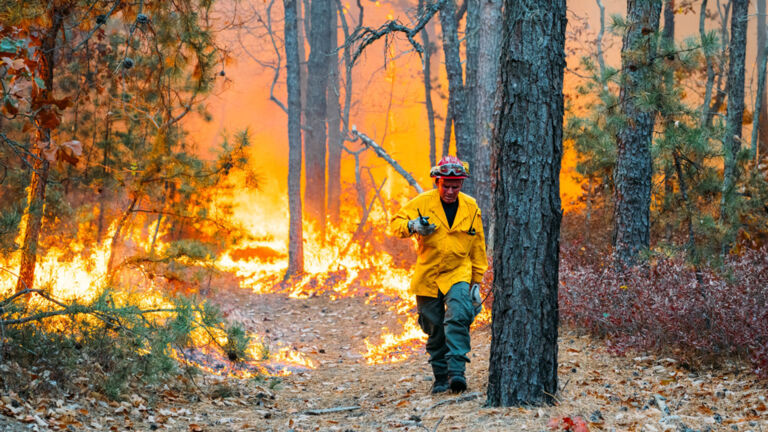
Communities across New Jersey are dealing with a rare outbreak of winter wildfires, as the Garden State continues to deal with severe drought conditions.
Dry, warm and windy weather over the weekend led to a rash of wildfires, including the Poor Farm Wildfire in Hopewell Township, which was 293 acres large and 90% contained as of Monday afternoon. New Jersey Forest Fire Service officials said that fire was started by electric lines that had been blown down.
Fires of that size are more likely to be found in the Pinelands than in the forests outside of Trenton. But the recent spread of emerald ash borer through New Jersey has caused the mass die-off of ash trees, scattering the forest with dry, dead wood ready to burn.
“You have hardwood forest that is in effect acting more like a pine forest of South Jersey,” Greg McLaughlin, the administrator of forest and natural lands for the New Jersey Department of Environmental Protection, said during a news briefing Monday.
A roughly 50-acre fire in Pennsville, near Fort Mott State Park, was being investigated as suspicious, state officials said.
New Jersey’s peak wildfire season is typically in late spring, with another active period in the fall. Wildfires in winter are relatively uncommon, but fire patterns are increasingly unpredictable as climate change shifts weather patterns throughout the year.
“I think what we are seeing is the concept of wildfire not being a specific season anymore, but year-round,” McLaughlin said. “I feel like things are changing in terms of when fires are occurring, where they are occurring, how they are occurring.”
From Jan. 1 through March 3, New Jersey has experienced 215 wildfires, which have burned a total of 514 acres. That’s a sharp increase from the same time period in 2024, officials said, when 69 fires burned 21 acres.
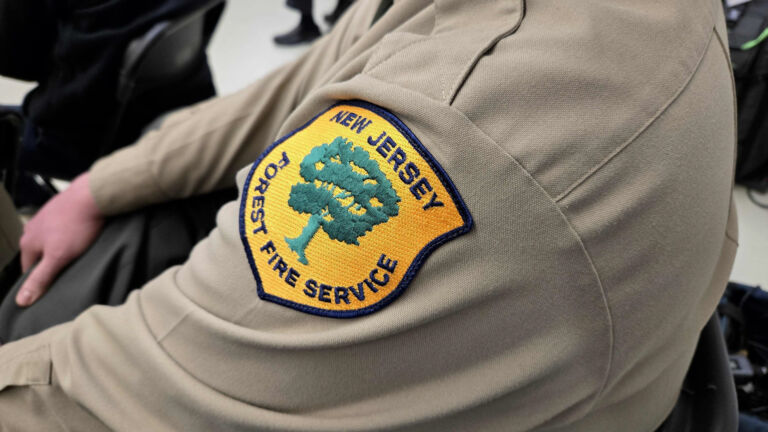
“There are fires everyday. Sometimes two, three. I think this weekend there were almost 50 of them in a day,” said Bill Donnelly, the chief of the New Jersey Forest Fire Service. “There’s fires going on throughout New Jersey every day when you have weather like this.”
The persistent dry weather has not only made it easier for forests to catch fire, it has also taken away water sources like swamps and creeks that firefighters sometimes rely on to contain blazes. And it has hampered the Forest Fire Service’s ability to conduct prescribed burns, which officials describe as their most effective tool for clearing forests of the thick underbrush and debris that fuels wildfires.