Credit: (Edwin J. Torres/NJ Governor's Office)
This year’s gubernatorial election campaign, which began for some candidates before last November’s presidential voting, is about to get real: Monday’s 4 p.m. filing deadline is the last chance for major-party candidates to get on the June primary ballot.
The primary races could be the most crowded in more than four decades, with six Democrats and 11 Republicans telling the state’s election watchdog of their intention to run. To get on the ballot, candidates must file petitions with the state Division of Elections with signatures of at least 2,500 registered voters, a 150% increase over the last governor’s election in 2021.
As of end of day Friday, all six Democrats and two Republicans were the only gubernatorial hopefuls who had filed petitions. The Democrats who filed are Newark Mayor Ras Baraka, Jersey City Mayor Steve Fulop, Reps. Josh Gottheimer (D-5th) and Mikie Sherrill (D-11th), teacher’s union president Sean Spiller and former state Senate President Steve Sweeney. Former Assemblyman Jack Ciattarelli and Sen. Jon Bramnick (R-Union) were the Republicans who had filed.
It’s unclear whether the increased signature requirement may be too large a hurdle to overcome for some of those who had originally planned on running. Legislative Democrats passed, and Democratic Gov. Phil Murphy signed into law, that requirement earlier this year after initial petitions with the former 1,000-signature stipulation had already been provided to candidates.
Early money, early ads
At least 10 candidates of both major parties have been raising money, running ads and appearing at public forums and are expected to file.
Some began publicly campaigning in the fall. A committee backing Spiller, a Democrat who heads the New Jersey Education Association, sent out mailers urging people to vote Democratic for president and U.S. Senate and including Spiller while noting he was running in 2025. An independent spending committee with ties to the union — expected to be largely or exclusively funded by NJEA member dues — has indicated it will spend $35 million on the primary and has been funding pro-Spiller ads for months.
‘The end of the county line makes this all the more important for these candidates to get out there early and get ahead of the pack since they can no longer rely on the old way of doing state politics.’ — Ashley Koning, director, Eagleton Center for Public Interest Polling
Major Republican candidates expected to file by the deadline include former state Sen. Ed Durr, former Englewood Cliffs Mayor Mario Kranjac and former talk radio host Bill Spadea. Spadea has said he intends to seek matching funds from the New Jersey Election Law Enforcement Commission, which oversees the state’s gubernatorial matching funds program as well as other election finance and reporting laws.
Candidates who raise and spend at least $580,000, agree to limit their total spending to $8.7 million in the primary and participate in debates can receive $2 for every $1 raised up to $5.5 million. As of early March, ELEC had already given out $23 million in matching funds to qualifying candidates, more than double what it has provided in any primary in the past.
A record-breaker?
The large number of candidates — and amounts raised so far by candidates and outside committees — could make this year’s election the most expensive in state history. So far, reports show that candidates and committees supporting them had spent more than $12 million as of the end of 2024. Independent groups have indicated plans to spend some $45 million.
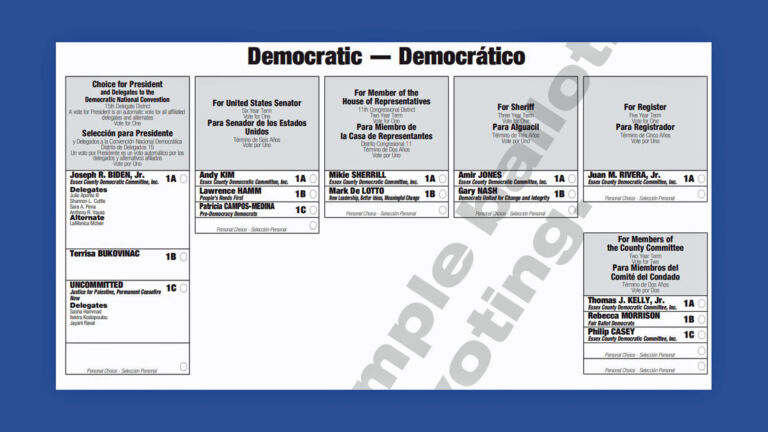
The end of the state’s party line balloting for both Democratic and Republican parties along with a new ballot design this year have candidates seeking more money and getting out their messages earlier than usual. Ads have been airing online and on television since early this year, well before candidates officially got into the race.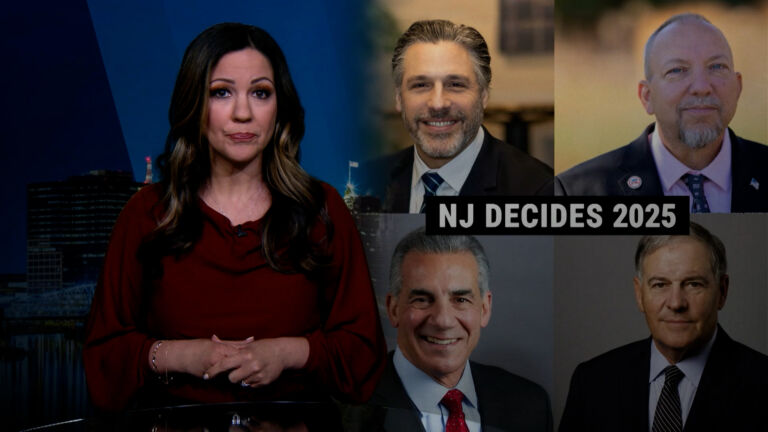
“The early start in this race is due mostly to the open seat and the large field of candidates on both sides of the aisle, who are all competing for both voters and donors,” said Ashley Koning, director of the Eagleton Center for Public Interest Polling at Rutgers University. “The end of the county line makes this all the more important for these candidates to get out there early and get ahead of the pack since they can no longer rely on the old way of doing state politics.”
Assembly races
The end of the party line and the new ballot design will also impact races for state Assembly, where all 80 seats are up for grabs this year.
As of end of day Friday, 103 Democrats and 51 Republicans had filed to run for Assembly seats. Nearly all the contested primaries so far are on the Democratic side, with incumbents challenged in a dozen districts in South Jersey and northeastern districts. So far, a handful of incumbent Democrats have chosen to bow out.
Democrats control both houses of the Legislature and the governor’s office, and legislative district lines favor continued control by Democrats, although Republicans statewide have been slowly gaining ground in voter registration. About 37% of New Jersey registered voters are Democrats, almost a quarter are Republicans and most of the rest are not affiliated with any party.
This year’s primary is June 10. New Jersey has a closed primary, meaning only those registered as Democrats and Republicans can vote in their respective party’s primary. Any unaffiliated voter can declare a party when they go to the polls and vote for that party’s candidates.