

Three years after Gov. Phil Murphy ordered the troubled Edna Mahan Women’s Correctional Facility closed, the state is announcing the location of its replacement: Chesterfield in Burlington County.
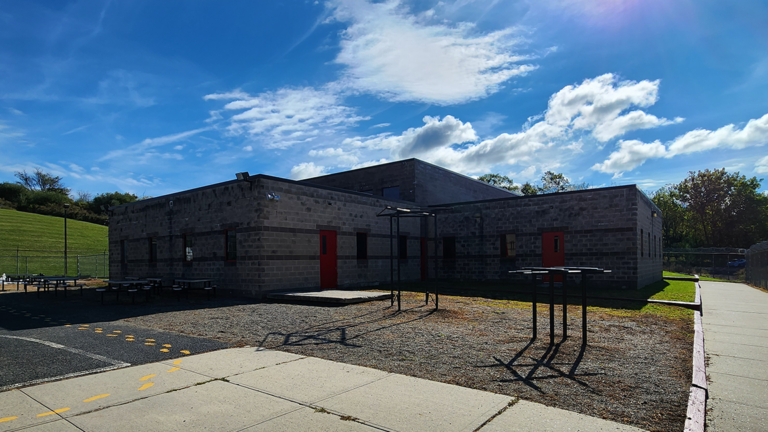
State corrections officials envision the new prison as a state-of-the-art facility for women with rehabilitation as its primary mission. It plans to build that prison at the far end of the same state-owned land where the Garden State Youth Correctional Facility and the former Albert C. Wagner Youth Correctional Facility, which closed at the start of 2020, are located.
On Thursday, the state plans to release the scope of work document, the first step in finding professionals to design and build the prison. That means the start of construction could be about a year away, with a new facility potentially ready by mid-2027. While the price of the new prison is not yet firm, the estimate is a little more than $312 million. It will be the state’s first new prison in 27 years.
 Credit: (NJ Division of Property Management and Construction)
“I couldn’t be happier,” Victoria Kuhn, the corrections commissioner, told NJ Spotlight News in announcing the scope of work document’s release. “It’s like one of those goosebumps moments. We’re finally at the point to be able to get that architect and engineering scope of work out there. This is the part where it finally gets real, right. We get to sit down with those folks that are going to help us design and build this facility that we’ve been thinking so much about and talking so much about. So it’s an exciting time for us.”
‘We need to ensure that we are being gender informed, and that’s all things, from the moment that you come through the door at intake, and recognizing how women communicate differently,’ Kuhn said
Covering about 33 acres, the new prison is envisioned as meeting the needs of a female population. Few facilities designed specifically with the goal of rehabilitating women exist in the U.S., as most women are incarcerated in old buildings designed for primarily for detention and often built for male prisoners and without consideration for women’s needs. Working with consultant CGL, state corrections officials looked to a few new women’s prisons elsewhere in the United States and Canada in laying out the requirements for the new facility. In addition to dorms, a kitchen and medical care, the new complex is to have spaces designed for programming, reentry services, mental health care, communal living spaces and a place for family visits.
Bonnie Kerness, a member of the Edna Mahan Board of Trustees, said the board is “thrilled” to see the project moving forward. “We anticipate these modern, normative settings will enable the incarcerated women to grow personally and build dignity and diligence in themselves in preparation for when they return to their communities,” said Kerness, who is also the program director of the American Friends Service Committee Prison Watch.
Replacing a troubled prison
The new prison will replace the current Edna Mahan, which is located on two sites in Hunterdon County and has roughly 380 women incarcerated at any given time. The main campus, which opened in 1913 on a former farm, now houses primarily administrative offices and the maximum-security building. Most women moved last year about five miles away to the former William H. Fauver Youth Correctional Facility, a newer prison that had closed. The buildings the female inmates had been living in were old and plagued by problems with temperature control and mold, among other issues, and the satellite campus dorms are brighter and have air conditioning.
Money to repaint and retrofit Fauver for as the Edna satellite for women with minimum- and medium-security status was included in an initial $90 million allocated by lawmakers last year. That money will also cover site work, security fencing and other work at the new location.
Kuhn wanted the new prison to be more centrally located to make it easier for family and friends to visit the women. Chesterfield will be closer to those coming from South Jersey who may want to visit women, though it may take a little longer for those coming from Essex or Hudson counties. The site is between the New Jersey Turnpike and Route 130.

“We know where the majority of our population comes from: We know the majority comes from Camden, Trenton, from Atlantic City, from Newark, from Paterson,” she said. “We were really looking for a central location off of major roadways that would split the difference as much as possible. And we were really looking for properties that we currently own.”
She added that the location should also help with the department’s efforts to recruit more corrections officers.
The siting of a prison can be controversial, as local officials often balk at locating a facility the public might not consider desirable. Chesterfield is in the 8th legislative district, which had been dominated by Republicans for decades but which elected one Democrat to the Assembly last fall. Murphy is a Democrat and both houses of the Legislature have Democratic majorities. Kuhn said the consultant recommended the location and politics played no role in that. Given the need for a central location and to use land the state already owned, the options were limited.
“We understand that there are going to be folks that are going to be a little nervous about a facility potentially coming into their area, but we’re really trying to be very transparent about what it looks like and size — small footprint — and those types of things,” she said.
The corrections department declined to make the consultant’s report public, saying it is a “deliberative document used in the development of the scope of work.” Such documents are exempt under the current version of the state’s Open Public Records Act.
Kuhn said that while it seems like the process has taken a long time, officials have been working on it throughout, examining different scenarios and properties and then working with other state departments and through the budget process.
“It’s been a long time, but actively at work,” said Kuhn, who was named acting commissioner after Murphy called for the closure. “It’s been a priority from day one.”
Breaking history ‘abusive incidents’
Murphy announced his intention to close the current facility in June 2021, following the recommendation in a report by the former state comptroller on the physical assaults by corrections officers on a number of women during forced cell extractions. The investigations of the assaults, which occurred in January 2021, led to the resignations of the state’s corrections commissioner and corrections ombudsman and the indictment of 15 officers, including the former associate administrator at Edna.
That incident occurred as the state was in negotiations with the U.S. Department of Justice after its investigation found a pattern of sexual abuse of women incarcerated at Edna. As part of a settlement with the Justice Department, the state agreed to federal monitoring of the prison, which is ongoing.
Murphy said that state needed to break the “long history of abusive incidents” at Edna by closing and replacing the prison.
The prison, opened in 1913 as Clinton Farms, was an early leader in innovative rehabilitation. After its namesake took over as superintendent, there were no bars or fencing keeping the women in and those who were incarcerated helped make decisions. But more recently, numerous allegations of sexual abuse and assault, and the 2021 physical violence, tarnished the prison’s reputation.
Corrections officials have taken steps to improve the culture at Edna and spent millions of dollars on stationary security cameras and body-worn cameras for officers. When it closes, the cameras will be used at the new prison.
The most recent federal monitor’s report, made public last month, cited continuing improvements toward increasing safety for incarcerated persons and staff at the prison and said there have been “significant advancements” in complying with both the settlement agreement with the DOJ and previous monitoring reports. Kuhn said her office is working with the DOJ to sunset some of the monitoring provisions, but others will remain. The monitor said more work needs to be done in a few areas, including the establishment of a risk management system to document allegations of sexual abuse, sexual harassment and retaliation and aid in preventing such incidents.
