Credit: (Bobby Brier; NJ Spotlight News)
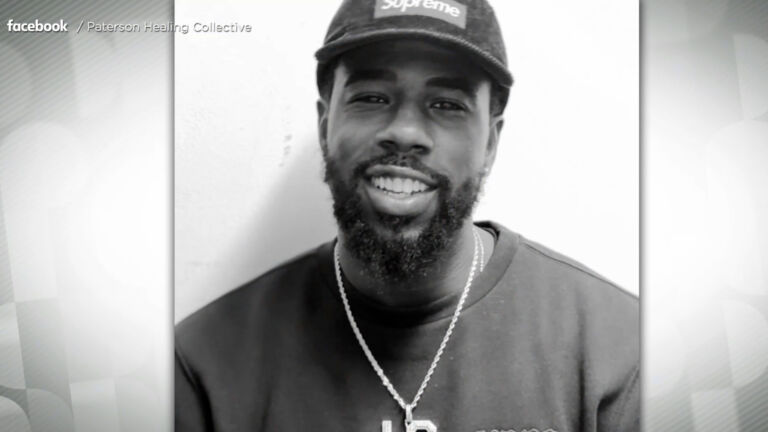
On March 3, 2023, police were called to an apartment in Paterson where Najee Seabrooks, 31, was experiencing a mental health crisis. Seabrooks worked for a violence intervention group called the Paterson Healing Collective, a group trained to de-escalate situations like his. They were on the scene that day.
Seabrooks asked for his colleagues to be there. And yet, they couldn’t help. Police officers instead negotiated with Seabrooks for four hours, which ended when he was fatally shot by some of those officers called to help him. His colleagues say if they were allowed to help, Seabrooks would still be alive.
What followed in the months after was an outcry for police accountability and reform. In the immediate weeks that followed, social justice groups marched in his name. His community demanded justice. His loved ones grieved.
In the year since Seabrooks was killed, the state attorney general’s office has taken over the Paterson Police Department and worked on strategies to improve police response to mental health crises and restore community trust. The investigation into the shooting and his death is ongoing. And the Paterson Healing Collective has continued its own public safety work.

“We’ve been dedicated to preserving his legacy while also staying committed to our mission. We have deliverables, funders, and participants that are in need of our services. Our goal is to continue to grow and evolve to meet the community’s needs,” said Liza Chowdhury, head of the Paterson Healing Collective, who had known Seabrooks since he was 16.
State attorney general in charge
While Attorney General Matt Platkin pushes forward on the overhaul of Paterson’s police department and reforms police response to mental health emergencies, some advocates say some of those efforts have fallen short of what they asked for — they want more community-led public safety responses, and less police.
“[The reform strategy is] police-first because at the center of all of this, it’s not about saving lives. It’s about saving face,” said Zellie Thomas of Black Lives Matter Paterson.
What Paterson needs is more investment in the community itself, Thomas said, as well as community-led violence intervention groups, which he says are more effective than police at de-escalating crises.
“Communities like Paterson are experiencing violence not because of the people, or because of the lack of resources,” he said. “We are getting constantly ignored and shunned.”
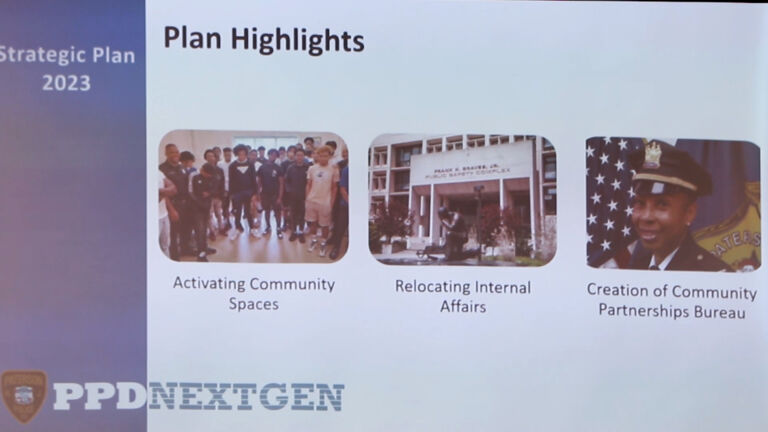
The attorney general’s office took over the Paterson Police Department weeks after Seabrooks’ death. The department was already beset by allegations of police misconduct and federal civil rights violations over the years. In September, Platkin and Paterson’s new Officer-in-Charge Isa Abbassi unveiled a strategy to reform the police department. Called “PPD NextGen,” it includes dozens of goals aimed at restoring community relations and improving the department’s work culture.
Part of the state’s strategy for Paterson stems from community listening sessions held directly after Seabrooks’ death. At the first listening session, residents shared with Platkin how they were subject to police misconduct over the years, to the point where they feared for their children. And so restoring trust and becoming more community-focused became one of the police department’s top goals.
 Credit: (Facebook/Paterson Healing Collective)
Use of force
All five Paterson officers who used force against Seabrooks — Officers Hector Mendez, Qiao Lin, and Mario Vdovjak, who used “less lethal force,” and Officers Anzore Tsay and Jose Hernandez, who shot their guns — are believed to still be working as police officers. The attorney general’s office declined to confirm their status as the investigation is ongoing. The state’s use-of-force database shows Seabrooks’ death was the last instance of force used by four officers. One officer’s last instance was in November.
Under the Independent Prosecutor Directive, the state attorney general’s office investigates police-involved civilian deaths. Case then make their way to a grand jury, who decide whether or not to hand down a criminal indictment. The process can take years.
“As we mark the first anniversary of Mr. Seabrooks’ death, I join the Paterson community as they remember an individual who was committed to his community and to supporting others,” Platkin said in a statement to NJ Spotlight News. “Working together with the Paterson community, we have accomplished much in the last year, but we know there is more left to do.”
When NJ Spotlight News requested comment on changes made by the Paterson Police Department over the last year, the state attorney general’s office shared a list of trainings implemented, including Active Bystandership for Law Enforcement (ABLE) and Integrated Communication and Tactics (ICAT) training. These trainings provide industry-standard guidance on how to manage emergencies with unarmed people in crises and to help prevent misconduct, the statement said.
A Paterson Police Department spokesperson also shared changes made as part of the PPD NextGen strategy, which include mandating the presence of supervisors at emergency calls for people in crisis and implementing the Arrive Together and Connect and Protect programs.
A question of funding
Paterson Police Benevolent Association President Angel Jimenez says the biggest change he’s seen is that the attorney general’s office has provided funding to help implement police reform.
“The Paterson Police Department has been defunded for the last 13 years. And that’s something that we’ve all been crying about. And nobody’s been listening. The [attorney general] takeover has provided the police department with a lot more resources than we’re used to,” Jimenez said.
The attorney general has increased the number of trainings available as part of the reform strategy. Jimenez estimates that 30 to 40 officers — many more than in previous years — were able to attend hostage negotiation training.
“That’s unheard of, in my 20-year career, I’ve never seen anything like that. It’s usually one or two guys [that attend],” said Jimenez. “But that’s because the city doesn’t want to pay, never want to pay for those trainings.”
After Seabrooks’ killing, the attorney general’s office revised its use-of-force guidelines to provide information on how to handle situations with people experiencing a mental health crisis. The office also expanded its Arrive Together program, which pairs mental health professionals and law enforcement on certain emergency calls.
Pressure for more community involvement
While social justice advocates have called that program a “good first step,” they say it is not exactly what they want — they want community-led responses to mental health emergency calls, not police.
“The role of the community-based organizations … is to provide an alternative solution outside of traditional policing,” said Will Simpson of Equal Justice USA and the New Jersey Violence Intervention and Prevention Coalition.
“We know what happens when law enforcement gets involved. There’s a higher likelihood, or perpetuation upon, for those folks actually getting introduced directly into the criminal justice system,” Simpson added.
The Paterson police’s version of Arrive Together was announced in December and takes a multistep approach, where an officer can refer a person to CBH Care, a nonprofit that provides mental and behavioral health services. CBH Care and Paterson police will also “conduct outreach” with individuals at the Paterson Bus Terminal to connect them with care.
Eventually, some emergency calls made through Arrive Together may not be answered by law enforcement, with only health professionals responding. That option is still to be determined.
What Mayor Sayegh is planning
Paterson Mayor Andre Sayegh said in December he has plans for another program called Connect and Protect. Sayegh declined repeated requests for comment, but has said that he was already working on his program before the attorney general’s takeover of the Paterson Police Department. That would join the Arrive Together program as well as existing community-led services, like one run by Paterson Healing Collective.
“There are two opposing models that are going [exist] in Paterson, instead of doing the thing that keeps people the most safe,” said Thomas.
Community-led programs use strategies based on research to de-escalate mental health emergencies, said Simpson of Equal Justice USA. They are more successful, he said, because they employ people who are directly from the communities they serve.
‘The idea of community policing still centers police within the safety narrative. That’s not what folks want to see around safety. Folks want to see community.’ — Will Simpson, Equal Justice USA
“When we talk about policing, many times, they’re coming right after harm has happened, after somebody’s already engaged in some traumatic event, or some act of violence,” Simpson said, adding that community groups can “get in front of this thing before the violence escalates.”
To violence intervention advocates, community public safety means their measures include the community-driven responses that Thomas and Simpson champion. But in the policing world, community policing is a concept that centers on police being more available, and a part of, communities.
“The idea of community policing still centers police within the safety narrative. That’s not what folks want to see around safety. Folks want to see community,” said Simpson.
The attorney general’s office and Paterson Police Department made their version of community policing as part of their PPD NextGen strategy. Officers now carry business cards and cell phones to help them be readily accessible to Paterson residents.
 Credit: (Taylor Jung/NJ Spotlight News)
Trying to change things with legislation
Officer behavior is unlikely to change overnight, nor will community trust be quickly gained — something that Platkin and Abbassi have acknowledged. But for social justice advocates, they want to push the state and local governments to implement versions of public safety without law enforcement, or ones that put residents and not police at the center of the process, Thomas and Simpson said.
As the PPD NextGen plan unfolds, those advocates are pushing for continued community investment. They helped pass the Seabrooks-Washington Community-Led Crisis Response Act in January, which was shaped by advocacy group Salvation and Social Justice. The law is named for both Seabrooks and Andrew Washington, who was killed by Jersey City police in late August after experiencing a mental health crisis.
The Seabrooks-Washington Act provides grant funding for community violence-intervention groups to continue doing that work. Chowdhury of Paterson Healing Collective said the law was important to her and her organization because of what her team experienced the day of Seabrooks’ killing.
“Najee sought support from our team, and we were eager to assist him. Unfortunately, the police denied our team the opportunity to support our team member in his time of need,” said Chowdhury.
“Once this bill is in effect, it will empower programs like ours across the state to enhance our capacity, receive training, and offer services to de-escalate mental health situations, ensuring that policing is not the only solution,” she continued.
Thomas of BLM Paterson said that this law gives him hope, because it will “allow more evidence to be collected, more data to be collected and more lives to be saved.”
‘Najee sought support from our team, and we were eager to assist him. Unfortunately, the police denied our team the opportunity to support our team member in his time of need.’ — Liza Chowdhury, Paterson Healing Collective
“So that the community crisis model can hopefully be the main model used to respond to mental health crises in Paterson within the next five years,” he said.
Thomas, Chowdhury and Simpson all said they hope the law provides more visibility for the groups they work with, and highlights how they all are part of public safety. Simpson said he hopes the state will provide more consistent and sustained funding, so that community violence-intervention groups can continue their work. Community groups are asking for more state and local investment so they can provide basic needs or public safety alternatives to the residents they serve.
“The state of New Jersey had invested $100 million in community based strategies over the past three or four years. What does it look like if we have that level of investment at one time, to actually infuse this work in a way that can actually begin to scale?” Simpson said.
Jimenez, the Paterson PBA president, said his perspective as a “minority” who grew up in Paterson’s Fourth Ward gave him mixed feelings on the subject.
“The police department can’t get anything done without community support. Doesn’t matter, period,” Jimenez said. “[Advocates] want less resources for law enforcement and more for these advocate groups. For me, is it about helping people who look like me? Or is it about you taking money away from the community you claim to protect?”
In the meantime, the work continues to heal those who knew Seabrooks and to push for justice after his killing. Chowdhury said that she’s proud of her team, who experienced a tragic loss much like the ones they help others deal with.
“I believe that situations like this serve as a significant test of an organization’s resilience and strength, and my team has emerged triumphant,” said Chowdhury. “Even if I wished to quit, I cannot, because I witness the determination of my team, the youth who visit our office, and the families we serve.”