
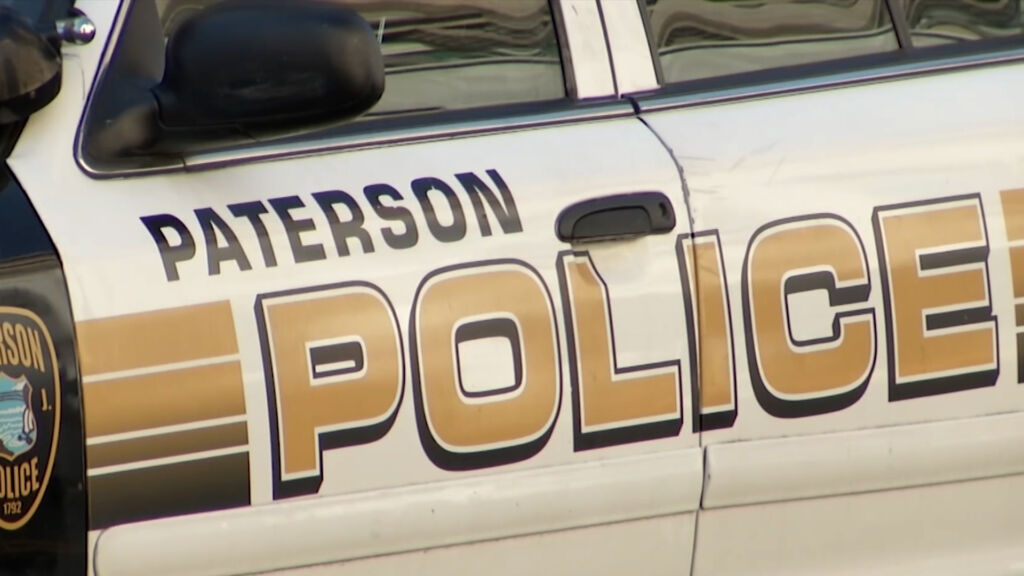
Paterson police appear to use force against Black and Hispanic people at a rate greater than law enforcement in New Jersey as a whole, according to an NJ Spotlight News analysis of statewide data.
An analysis of the attorney general’s use-of-force database found that more than 55% of the Paterson officers who reported using some type of force — including taking down a suspect, using arms or legs, firing a chemical agent such as pepper spray or firearm — between October 2020 and February, involved a Black person. That’s compared with 45% statewide. Similarly, Paterson police reported use-of-force actions against Hispanic people almost 17% of the time, compared with 9% of the total statewide.
By contrast, white people were subjected to force less often in Paterson than they were by police across New Jersey. Of all the reported Paterson police encounters involving force, 20% involved white people. The total for the state was more than double that amount.
The most recent data on the use of force by Paterson police shows some improvement from a performance audit of the department conducted by an outside firm. The city requested that audit, which began in May 2020 and was completed in February 2022. According to that audit, the racial breakdown of people against whom police used force between 2018 and 2020 was 57% Black, 34% Hispanic and 7% white, with the rest unknown or other communities. That report had urged the department to “further examine” this data to determine “factors that may influence the use of force” and to monitor it “on a regular basis.”
It’s unclear what the department has done in this regard. The police chief’s office said Thursday he was unavailable for comment. Representatives from the office of the police director and Paterson Mayor Andre Sayegh did not respond to questions about the department’s use of force.
Reason for discrepancy?
The discrepancies in the use of force on people of different races may be explained, at least in part, by the makeup of Paterson’s population, given most police interactions are likely to be with city residents.
Paterson’s white population is significantly smaller than the state average — about 7% of the city’s 158,000 residents are white, compared with 52% of New Jersey residents, according to the U.S. Census Bureau’s 2021 American Community Survey. That could explain why Paterson police used force on white people at half the rate of police statewide.
Paterson, the state’s third-largest city, has a majority Hispanic population, comprising of about 64% of all residents. Police force encounters with Hispanic people represented fewer than 17% of the total.
But while just 23% of Paterson residents are Black, police use-of-force actions against Black people represented 55% of all those reported.
Paterson police have been under increased scrutiny since officers shot and killed Najee Seabrooks, a violence intervention worker who was going through a mental health crisis. Authorities say police fired on Seabrooks after he advanced toward them with a knife after a confrontation that lasted hours following calls for help.
Pro and con a federal investigation
A group of social justice organizations has asked the U.S. Department of Justice to investigate the police department, a call Sayegh has rejected.
Since 2015, Paterson police have shot at least eight people; seven of those resulted in fatalities, while the eighth last June left an unarmed man, Khalif Cooper, unable to walk. The seven fatalities by the department are the same number as the far larger New Jersey State Police force and second in the state only to Newark’s police department, which had eight, according to data compiled by The Washington Post, which has been tracking fatal police shootings since 2015. Newark is the state’s largest city. Jersey City, the second largest, has had three fatalities caused by the police.
Social justice advocates question whether all instances of the use of force are being reported and that appears to be a valid question involving at least one incident in Paterson that can be verified.
While the attorney general’s office provides the public with a way to see information on use-of-force incidents across the state, that online tool does not allow people to find fatal police shootings. The Washington Post database logs 95 people as having been shot by police in New Jersey since 2015.
The state force database does show how often police say they have used force, but only since Oct. 1, 2020. In Paterson, there are 736 instances involving 491 subjects and sometimes more than one officer used force against the same person.
Are all incidents being reported?
Social justice advocates question whether all instances of the use of force are being reported and that appears to be a valid question involving at least one incident in Paterson that can be verified. According to the attorney general’s office, Paterson detective Victor Lora shot and killed Hui Zhang. The attorney general’s office alleges Zhang had a handgun and was attempting to enter other vehicles while fleeing the scene of a car accident when Lora shot and killed him on Oct. 10, 2022. That incident is not listed in the state force database. That could be because the shooting is currently under investigation by the attorney general’s office. All fatal police shootings are investigated, and the database only includes reports on cases “marked completed or closed.” However, other officers whose more recent shooting incidents are still under investigation have posted information on their incidents to the database.
The database can be helpful, however, in giving an overview of police encounters with people that involve force.
For instance, a review of the force database by NJ Spotlight News found that all five of the police officers who used some level of force in the incident where Seabrooks was killed had used force in other cases. Officers Anzone Tsay and Jose Hernandez fired their weapons and struck Seabrooks, according to the attorney general’s office. Tsay had reported two uses of force, one in 2021 and one last year, while Hernandez had reported 15, the most recent of which was last October. Of the three officers that the attorney general’s office said used less than lethal force, Hector Mendez and Qiao Lin reported using force twice and Mario Vdovjak reported three instances, all last year.
Colleen O’Dea discusses data on the use of force by police
One additional state database, the report of major discipline, can shed light on police misconduct. However, because departments have latitude in determining what level of discipline to impose for various infractions, it is unclear how useful this is. In 2020 and 2021, the only years for which information is available on a statewide basis, one Paterson police officer was fired and another was suspended twice for infractions, the database shows. The first year the state made this information public was 2020 and 2022 data is not yet available.
By contrast, the police departments in the state’s two largest cities reported many more instances of major discipline against police officers — 18 by Newark police and 23 by officers in the Jersey City department. So did a number of smaller cities — nine by Irvington, six by Trenton and five by Atlantic City police. And several smaller departments in less populous municipalities — Long Hill in Morris County and Middle Township in Cape May — reported the same number as Paterson in 2020 and 2021.
It’s unclear whether these departments imposed similar penalties for similar infractions or whether some were less tolerant of misconduct than others. A review of the database shows that different police departments cite officers for different lengths of time for a host of infractions, such as providing false or inaccurate information on a report.
— Graphic by Genesis Obando
