
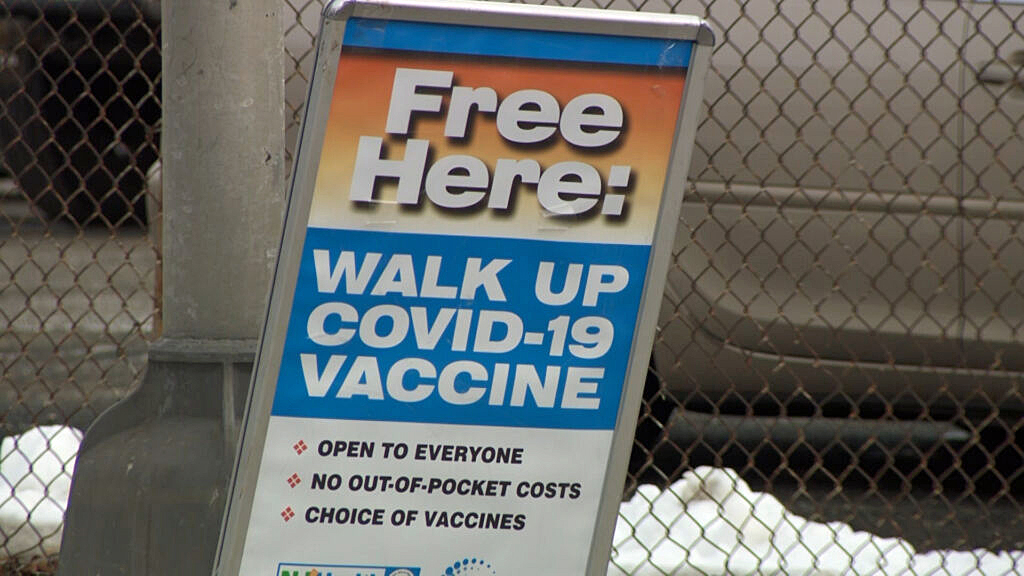
The frustrating quest for COVID-19 tests — and, later, vaccines and treatments — may now seem like distant memories to most New Jersey residents.
But three years after the pandemic first emerged here and with thousands of new cases reported in New Jersey every week, barriers to COVID-19 protections and care could reemerge as pandemic-related government policies evolve or expire in the coming months and years.
The federal Public Health Emergency, as declared by the White House in early 2020, is now on track to expire May 11. That expiration will trigger changes to multiple regulatory systems, affecting access to tests and shots, health care staffing levels, telehealth availability and food subsidies. People with limited incomes and those who lack health insurance or documented residency status are most likely to suffer, according to public officials and outside experts.
“We are definitely concerned about our underserved, our lower-income individuals and how the ending of the Public Health Emergency is going to impact them,” said Monmouth County Health Officer Chris Merkel, president of the New Jersey Association of County and City Health Officials.
“And it’s not just testing, not just vaccination, it’s all the wrap-around services these folks need, like food, housing, transportation.”
Paying post-emergency prices
Without the federal health emergency, Medicare members will no longer get at-home COVID-19 tests for free, according to the federal government. People with private insurance may face co-pays for home and lab-based tests.
Those without health care coverage will need to pay full price for COVID-19 tests and vaccines, which are expected to rise to as much as $130 per dose, a price that could make it impossible for some local public health organizations to purchase vials in bulk and provide the shots at free clinics, as they do now.
“That’s a little cost prohibitive,” Merkel said, noting that influenza vaccines cost about $17 a vial, low enough so they can purchase in bulk and hold free flu-shot clinics in vulnerable communities.
In the first two months of 2023, new case numbers in New Jersey declined 54%, hospital census dropped 46% and daily reported deaths were down 18%.
The federal health emergency has also enabled states to expand Medicaid programs; New Jersey’s grew 25%, to cover some 2.2 million residents. But a new federal law requires states to launch a systematic review of taxpayer-subsidized health programs to ensure those now enrolled are still eligible, a process that will begin here in April. This “redetermination” could pare 13% — or 286,000 people — from New Jersey Medicaid, according to the state human services department, which oversees the federal and state-funded program.
New Jersey reported its first COVID-19 case on March 4, 2020. Since then the pandemic has at times placed unimaginable strain on the state’s public and acute health care systems. Some 8,000 people were hospitalized in April 2020; a new highly contagious strain caused case numbers to peak in January 2022, when nearly 40,000 new diagnoses were reported in a single day. Since then, more than 3 million residents have tested positive, close to 166,000 have been hospitalized and nearly 36,000 have died as a result, according to state data.
Nationwide, COVID-19 cases are down 92% since that January 2022 high point, according to federal officials, and hospitalizations and deaths have dropped 80%.
Feds’ plans for the future
“We have come to this point in our fight against the virus because of our historic investments and our efforts to mitigate its worst impacts,” the U.S. Department of Health & Human Services said in early February when announcing the May 11 end-date.
“It is important to note that the Administration’s continued response to COVID-19 is not fully dependent on the COVID-19 (public health emergency), and there are significant flexibilities and actions that will not be affected as we transition from the current phase of our response,” it said, promising to work closely with state and local officials in the process.
‘People who already don’t think there’s an emergency will be even less likely to think there’s a problem, and less inclined to get vaccinated.’ — Epidemiologist Eddy Bresnitz
New Jersey has seen a similar downward trend. In the first two months of 2023, new case numbers declined 54%, hospital census dropped 46% and daily reported deaths were down 18%, according to the state.
“The Department remains vigilant in monitoring COVID-19 activity in several key statistical areas but has observed a relatively mild winter surge as compared to prior years,” said Nancy Kearney, deputy communications director for the health department.
Despite this decline, Kearney said the department continues to encourage people to get vaccinated with the new, bivalent booster; nearly 7 million New Jerseyans have had an initial series of vaccines, but fewer than 1.5 million have received the bivalent booster, which combines two strains of the coronavirus to offer broader protection.
Booster blues
The low booster uptake in New Jersey and elsewhere — just over 16% of Americans have had the bivalent shot — is a concern to former New Jersey epidemiologist Eddy Bresnitz, a vaccine expert who served as an adviser for the first year of the COVID-19 pandemic. “The booster rates are pretty miserable,” he said.
People may be even less motivated to get these shots when the federal public health emergency ends, Bresnitz said. “People who already don’t think there’s an emergency will be even less likely to think there’s a problem, and less inclined to get vaccinated,” he said. “When there’s no public health emergency, nobody is going to think twice about it.”
For people who do seek immunizations, Bresnitz said they could be harder to get. “The uninsured, that’s the population that’s most concerning,” he said. “The government says it is going to be available, but there are going to be safety-net people who fall through the cracks.”
New Jersey officials say they are aware of these concerns and are taking steps to protect services for low-income and uninsured residents. Human services officials developed strategies to protect Medicaid coverage for as many people as possible, with a website to help members navigate the changes, and will work to connect them with other coverage if needed.
Gov. Phil Murphy pledged state money to fill gaps in the federal food stamp program, which serves nearly 770,000 residents here, once funds from Washington, D.C. shrink with the emergency’s end.
‘The public health emergency designation may be ending, but numerous challenges facing our healthcare systems remain…’ — Cathy Bennett, New Jersey Hospital Association
Officials at the state health department said it is identifying existing programs that could be used to fund vaccine clinics, testing and other COVID-19 responses once federal support for those services ends. Money has been identified to operate free or low-cost testing for at-risk residents through mid-2024, officials said.
“The Department is currently reviewing all of its programs in assessing future COVID response at the state level. We know that current vaccines and oral antivirals will remain free to everyone until the products become commercially available,” Kearney said, a change also expected this spring.
“The end of the PHE may have a disproportionate impact on those who are uninsured and underinsured,” she said. “The Department will continue to monitor the impact on the availability of free testing following the end of the public health emergency.”
Easing restrictions and funding
New Jersey officials have dialed back their pandemic response over time, lifting some restrictions in June 2021 and allowing the state’s emergency declaration to lapse in March 2022. The federal government has also trimmed state funding for this work, suspending reimbursements to doctors and hospitals who provided free COVID-19 testing and vaccinations in April 2022. This program paid New Jersey providers nearly $1 billion for this work over two years, hospital officials said.
While the end of the federal health emergency could impact access to COVID-19 vaccinations, testing and treatment, these clinical advances — most of which were developed and approved in record time in response to the pandemic — will still be available under an Emergency Use Authorization, federal officials said.
Regulatory changes that enabled greater use of telehealth and provided more flexibility to substance-use treatment programs will also remain in place, they said, at least for the near term.
Hospital leaders and other acute care providers are sifting through close to 100 federal and state regulatory waivers issued during the pandemic to ease capacity at these facilities; these measures created flexibility around staffing levels, licensing restrictions, reporting requirements and more. While some of these have already expired and others will continue, more than half are tied directly to the federal public health emergency.
Cathy Bennett, president and CEO of the New Jersey Hospital Association, praised the state’s effort to provide regulatory flexibility during the COVID-19 crisis. These options were also useful last fall, she said, when hospitals faced a “tripledemic” threat with rising numbers of cases involving COVID-19 cases, influenza or other respiratory viruses.
“While these flexibilities were created as a direct response to the COVID-19 pandemic, the last three years have acted as a catalyst for establishing new, innovative and safe ways to deliver patient-centered care,” Bennett said.
“The public health emergency designation may be ending, but numerous challenges facing our healthcare systems remain, which will require certain flexibilities be made permanent or extended to continue providing quality care to our communities.”
