
 Credit: (AP Photo/Damian Dovarganes)
With COVID-19 cases continuing to decline, the federal government is also scaling back on the resources and flexibility it provided New Jersey and other states to bolster their pandemic response — a shift that advocates fear could endanger those most at risk of the disease.
New Jersey providers have collected about $1 billion from a federal program that covers COVID-19 testing, treatment and vaccination for those without insurance, according to the state hospital association, but the agency administering the fund has announced it has now run dry.
The program under the federal Health Resources and Services Administration stopped accepting claims for COVID-19 screenings and care last week and will no longer reimburse health care providers for immunization costs after April 5, according to the agency’s website.
State officials stressed that tests and vaccinations will remain free to all residents, regardless of insurance, thanks to existing state programs and a binding commitment providers made to the federal Centers for Disease Control and Prevention to administer COVID-19 shots for free. But the removal of the federal funds will force health care providers to find other ways to finance these efforts.
‘Now we’re going to pull the plug and tell people, unless you have insurance we’re not going to treat you? And what are we going to do, let them walk around with COVID? That’s crazy.’
“This is another public health emergency in the making. We’re going to reverse all the progress we’ve made,” said Maura Collinsgru, policy and advocacy director with New Jersey Citizen Action, which seeks to expand health access for low-income residents.
“Now we’re going to pull the plug and tell people, unless you have insurance we’re not going to treat you? And what are we going to do, let them walk around with COVID? That’s crazy.”
Federal funds for the uninsured
Since the Health Resources and Services Administration’s uninsured fund was established in early 2020 at the height of the pandemic, providers in New Jersey — including hospitals, physicians and community clinics — have successfully submitted more than 3,200 claims to it, according to the New Jersey Hospital Association.
Hospitals have used the fund to help pay for treating uninsured patients — a cost that traditionally would be covered by a mix of state and federal charity-care dollars — and community health centers have been reimbursed for testing and vaccination clinics held in low-income communities, such as for migrant farmworkers or other situations where clients may not have health insurance.
NJHA president and CEO Cathy Bennett agreed that testing, vaccination and treatment remain critical components of public safety.
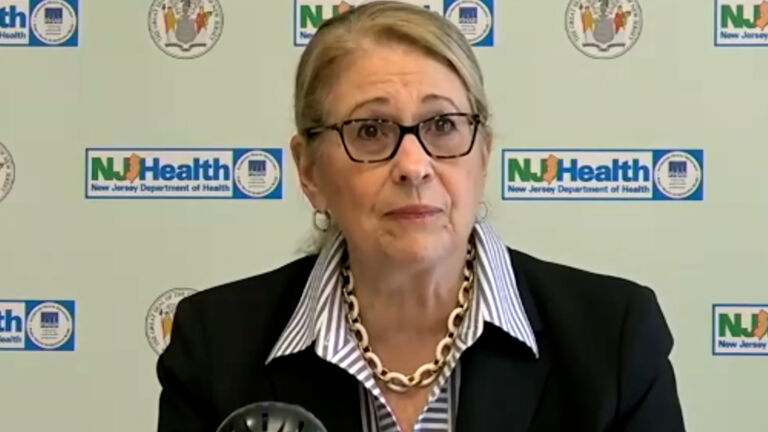
“We are all eager to move past this pandemic, but COVID is still here,” she said, noting that hospitalizations are rising again in Europe. “That makes this action by HRSA all the more disappointing and problematic. Federal support is needed to remove any barriers for the uninsured to access testing, vaccines and treatment.”
Bennett, a former state health commissioner, said the fact that the state has collected $1 billion through the fund so far “shows the level of need in our state and the importance of this funding, especially in caring for vulnerable populations.”
U.S. census estimates suggest at least 700,000 New Jerseyans may lack health coverage.
Changes to Medicaid program
At the same time, patient advocates are also bracing for changes to the Medicaid program, operated as NJ FamilyCare here, which they worry could allow tens, if not hundreds of thousands of struggling New Jerseyans to lose publicly subsidized health insurance. The changes — and millions of additional Medicaid dollars they triggered for states — are tied to the expiration of the federal public health emergency, which could end as early as April 16, although experts believe the Biden administration will extend it for several more months.
Under the federal public health emergency declared in January 2020, and renewed multiple times since then, states received a 6.2% increase on Medicaid rates if they agreed to not disenroll anyone, even if their income level changed. New Jersey added 400,000 people during the pandemic — a 25% increase — to its FamilyCare program, and it is now taking steps to smooth the transition process triggered when the federal order is lifted.
State Medicaid director Jennifer Langer Jacobs, with the Department of Human Services, said the increased access to care and stability, with no threat for termination, has been a benefit for many families over the past two years. Experts agree that the so-called Medicaid churn — where members cycle on and off the rolls due to changing income levels or family situations — is a major barrier to quality care.
“We see the benefit of reducing that churn to zero and what that means for the continuity of care” under the pandemic, Jacobs said. Once the federal emergency ends, New Jersey will take a year to review the rolls and assist people with re-enrolling or obtaining other care, in an effort to limit terminations.
Jacobs said it was too soon to know exactly how many people could be impacted by the changes in enrollment enforcement, but researchers with the nonprofit Kaiser Family Foundation estimated 13% of Medicaid members could lose their coverage in the process.
In New Jersey, where 2.1 million residents are currently enrolled, that means some 273,000 might no longer qualify for the public health insurance program.
Not behind us yet
New COVID-19 diagnoses and hospitalizations have declined dramatically since the peak earlier this year, but epidemiologists and public health experts insist the pandemic is not behind us yet, as other countries continue to experience new surges. At least one in five residents has yet to be vaccinated, and half of those eligible for boosters haven’t received that extra shot, state data indicates. Almost 2.2 million New Jerseyans have been diagnosed with COVID-19 since March 2020, nearly 120,000 hospitalized, and at least 33,000 have died.
But with public and political appetite for the pandemic waning, New Jersey — like states nationwide — has started to roll back its COVID-19 infrastructure. Mask mandates have been lifted here, state-operated vaccination mega-sites are closing, and the contact tracing team will be cut in half this month, state officials said.
Some worry these changes, when combined with cutbacks at the federal level, will leave those who are most vulnerable to the virus even more at risk.
“We can’t leave these communities behind,” said Christopher Rinn, CEO of the Visiting Nurse Association of Central Jersey Community Health Center, which has multiple sites in Monmouth County.
The center was among the first to provide testing and vaccinations for people who are homebound and has run dozens of clinics at senior centers, low-income housing communities and other community hubs. Rinn said he was “shocked” by the news that the uninsured fund had run dry.
In addition to the sometimes complex logistics, VNACJ providers had to overcome deep-seated hesitation and skepticism about the vaccine in some communities, Rinn noted, making continuity in the program even more important.
‘The hardest nut to crack’
“These are where the hardest nut to crack is, in these communities,” he said, pledging to continue to do this work for the “foreseeable future,” even without federal reimbursement.
The state Department of Health said it is monitoring community health centers and other providers to determine the impact of the funding loss. Providers are not allowed to charge patients for the vaccines or the associated costs, officials said, and free tests are available from a variety of sources, including through the state’s partnership with Vault Health, which will provide home-testing kits at no cost. The state also provides $32 million annually to community clinics to help cover the cost of caring for uninsured patients, the department said.
“The New Jersey Department of Health’s focus during the COVID pandemic has been on equitable access to COVID-19 vaccines, treatments, and testing and these efforts have been supported through the use of federal funds,” communications director Donna Leusner said. “We expect all COVID-19 vaccination sites to remain free to vaccination recipients — regardless of insurance status.”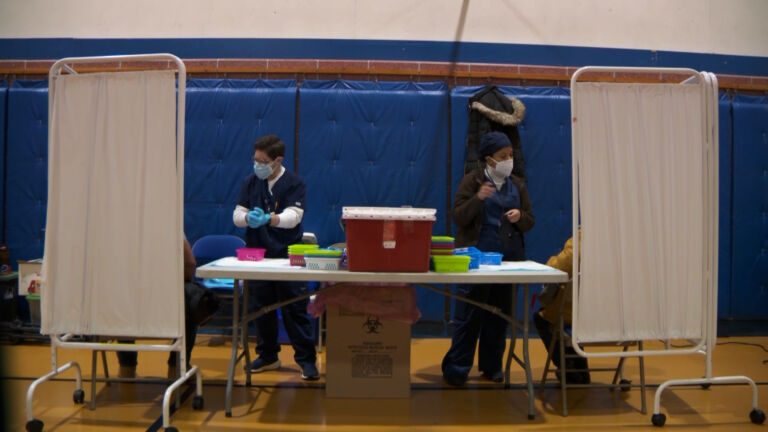
At the Department of Human Services, Jacobs said officials have been working all along to identify which of the now 2.1 million Medicaid members might not qualify for the public insurance again, either because their finances or household makeup has changed, or because they have not responded to outreach from program staff seeking to verify contact information, income or other factors.
While the eligibility requirements remain the same as before the pandemic, department staff traditionally reconfirmed qualifications once a year, and members were required to inform the state of changes in their job or family status, factors that resulted in enrollment churn. Jacobs has asked the federal government to allow additional program changes to reduce churn, but said it is unlikely they could be put in place until later this year; state lawmakers have introduced a similar proposal.
After the public health emergency
“We’re pretty well caught up in having eyes on the population,” Jacobs said. When the public health emergency does end and the enrollment review begins, she said her team will work carefully to ensure people have options.
Membership volume has grown, but Jacobs said the system is also more efficient than it was two years ago. “It’s not new work. It’s not even different work. It’s just more work. We need to be thoughtful, collaborative, and strategic about doing the work, just as we were at the beginning of the pandemic.”
‘We need to be thoughtful, collaborative, and strategic about doing the work, just as we were at the beginning of the pandemic.’
Jacobs said no resident will lose Medicaid without first being contacted by the state, and she encouraged New Jerseyans to look out for mail from the department. Members will have an opportunity to clarify their status and can appeal any termination decision, she said. The department is also working closely with other state agencies and patient advocates to ensure those who no longer qualify for Medicaid will be connected to the state’s Affordable Care Act health insurance exchange, or marketplace, which offers discounted plans and significant subsidies to most members.
According to the Kaiser Family Foundation’s study, New Jersey’s process — which will spread enrollment confirmations over 12 months — may be among the more forgiving models nationwide. Some states said they plan to terminate ineligible members within three months of the public health emergency being lifted. One state, Hawaii, is estimated to lose over 30% of its enrollees, the study found.
While New Jersey may be ahead of the game, Collinsgru is concerned about the massive task ahead, given what she called “one of the biggest shifts in health insurance enrollment” since the full implementation of the Affordable Care Act, nearly a decade ago. “This is an all-hands-on-deck moment. It’s going to require education and communication, that will be essential,” she said, stressing that DHS needs to invest in these efforts and the work of community partners like Citizen Action to help members navigate the shift.
“All of that is really going to be put to the test,” said Collinsgru, who is also worried about the loss of the 6.2% Medicaid rate increase, which also ends with the public health emergency. “That money will evaporate and that’s a concern.”
