Health care advocates joined U.S. Rep. Frank Pallone (D-6th) at a Long Branch news conference on Friday to oppose potential raids on federal health funding, after House Republicans passed a budget plan that could chop Medicaid spending by $880 billion to help pay for extending President Trump’s proposed $4.5 trillion tax cuts.
“We are in need of these services for community members,” said Adele Sammarco, spokeswoman for the Alzheimer’s Association. “We need the healthcare! We need the support! ”
Sammarco, for example, said her association is seeing a rise in cases and in costs for patients with dementia.
Visiting nurses and physicians said they fear cutbacks to their mission of keeping people out of hospitals. “Medicaid makes it possible to deliver this high-quality healthcare directly to patients in their home — helping them manage their chronic conditions, avoid hospitalization, and maintain their independence,” said Dr. Kate Aberger.
“It’s scary,” Pallone said of the prospects. “A lot of people just assume that these [services] are going to happen, but they only happen because the federal government’s paying for them.”
New Jersey’s Medicaid program covers 1.8 million low-and moderate-income adults and kids. It also covers nursing homes, seniors, those who are disabled, and charity hospital support, with the federal government paying more than half the $24 billion bill. State officials said congressional cuts could blow a $5 billion hole in the state budget.
State Assembly Democrats on Thursday passed a measure urging New Jersey’s U.S. senators to reject the House budget bill.
“You need to understand the ripple effect to our largest employer in our state is health care and health care providers,” said Assembly Majority Leader Lou Greenwald (D-Camden). “That is our largest employer. The impact of these cuts are dramatic.”
During his first Cabinet meeting this week, President Trump repeated a campaign promise not to cut Medicaid benefits: “We’re not going to touch it. Now we are going to look for fraud. I’m sure you’re okay with that. People that shouldn’t be on, people that are illegal aliens, and others — criminals, in many cases.”
But Pallone said the Medicaid program itself is “the leanest program in the federal government, it’s the most efficient.”
House Republicans, including New Jersey’s Rep. Chris Smith (R-4th), have called the budget a work in progress, but it nevertheless has created a rift between hardliners who want even deeper spending cuts and others concerned about backlash from constituents.
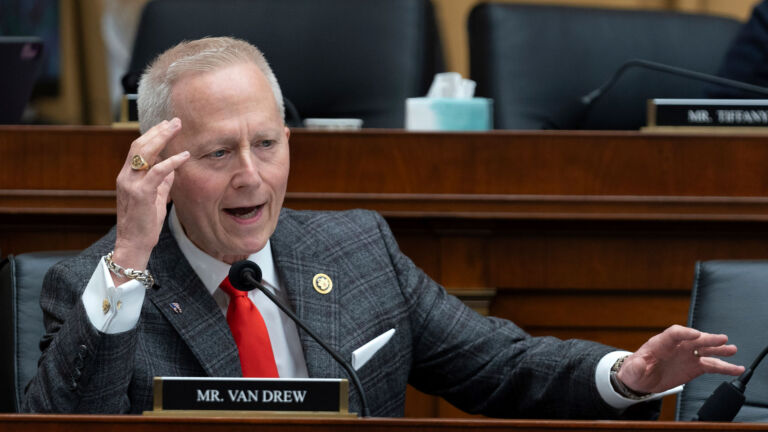
Almost 21% of Rep. Jeff Van Drew’s (R-2nd) constituents receive Medicaid, and he noted after the vote that “no actual changes to Medicare, Social Security, or Medicaid can happen through a budget resolution alone. Any real cuts would require separate legislation, which I would vehemently oppose.”
Pallone, the ranking member of the committee that oversees Medicaid, said states facing cutbacks could reduce optional benefits, like dental and vision care, or restrict Medicaid eligibility or cut support services.