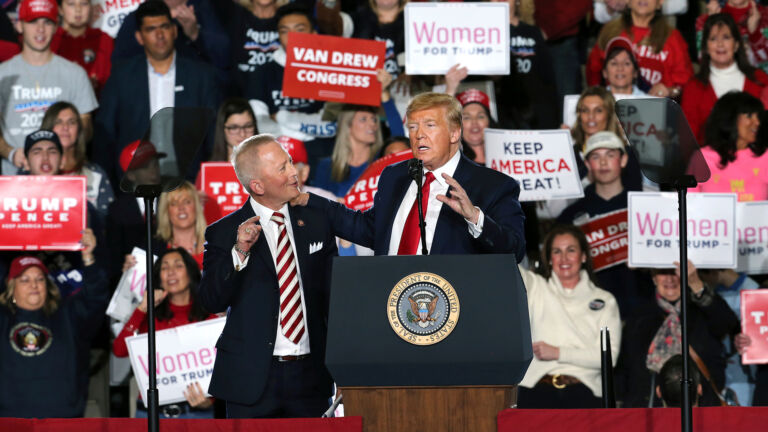
Credit: (AP Photo/Jose Luis Magana)
WASHINGTON — After a frantic day of arm-twisting and vote-watching, the House narrowly adopted a budget plan that could deliver punishing cuts to national social and health programs, including Medicaid, while increasing spending for the Trump administration’s military and immigration objectives.
New Jersey’s Republicans in the House — Reps. Jeff Van Drew (R-2nd), Chris Smith (R-4th) and Tom Kean (R-7th) — voted for the proposal. Republicans said House leaders promised before voting Tuesday that Medicaid would not be cut.
At roughly 7:30 p.m., Republicans abruptly pulled the bill from the floor. But moments later, they called all lawmakers back to the chamber after securing enough support for passage.
Wary of potential deep cuts to Medicaid and how those cuts would land in their home districts, Republicans, including Van Drew, had been unsure how they would vote as of Tuesday evening.
No Democrats in the chamber voted for the budget plan, which does not specify what programs to cut. Instead, the bill approved Tuesday calls for a minimum of $1.5 trillion in spending cuts and up to $4.5 trillion worth of new tax cuts over the next decade.
Deep cuts
To pay for this proposal, written by Republicans alone, deep cuts worth trillions of dollars would likely have to come from national health programs such as Medicaid and the Children’s Health Insurance Program, or CHIP, both federal health coverage programs for low-income citizens.
About 1.75 million people in New Jersey were enrolled in Medicaid or CHIP as of October, according to the Centers for Medicare & Medicaid Services, a federal department that oversees national health coverage.
‘It’s a work in progress. It’s not the end game, this is the beginning.’ — Rep. Chris Smith (R-4th)
The Supplemental Nutrition Assistance Program, formerly known as “food stamps,” is another likely target for cuts.
Smith said Republican leaders in the House, including Speaker Mike Johnson, Majority Leader Steve Scalise and Rep. Tom Emmer, a Minnesotan in charge of securing votes, got backing from wavering Republicans by promising Medicaid would not be touched.
 Credit: (AP Photo/J. Scott Applewhite)
“Both the speaker, Scalise and Emmer said clearly we’re not going to cut Medicaid, we’ll find some other way of doing it,” Smith said in an interview Tuesday night with NJ Spotlight News.
“It’s a work in progress. It’s not the end game, this is the beginning,” Smith said. “So for that reason, and trusting our speaker, I think we can be very confident that he’s gotten the message.”
Whipped off the fence
Republican leaders in the House whipped on-the-fence members of their party into supporting the bill with the promise that cuts would not come from Medicaid.
Before the budget plan was adopted, Rep. Frank Pallone (D-6th) urged the trio of Republicans who represent New Jersey in Washington to vote against the deal, noting they could block the resolution if they voted with Democrats.
Van Drew’s district is home to approximately 126,400 people signed up for Medicaid or CHIP — about one in five people in the district.
“We know these cuts would be devastating but it only takes three Republicans to stop this bill in its tracks,” Pallone said in a statement Monday. “I call on Tom Kean, Jeff Van Drew and Chris Smith to protect New Jersey’s most vulnerable children and families instead of giving tax cuts to billionaires.”
At a minimum, the budget plan requests cuts of $880 billion from the committee that oversees health policy, $330 billion from the committee that oversees education and $230 billion from the committee that oversees agriculture and nutrition.
How $880 billion in health cuts could be found without that money coming out of Medicaid seems unclear.
Sherrill: ‘I think they’re lying’
The idea Republicans could reach their cuts without touching Medicaid is absurd to Rep. Mikie Sherrill (D-11th).
“I don’t think that’s credible,” Sherrill said in an interview Tuesday with NJ Spotlight News, referencing Republicans’ budget plans. “I think they’re lying.”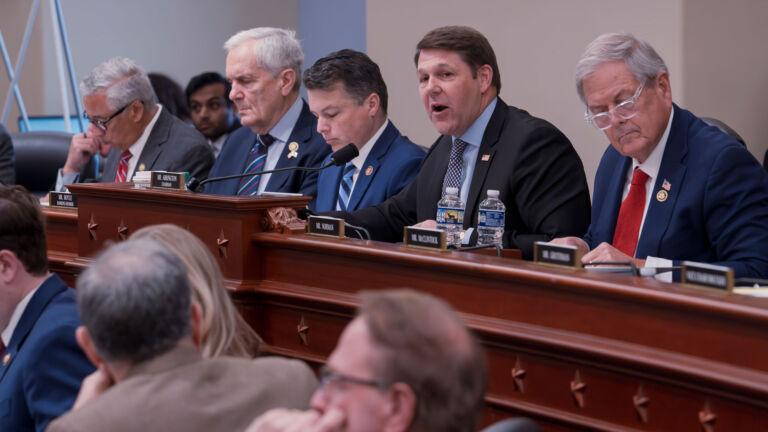
Van Drew’s district is home to approximately 126,400 people signed up for Medicaid or CHIP — about one in five people in the district — according to the Center for Children and Families at Georgetown University.
In Smith’s home district, New Jersey’s 4th Congressional District, about 138,800 people, or 22.2%, are enrolled in Medicaid and CHIP.
For Kean’s district, the total is about 44,000, or 7%, of the population.
Democratic amendments were blocked
Republicans beat back attempts by Democrats to amend the budget proposal, including an amendment from Rep. Bonnie Watson Coleman (D-12th) to block the $880 billion worth of health cuts.
Republicans hold a slim majority and can afford to lose one member, assuming every House lawmaker is present and voting, and still pass a given bill.
To marshal support for their plan, Republicans argued that taxes would increase for most Americans without congressional action.
“We need the tax cuts,” Smith said.
Adopting the budget proposal is an early step in a multistep gauntlet Republicans are attempting to run in order to pass a policy agenda for President Donald Trump. A top priority is extending provisions from the 2017 tax law Trump signed into law during his first term in the White House.
Provisions of that law are scheduled to expire at the end of this year.
Cost of tax cuts
When Congress passed that legislation in 2017, Republicans in part wrote that law to expire this year in order to give them leverage in future negotiations.
Unless Congress acts, extending portions of the 2017 tax law that expire at the end of the year will cost more than $4 trillion over a decade, according to the nonpartisan Congressional Budget Office.
The seesawing over the bill Tuesday night highlights the difficulty of passing legislation this Congress, especially in the House, where factions of hard-right Republicans who want deeper cuts than more moderate GOP lawmakers are in nearly perpetual tension over the trajectory of the federal budget and the national debt.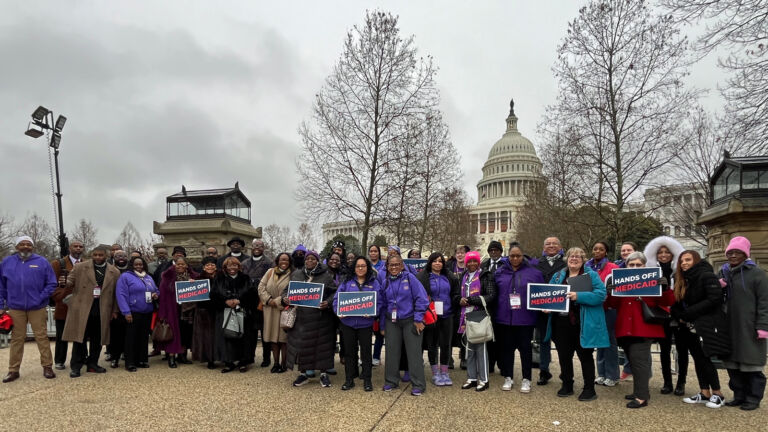
Rep. Nellie Pou (D-9th) said the cuts to federal programs blended with blanket firings and layoffs the Trump administration has issued during its first month in office would stretch an already stretched federal workforce.
“If you don’t have the people there to absolutely answer phones, process the paperwork, screen you, provide you with outreach,” Pou said in an interview with NJ Spotlight News Tuesday, “If they’re reducing the people, who’s actually going to help the citizens?”
After members were called back to vote, Rep. Katherine Clark, a Democrat from Massachusetts and her party’s whip, sent out an email accusing House Republicans of “trying to jam through their Budget Resolution after assuring House Democrats that there would be no further votes this evening.”
In a potential move that could have derailed the bill before passage, three Democrats who had been away from Washington — one is recovering from a blood clot, another from a pregnancy and a third had not voted since January — rushed back to the Capitol and stayed out of view.
They hid in Democrats’ offices near the House floor before emerging and voting against the deal, before it ultimately cleared the chamber 217-215.