
 Credit: (valelopardo from Pixabay)
A decade ago, New Jersey allocated roughly $850 million to support hospitals in its annual state budget and $11.4 billion for Medicaid, legislative records show. Much of these costs were covered by the federal government, whose share of Medicaid spending was on an upswing, growing by more than $1 billion annually over several years.
Flash forward to 2025, New Jersey’s current budget booked just over $700 million for hospitals, while Medicaid – the federal and state funded health insurance for low-income Americans – nearly doubled to $21.3 billion. But the federal contribution to Medicaid has been shrinking, budget analyses show, with $12.2 billion coming from Washington, an 11% decline from the budget year that ended in June 2024.
Medicaid enrollment is also declining and New Jersey’s program, NJ Family Care, now covers roughly 1.9 million people who are poor, disabled or living in nursing homes. But costs continue to grow, according to experts with the non-partisan Office of Legislative Services, who predicted Medicaid spending will increase 2.7% over twelve months. If enrollment had remained stable, experts estimated cost growth of more than 13%.
This comes as federal funding for Medicaid and other social service programs is under attack by Republicans in Congress, who are seeking to slice billions from existing programs to pay for tax cuts that are a priority for President Donald Trump. The result could mean up to $5.2 billion less from the federal government to pay Medicaid claims next year, according to state modeling obtained by NJ Spotlight News, plus a loss of $4.2 billion used to support hospitals and nursing homes. Proposed changes to eligibility rules could also leave as many as 700,000 New Jerseyans without Medicaid coverage, the state found.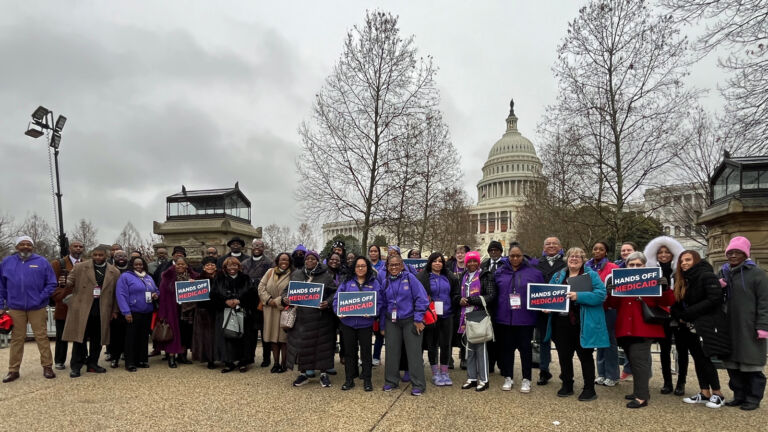
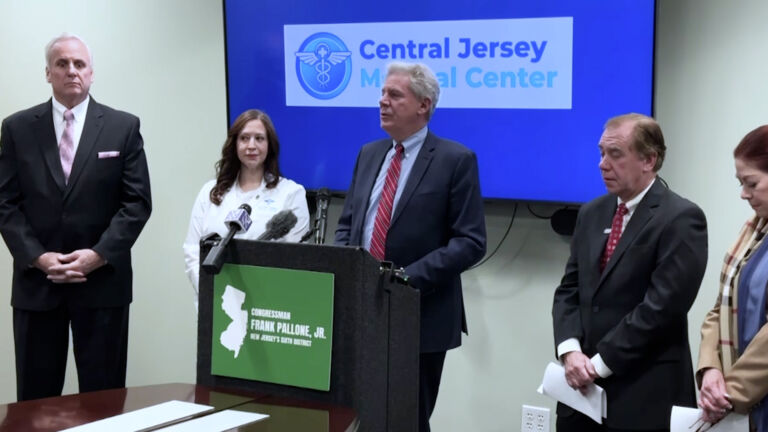
“This is something that we really ought to be afraid of,” Assembly Speaker Craig Coughlin (D-Middlesex) said last week at an event to highlight the dangerous impact of the potential cuts.
“We don’t have an extra $12 billion dollars lying around. That’s an unachievable number,” Coughlin said, referring to the current federal share for Medicaid. “We can’t hope to find a way to replace that at the state level. It’s just not there.”
In New Jersey, Medicaid pays 60% of the costs for the people living in nursing homes, for nearly one-third of the births and for one in four hospital patients. Cuts to the program would impact health care providers and patients, advocates warn. “The far-reaching proposed cuts would be catastrophic for continuity of care for infants, children, seniors and families. It’s an access-to-care crisis in the making,” Cathy Bennett, president and CEO of the New Jersey Hospital Association, told NJ Spotlight News in an email.
On Tuesday Gov. Phil Murphy, a Democrat at the end of his second term, is scheduled to outline his spending plan for fiscal year 2026, which begins in July. Murphy’s office declined to comment, but the governor has said money is tight and last fall called for state agencies to trim spending and freeze hiring. In an interview with NorthJersey.com, Murphy said 15% of the state’s workforce is funded through the federal government.
In an op-ed previewing the budget for NJ Spotlight News, state treasurer Elizabeth Maher Muoio said Murphy remains committed to the “guiding principles” he has held all along, including improving the state’s fiscal health and making it more affordable. “These investments do come with a cost,” she wrote.
The state’s nearly $57 billion spending plan for the current fiscal year, which runs through June 30, includes a structural gap between projected annual revenues and expenditures that Murphy and lawmakers are plugging with more than $2 billion from surplus to maintain balance on paper, as required by the state constitution.
Murphy underscored his commitment to health care in general on Thursday, when the state Department of Banking and Insurance announced record enrollment in New Jersey’s health insurance marketplace, “Get Covered New Jersey.” More than 513,000 residents signed up for marketplace, or Obamacare exchange policies this year, nearly 200,000 of them new, a 30% increase over last year’s enrollment period, the department said.
“From the outset of my Administration, we have led with the principle that health care is a right, not a privilege, and the steps that we have taken underscore that commitment. Recognizing that affordability is central to access, New Jersey established Get Covered New Jersey with State subsidies on top of the federal financial help offered to lower monthly premiums. Hundreds of thousands more New Jerseyans now have health insurance, and they are paying less for it,” Murphy said in a statement.
The state opened its Get Covered marketplace, or Obamacare exchange, in 2020. Murphy called for providing $200 million in state subsidies to help people cover the premium payments, a decision that he framed as defense against Republican efforts reform or end the program, using funding from a new tax on health plans. The fund is expected to provide $190 million in subsidies this fiscal year, according to a legislative analysis. The federal government provides separate subsidies for these marketplace plans – which don’t flow through the state budget – but that money is also the target of GOP spending hawks.
New Jersey’s annual budget funds health care services in a range of way, including funneling federal dollars to address specific issues like HIV/AIDS, maternal health and veterans’ care. It commits millions in state funds to help elderly and disabled people buy medications, expand the health care workforce and provide kids with health insurance, regardless of their income or immigration status.
The state’s biggest health-related expenses involve programs like Get Covered, hospital aid and Medicaid, which at $21 billion comprises more than one-third of the total budget. Hospital aid – all allocated by formula – includes charity care, through which the state reimburses some of the cost hospitals incur treating patients without insurance as required by law, plus funding for quality improvement and money for graduate medical education, which pays hospitals to train doctors.
Funding for these programs is connected, in some ways. The Affordable Care Act, also known as Obamacare, drastically expanded access to insurance nationwide and more than 500,000 New Jersey residents gained coverage through Medicaid or the Obamacare marketplace. That led to declines in charity care costs, from $650 million in 2015, to $342 million in 2024. Funding for graduate training has also grown, while quality improvement support has remained fairly level.

New Jersey’s Medicaid expenses were on the rise before Trump took office a second time and called on Republicans to make cuts. During the COVID-19 pandemic the federal government increased what it was paying states for Medicaid patients, a bonus that ended in 2024, requiring the state to add nearly $140 million more to the program than it had the previous year, according to the legislative analysis. Higher payments to the five managed care companies that provide Medicaid plans also increased state costs by another $139 million, it shows.
Enrollment in Medicaid had declined in the last year or two after the federal government called on states to review everyone’s eligibility requirements, a process that had been purposely stalled during the pandemic. But, as Baby Boomers age, the number of Medicaid members in costly long-term care is growing – estimated to expand by 3.7% this year – forcing the state to invest an extra $134 million for their care in 2025, according to the analysis. And state laws increasing wages for low-income workers have also impacted the program, adding at least $16.5 million to the state’s Medicaid tab this year.
