
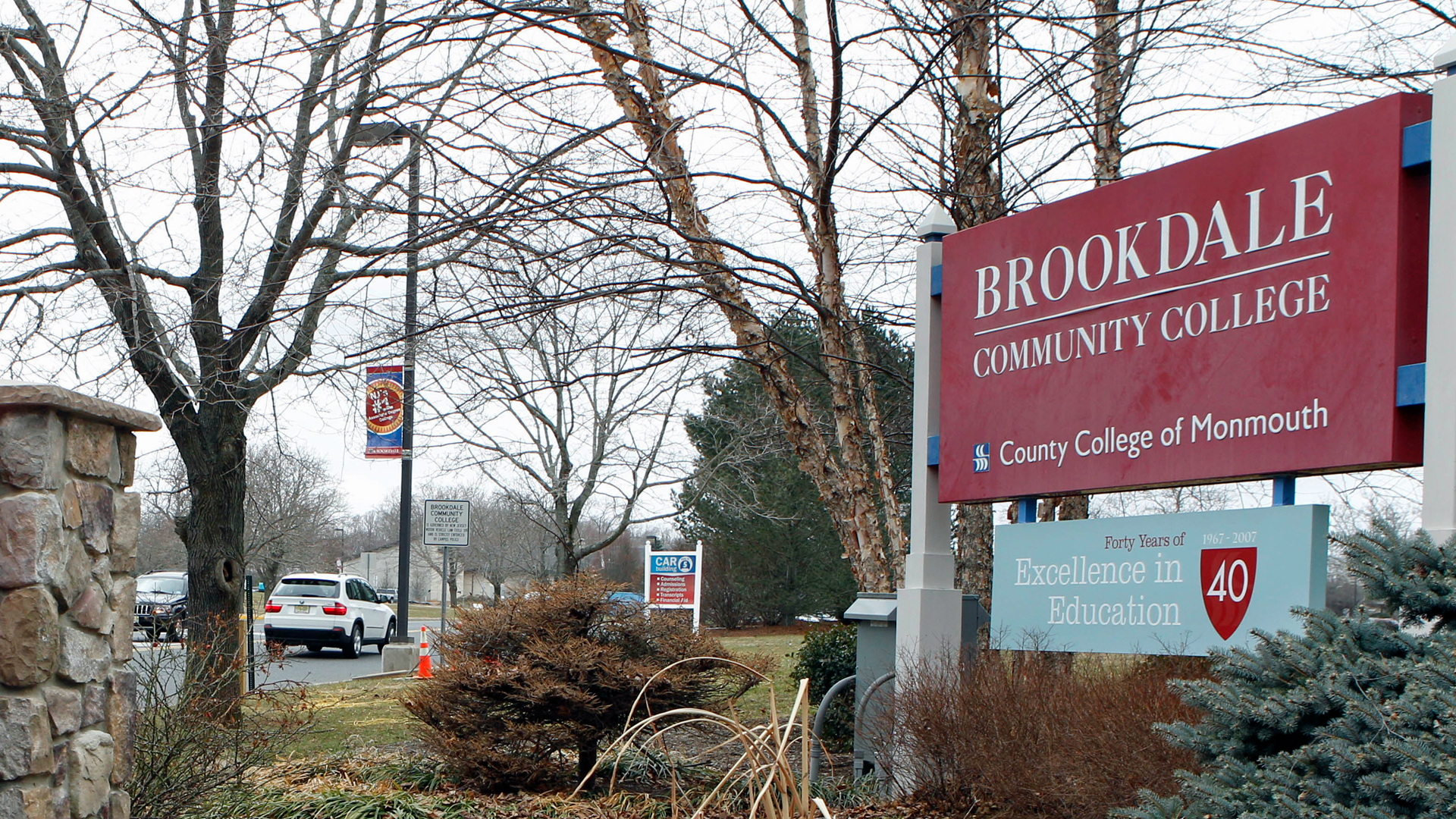
 Credit: (AP Photo/Mel Evans)
 In 2017, New Jersey aimed for 65% of state residents to achieve some college education by 2025 — an effort called the “65 by ’25” campaign.
As of 2024, the state saw a 6% increase, with 59% of working-age residents possessing a post-high school credential, which includes short-term certifications.
What helped New Jersey make progress toward its goal, and what stood in the way?
Some of the answers may lie in “The Current Landscape of Higher Education in New Jersey” a study from the New Jersey State Policy Lab, a nonpartisan research team at Rutgers University.
The report comes as the office of state Higher Education Secretary Margo Chaly is preparing a higher education strategic plan, the first since 2019.

Attaining a college degree is “more than simply satisfying labor market needs,” said Elizabeth Cooner, the State Policy Lab executive director and report co-author.
“We’re living in a time when it’s very clear how important it is for our populace to be educated,” Cooner said in an interview with NJ Spotlight News. “Higher education is also associated with better health and longer life, greater employment stability, stronger civic and community engagement and personal well-being and fulfillment.”
Here’s a lightly edited transcript of the conversation.
New Jersey Spotlight News: What are some key findings from the study?
Elizabeth Cooner: New Jersey’s higher education enrollment is beginning to stabilize, but there’s this contrast between a little bit of stabilization in total enrollment versus a weakening in the pipeline of first-time full-time students.
A demographic cliff is emerging. At the time of the Great Recession in 2007 and 2008, the birth rates declined precipitously and there was a prolonged period of lower birth rates. We have a shrinking pool of graduating high school students, meaning a smaller population of traditional-age college students coming through the pipeline.
Institutions have to look beyond that traditional population and enroll students who are adults, who are older, who have started and left and who are working.
New Jersey is doing better than a lot of other universities and countries across the country. Our graduation rate for four-year institutions is just about 68% versus below 61% across the country.
At community colleges, however, our completion rate is a little bit lower than the rest of the country. It’s just below 38% in New Jersey versus almost 43% across the country. More broadly, there are notable gaps in completion by race or ethnicity, income and gender.
‘Navigate the system’
New Jersey Spotlight News: What surprised you, if anything, about the main findings?
Elizabeth Cooner: The differences in persistence and retention rates by student age groups.
If you are 20 or younger when you start college you are likely to continue to enroll in college into the following year at a rate of 83.2%. If you are 25 or older when you start college, that drops to 46.2%.
There are a lot of reasons why someone might make a decision to pursue a career or they may have obligations that require that choice or maybe they’re not financially able to pursue college at a particular time. We have to try to find ways to serve them well and to help them navigate the system and have success in completing a degree and ending up in a career that they find rewarding.
NJSN: Why is this a key moment to pay attention to those persistence rates?
EC: We need to understand the barriers that are in the way and try to remove them and improve success, especially for those from various historically marginalized populations.
What does an older student need to be successful? Do they understand what the process looks like? Do they understand financial aid? Do they understand what it takes to register for courses? To be successful in their courses? Are we helping them to create networks and communities with other students so they can have a sense of belonging? Are we offering courses at times that do not interfere with their jobs? Maybe we need to provide childcare support?
NJSN: Let’s dive a bit more into what’s driving the overall 1.8% increase in undergraduate year-over-year fall semester enrollment.
“It’s troubling to see this huge difference between this goal of achieving a bachelor’s degree and the actual success rate among students who begin at community colleges.” — Elizabeth Cooner
EC: There were declines that occurred at the point of the pandemic, so some of this increase is a rebound. In New Jersey, there’s been a real concerted effort to attract students who had previously attended some college and then stopped — part of the statewide “Some College, No Degree” campaign. That’s been effective. Some 15,700 students have returned and re-enrolled. We also have some policies like the Community College Opportunity Grant and the Garden State Guarantee to ensure that the people who need money in order to pursue a college education have the funds that they need.
We are seeing more adult students, more returning students, growth in the proportion of students who are Hispanic and growth at community colleges. However, the enrollment is still below pre-pandemic levels. Broadly speaking, student populations are becoming more and more diverse, which to me suggests that more students are recognizing that higher education is a place where they belong. It’s a place where they have an opportunity.
Dreams abandoned
NJSN: What’s one takeaway message for higher education leaders and policy makers about persistent gaps in community college transfer and completion rates, which vary by race, income, gender and age?
EC: Surveys show that 80% of community college students aspire to earn a bachelor’s degree, but only about 30% of them transfer, and then less than half of those who transfer go on to complete a bachelor’s degree.
It’s troubling to see this huge difference between this goal of achieving a bachelor’s degree and the actual success rate among students who begin at community colleges.
Community college students tend to be more racially and ethnically diverse, and they tend to be lower-income students. We’re losing them along the way from the time they start with this dream. Where are we failing them or where are we not helping them enough so that they can be successful? I think it’s a place where New Jersey can improve.
We need culturally responsive reforms and advisers and mentors who understand student experiences.