 Credit: (AP Photo/Lynne Sladky)
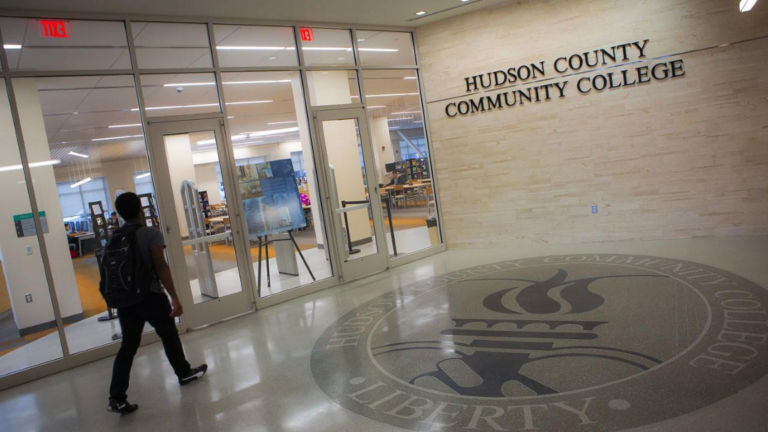
 With colleges and universities under pressure from declining enrollments and federal uncertainty, New Jersey lawmakers are taking steps to formalize the approval process for them to merge.
The state should take proactive steps to support colleges and universities to share resources and explore potential mergers, experts told lawmakers at a hearing last week. Lawmakers are learning from recent and ongoing mergers, including the merger of Montclair State University and Bloomfield College and the plan to turn New Jersey City University into Kean Jersey City, as they seek greater oversight of future mergers.
The country is facing a “college enrollment cliff” due to a falling birth rate, and fewer students require fewer colleges. College closures often disrupt the education of current students and harm the local economy because of significant job losses. College presidents and other higher education leaders told the Senate Education Committee last week that mergers can offer a solution to some of these issues.
“[Mergers are] going to be forced by the economic reality, so we might as well be ahead of it, be proactive as opposed to reactive,” said Henry Amoroso, state monitor at New Jersey City University, which is undergoing a merger with Kean University.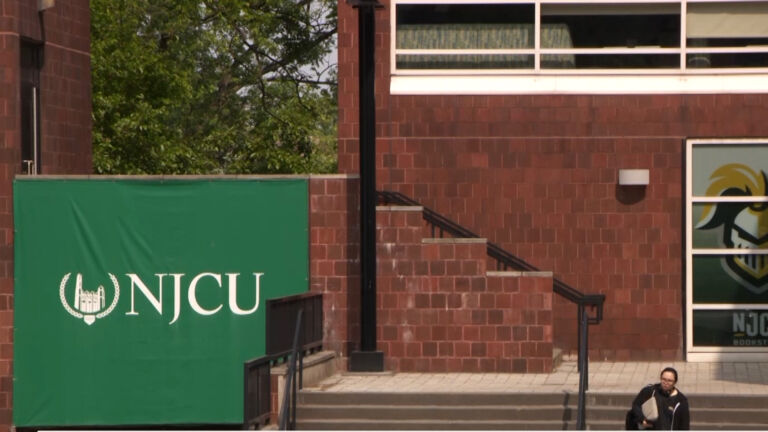
Kean University will become responsible for what will become Kean Jersey City once the merger is complete around 2027. Lamont Repollet, president of Kean University, said he wants the merger to be a model for other colleges that decide to combine.
“There are changes taking place, demographic changes, technology changes, value proposition changes,” Amoroso said. “The education community has to look at how to continue to deliver an effective educational experience that is not entirely tuition driven.”
What legislative involvement would look like
Higher education mergers and consolidations would require executive and legislative approval under a bill (S-4597) introduced by Sen. Joe Cryan (D-Union), chair of the higher education committee.
“I do believe the state should play a vital role in the merger of public universities, not only to ensure they are done in the best interest of the state, surrounding communities, faculty and most importantly, the students,” Cryan said.
He is asking for feedback on the bill, which was referred to the higher education committee after it was introduced on June 9.
‘Experience has taught us that not involving labor in pre-merger discussions compounds the challenges faced when trying to integrate two institutions in the immediate and well into the future.’ — Jennifer Higgins, president, American Federation of Teachers New Jersey
Bloomfield College officially became part of Montclair State University in July 2023, after the college began searching for an academic partner to avoid closing due to financial challenges exacerbated by the pandemic. Montclair State University President Jonathan Koppell told lawmakers the merger has saved Bloomfield College and made Montclair State University stronger.
“Bringing things together is about creating a whole that’s more than the sum of the parts,” Koppell said last week. “It’s not just about rescuing an institution that might have foundered without our intervention.”
Montclair State hired about 87% of Bloomfield College’s staff and assumed all its assets and liabilities. Just under 1,000 of Bloomfield’s 1,300 students were absorbed by Montclair.
“We kept a giant economic and social hole from opening in the heart of Bloomfield, an important community in Essex County,” Koppell said.
A delicate merger
In July 2023, Rutgers University approved a plan to merge its medical schools in Newark and New Brunswick. The first merged class is not expected to enroll until 2028 because both campuses need to have comparable facilities to gain accreditation from the Liaison Committee on Medical Education. Newark’s campus is not as modern as New Brunswick’s and must undergo renovations.
The medical school merger will speed up the renovations in Newark, allow for broader learning and experiences, make Rutgers more competitive and improve access to care for New Jersey residents, Brian Strom, chancellor of Rutgers Biomedical and Health Sciences, told the committee last week.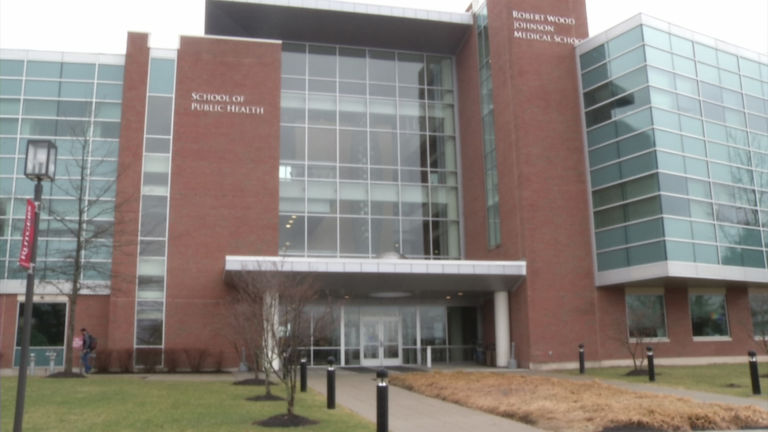
The planned merger has concerned some Newark residents who are worried Newark and University Hospital would be abandoned if the merger goes ahead. These concerns have largely dissipated following community engagement on behalf of the university, Strom said.
“There’s no abandonment of Newark,” he said. “Quite the opposite. There’s investment in both places.”
Jennifer Higgins, president of the American Federation of Teachers New Jersey, said labor must be involved in the process throughout, beginning with pre-merger discussions. The merger of Kean University and New Jersey City University is off to a good start in terms of labor involvement and should be replicated, Higgins told the Senate committee.
“Experience has taught us that not involving labor in pre-merger discussions compounds the challenges faced when trying to integrate two institutions in the immediate and well into the future,” she said.
This story is made possible in part by the Corporation for Public Broadcasting, a private corporation funded by the American people.