
 Credit: (AP Photo/Seth Wenig)
Voting in New Jersey’s high-stakes gubernatorial election is about to begin.
Saturday is the deadline for county clerks to send out the first mail-in ballots for the Nov. 4 election to chose the next governor and determine control of the Assembly.
Some voters may have gotten a ballot already. In some counties, clerks have mailed ballots early to voters who signed up to receive a mail-in ballot automatically for every election. Clerks are required to mail out a ballot to those voters and to anyone else who requests one.

National Democratic and Republican groups have pledged to spend millions of dollars to try to win the governor’s seat. The elections in New Jersey and in Virginia, the only other state with major off-year elections, are the first after Republicans won the White House and both houses of Congress. Because of that, both are seen as a bellwether on the electorate and on the second Trump administration.
Mail-in balloting has become a popular method of voting in New Jersey, more so among Democrats than Republicans. County clerks sent out close to 700,000 ballots for the primary, almost three quarters to Democrats and virtually all of the rest to Republican registered voters. All but a few thousand of those ballots went to people who are getting mailed a ballot for every election.
More than half of the ballots were mailed back to election officials, and close to 78% of those who mailed in a ballot were Democrats.
Republicans have been more skeptical of using mail-in ballots, especially since Donald Trump’s insistence without proof that it encourages fraud. A number of analyses have found voter fraud to be extremely rare. Last year, Trump did encourage his supporters to use whatever method they prefer, including mail-in balloting, to vote for him. Since taking office, Trump has vowed to end voting by mail, although experts say he does not have the power to do this by executive order and he cannot dictate how a state conducts a non-federal election, such as this year’s.
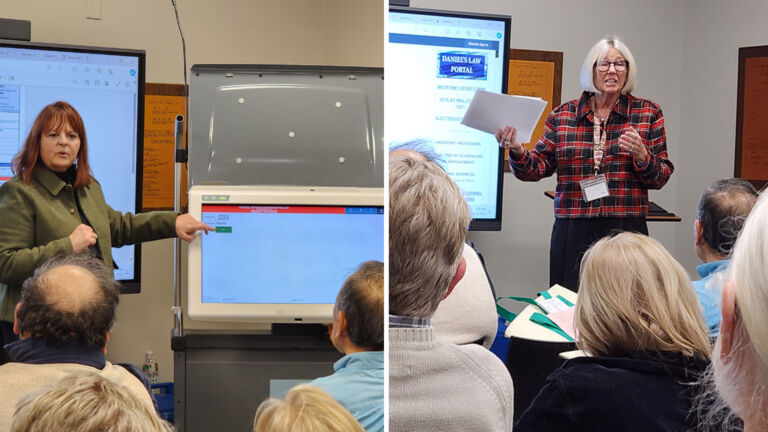
The start of voting comes as the campaign hits a next level, with the first debate scheduled for Sunday night. People can return a ballot as soon as they get it, perhaps with their impressions of the candidates from that debate fresh in their minds.
Voting by mail has benefits, including the convenience of filling out a ballot from home and not having to worry about getting to the polls. Voting by mail eliminates the need to wait on line or having something come up that prevents a voter from going to the polls. Rain on Election Day can depress turnout.
There are also some potential problems for mail-in voters, such as a ballot getting lost in the mail or being rejected for one of more than a dozen reasons.
Close to 8,000 ballots cast in this year’s primary were rejected, about 2% of all mail-in ballots returned. The most common reason for a rejection was a ballot arriving past the deadline. The next most common was a person forgetting to sign the certificate that accompanies the ballot or the voter’s signature not matching the one on file. To try to compensate for some of these issues, state law requires county election officials to alert a person whose ballot is in danger of being rejected so that a problem can be corrected and each county has a number of secure drop boxes within its borders where voters can drop off their ballots safely.
Anyone who does not automatically receive a mail-in ballot can request one from the county clerk’s office. Links to the mail-in ballot applications for every county are available from the state’s voter information portal.
While popular, mail-in balloting is still only used by a portion of the electorate – 28% of the 1.3 million votes cast in this year’s primary. Most voters go to the polls on Election Day. Polls on Nov. 4 are open in every municipality from 6 a.m. to 8 p.m. Six of every 10 people who voted in the primary did so on primary day. Another 11%, or close to 150,000, voted early in-person. New Jerseyans were slow to embrace the process, begun here in 2021, of showing up at one of the few polling sites open in their county a few days before Election Day until last fall, when 1.2 million voted early in-person throughout the state. This fall, at least three polling sites will be open daily in each county between Oct. 25 and Nov. 2 for machine voting.
In addition to the governor’s race, the entire state Assembly, one state Senate opening and a host of county, local and school board races are on this year’s ballot. NJ Spotlight News’ elections page has information about how to vote, how to register, all our election coverage and more, including our voter guide, which has information about the governor’s race and all 40 Assembly district races.
