Credit: (AP Photo/Jose Luis Magana)
Hundreds of New Jerseyans who migrated to this country as children and now have legal residency status will lose their health insurance coverage this month under a policy change pushed by the Trump administration.
The regulatory change approved in June will block migrants protected under the Deferred Action for Childhood Arrivals, or DACA program, from being able to purchase health plans or access coverage they have already bought through the Affordable Care Act marketplace. The rule goes into effect on Aug. 25.
In New Jersey, that will immediately impact roughly 500 DACA recipients — also known as “Dreamers” — who bought health insurance on the state’s ACA marketplace, Get Covered NJ, according to the state Department of Banking and Insurance.
It also eliminates this health care coverage option for close to 16,000 other Dreamers living in New Jersey, based on data in the 2020 annual report from the New Jersey Office of New Americans, the most recent available.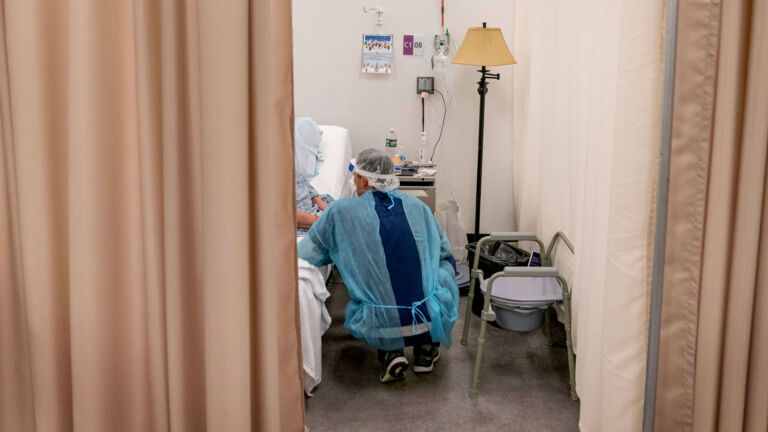
State Attorney General Matt Platkin leads a group of 14 states in challenging the rule’s impact on DACA recipients, one of the first of many lawsuits he filed or joined that push back on policy moves by the Trump administration. His office said that complaint is still pending.
“Dreamers are a critical part of the New Jersey community, and America is the only country they know. Undermining Dreamers’ access to healthcare not only hurts them and their American children, but it harms states like New Jersey, too,” Platkin said in a press release announcing the lawsuit.
One among many changes to federal policy
While the number of New Jersey residents immediately impacted by this change is relatively small, eliminating coverage for Dreamers is one of multiple federal policy changes that experts say will increase the ranks of the uninsured here and nationwide, especially low-income people and people of color.
They cite the Trump administration’s reductions in aid to hospitals, nursing homes and other health care providers, and its defunding of long-standing social support programs that provide people with food, education, child care and other necessities. Many of these cuts were included in the massive tax-cut and spending reduction bill President Donald Trump signed on July 4.
Overall, the Trump administration’s planned changes to Medicaid, the state and federally funded insurance program for low-income Americans, are expected to cost New Jersey as much as $3.3 billion annually in hospital aid in the years to come. According to the state Department of Human Services, those changes could also force as many as 350,000 state residents from the plan. Operated here as NJ Family Care, the program now covers 1.85 million New Jersey residents.
Other aspects of the new law will make it harder for people who exceed income limits for Medicaid but don’t get insurance through work to purchase policies on the Get Covered marketplace, according to the state Department of Banking and Insurance. The department also said it will double the premium cost for most of the 513,000 people currently insured through these Obamacare plans. Some could see the cost of their plans rise far more, according to a department analysis that found a Bergen County couple in their 60s could see premiums soar nearly 400% next year, an extra $20,000.
Target of Medicaid cuts?
Immigrants are among the first to be targeted as Medicaid shrinks, including certain categories of legal migrants. As many as 25,000 people in New Jersey — including refugees and victims of either trafficking or domestic violence — will lose access to NJ Family Care, the state’s Medicaid program, by October 2026, according to state Medicaid officials.
New Jersey is home to more than 2 million immigrants, according to the Office of New Americans, and more than three-quarters of them have some form of legal status. This includes roughly 52,000 people eligible for DACA, a program enacted under President Barack Obama that granted legal status to residents who were brought here as children by parents who crossed national borders before a certain date and without the proper paperwork.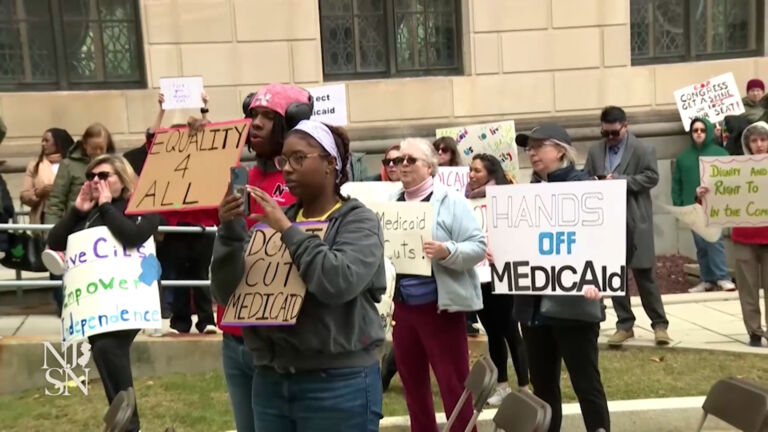
Some 16,350 of these potential Dreamers had enrolled for DACA protection, as of its 2020 report.
“These are our friends, neighbors and colleagues. They are New Jerseyans who contribute to our state culturally and economically, and should have the right like every other New Jerseyan to purchase health coverage through the ACA,” said state Human Services Commissioner Sarah Adelman in the press release announcing Platkin’s lawsuit.
Nonprofit organizations that work with the state to help people enroll in Medicaid or Get Covered NJ said interest in these programs has grown in recent years as outreach has expanded. Now people are confused about what the changes mean for their coverage, said Laura Waddell, health care director for New Jersey Citizen Action, one of the groups that partners with the state on these programs.
These groups are starting to get the word out about the new policies, but the news for Dreamers is particularly harsh, Waddell told NJ Spotlight News. DACA recipients only gained access to the health coverage last October, she said.
“They’re not even letting them go to the end of the year,” Waddell said. “They don’t even get 12 months of coverage.”