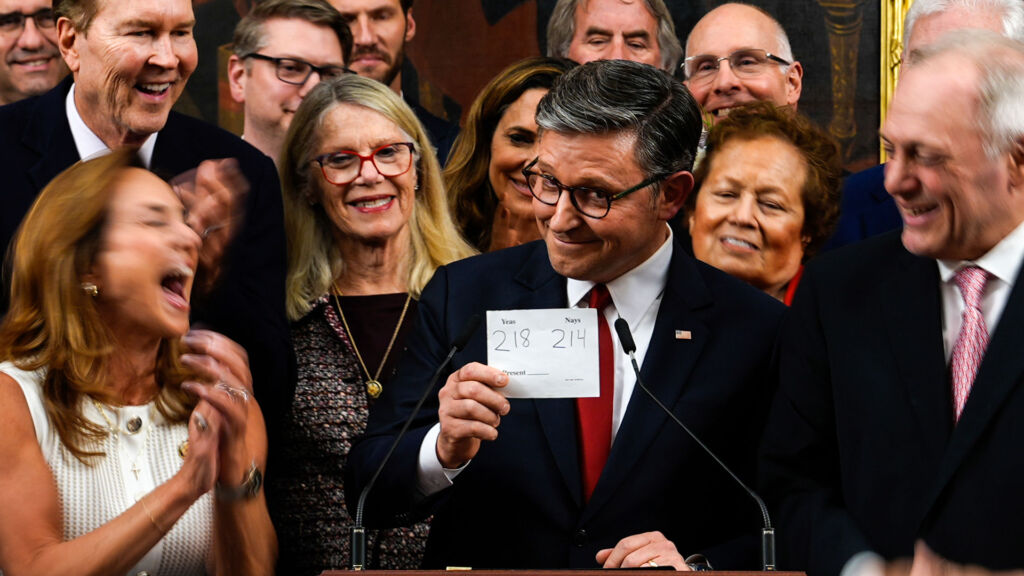
WASHINGTON — Republicans touted tax cuts in the sweeping legislation they were assembling this spring and summer on Capitol Hill, often invoking tipped workers, seniors and parents with young children.
“You got hard-working Americans like our waiters and our bellhops and our hairstylists, they’re going to keep 100% of their tips and overtime pay,” proclaimed House Speaker Mike Johnson, the Louisiana Republican who sets the agenda in the House of Representatives, on Thursday, moments before the bill passed.
“That is money they earned. It does not belong to the government,” he said. “It belongs to them, and they deserve to keep it.”
The final version of the bill contains many of those core elements, such as deductions for tips and overtime work, plus increases in the standard tax deduction and an additional deduction for Americans over 65.
But a look at the fine print in the bill shows many of those new tax breaks come with limits that haven’t been advertised so much.
For instance, the much-touted expansion of the property-tax deduction comes with time limits. So do changes that lower taxes on tips and overtime.
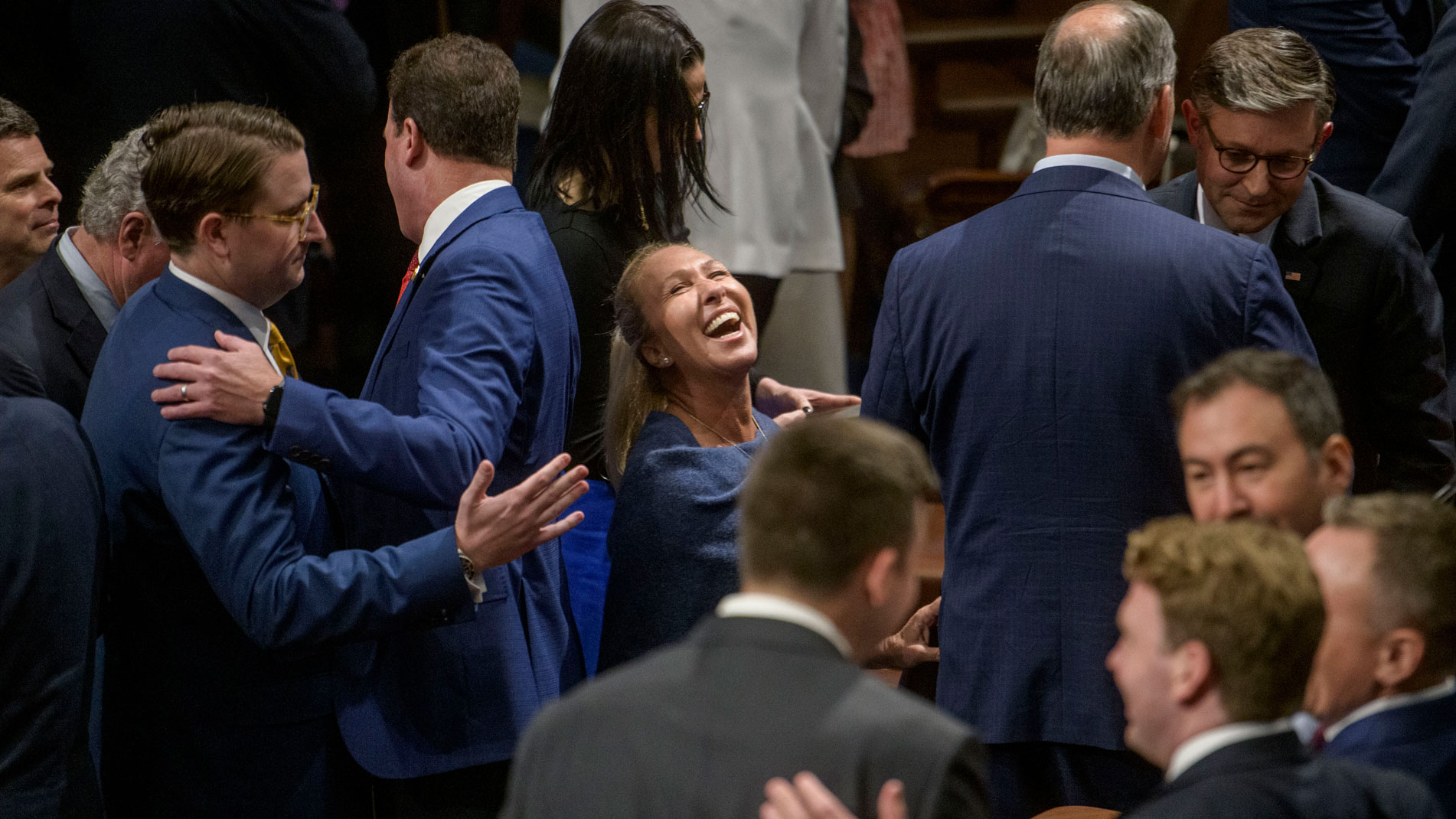 Credit: (AP Photo/Rod Lamkey, Jr.)
Key tax cuts
President Donald Trump is expected to sign the bill into law Friday, after the House voted 218-214 on Thursday. Every New Jersey Republican member voted for it, and every Democrat from the state voted no.
Trump told reporters Thursday he would sign the legislation Friday at 5 p.m. EST as military planes, including B-2 bombers, fly overhead. “We’ll be signing with those beautiful planes flying right over our heads,” he said.
‘We secured the full SALT deduction for every middle-class family in New Jersey.’ — Rep. Tom Kean Jr. (R-7th)
A central component of the legislation is the extension of tax cuts first enacted under Trump in 2017.
To partially pay for these tax cuts, the bill phases out clean-energy tax incentives, slashes $1 trillion from Medicaid funding and cuts an estimated $285 billion from the Supplemental Nutrition Assistance Program, or SNAP, previously known as “food stamps.”
 Credit: (AP Photos/Mariam Zuhaib; Manuel Balce Ceneta; Francisco Seco)
Medicaid cuts
The legislation will remove an estimated 11.8 million people from federal health insurance through Medicaid, according to the nonpartisan Congressional Budget Office, which advises Congress on economic matters.
But after he voted for passage Thursday, U.S. Rep. Tom Kean Jr. (R-7th) focused on the tax side and the legislation’s expansion of the property-tax deduction from $10,000 to $40,000.
“We secured the full SALT deduction for every middle-class family in New Jersey,” Kean said.
The Committee for a Responsible Federal Budget, a nonpartisan group, estimated it will cost $4.1 trillion over the next decade.
Yet while the measure does raise the deduction cap to $40,000, it does so from this year only through 2029. Democrats from relatively high-tax states like New Jersey maintain Congress should have let the existing limit expire at the end of the calendar year, eliminating the cap entirely.
In a bullet-pointed list his office released, Rep. Jeff Van Drew (R-2nd) also lauded a series of the legislation’s tax provisions, including language to end federal taxes on tips and overtime work, as well as a new deduction for seniors.
But the bill’s limits on federal tax on tips — a popular campaign promise from Trump — comes with strings.
More from the Capitol on the passage of the legislation
Strings attached
Tipped workers will be able to claim a deduction, but that deduction is capped at $25,000 and decreases for individuals who make more than $150,000 a year and couples that make more than $300,000 annually.
It also expires at the end of 2028. Same with the new provision that allows workers to deduct tax on overtime. But that too is capped, at $12,500, and will expire at the end of 2028.
It’s a similar story for the new deduction for those 65 and older, who, if they earn less than $75,000 a year, will get a new $6,000 deduction. That, too, starts this year and expires in 2028.
The bill does raise the federal child tax credit — money paid to parents raising dependents — from $2,000 to $2,200 without an end date.
Overall, the legislation will cost an estimated $3.3 trillion over the next decade, according to the Congressional Budget Office.
Other budget watchdog groups estimate it will cost more. The Committee for a Responsible Federal Budget, a nonpartisan group, estimated it will cost $4.1 trillion over the next decade. The conservative Cato Institute placed the total cost at $6 trillion, depending on how Congress manages federal spending and the “fiscal impact of mass deportations,” as Dominik Lett, a Cato analyst, put it.
After the House vote, Johnson and dozens of Republican staffers and lawmakers, including U.S. Rep. Chris Smith of New Jersey (R-4th), gathered for what’s known as a formal engrossment ceremony to sign the bill before it’s sent to Trump.