Credit: (Bobby Brier/NJ Spotlight News)
Community-based violence intervention programs are a key component in reducing and preventing gun violence across the state, advocates, academics and state officials say.
No statewide data points to a direct correlation between a reduction in homicide rates and the work of these programs. But recent data from the state shows the programs have contributed significantly to a reduction in the number of people who were shot across New Jersey.
In 2023, 924 people were shot in the state, a 13% reduction compared to 2022, according to a recent report from the attorney general’s office. Last year, 788 people were shot, further reducing the number of shooting victims in New Jersey, the report says.
Fatal shootings are down 40% in New Jersey over the last four years, and in the past two years the state has seen the total number of shootings “reach an all-time low,” Attorney General Matthew Platkin said in a statement to NJ Spotlight News.
“These substantial decreases can be attributed to a multipronged approach that builds upon the courageous and dedicated work of our law enforcement officers to also include over $120 million of investments in community violence intervention — programming that puts trained professionals at critical points of intervention like the hospital bedside and on the streets, preventing further violence and victimization,” Platkin said.
Layoffs, program cuts
But community-based violence intervention programs in New Jersey and across the country have had to lay off employees and in some cases end services altogether after the U.S. Department of Justice abruptly canceled hundreds of ongoing grants in April. That work is being reduced or shuttered altogether as the region prepares for excessive heat. Crime increases and shootings occur more often when temperatures rise outside, academics and researchers have noted.
Gov. Phil Murphy’s budget proposal for the fiscal year that begins July 1 includes $25.5 million in revenues from marijuana sales to support hospital and community-based violence intervention programs.
By taking away funding from these organizations and leading to their collapse, the federal government is also now taking away the little bit of trust these organizations may have helped to build with other institutional structures or organizations, including local hospitals, Jason Williams, a professor of justice studies at Montclair State University, said.
“This is going to have a colossal effect and all kinds of collateral consequences that I don’t even think people are really seeing or talking about right now,” said Williams.
On Tuesday, Platkin, along with 21 attorneys general and the state of Pennsylvania, filed a multistate lawsuit challenging the Trump administration’s “illegal attempts” to end federal funding to states for a wide variety of programs, including those combating violent crime, according to a press release from the New Jersey attorney general’s office.
Community violence intervention and prevention services provide peer support, counseling, mentorship and conflict mediation. The goal is to improve people’s lives in neighborhoods where violence is common. The programs promote positive behavioral change and reduce the likelihood that people who are victims of community violence will commit or promote violence themselves.
 Credit: (Bobby Brier/NJ Spotlight News)
‘So important’ during summer
And the programs work, say the experts who study them and the people whose lives have been changed by them. In a recent interview with NJ Spotlight News, Racquel Romans-Henry of Salvation and Social Justice said violence disruption teams are “so important” during summer because the programs offer outlets and resources to young people.
“It gives us access to the communities in a way that we may not have access to in other parts of the year when people tend to be indoors. And quite frankly, the need is incredibly great,” said Romans-Henry, the director of policy for the Trenton-based nonprofit.
Salvation and Social Justice runs the Trenton Restorative Street Team, which provides violence prevention and intervention programming through education and advocacy, among other offerings.
Providers of hospital-based violence intervention programs worked with over 2,500 people affected by violence in 2024, according to the attorney general’s office.
“More than ever, I think the support of these teams is crucial,” said Romans-Henry. “One of the things we continue to advocate for is not just increased state support, but increased local and county support for these crisis response teams and using cannabis dollars to support those teams as well,” Romans-Henry said.
Gov. Phil Murphy’s budget proposal for the fiscal year that begins July 1 includes $25.5 million in revenues from marijuana sales to support hospital and community-based violence intervention programs, according to a state budget document.
Community trust
Providers of community-based violence intervention programs across the state responded to a total of 688 violent incidents in 2024, according to Tara Oliver, a spokesperson for the attorney general’s office.
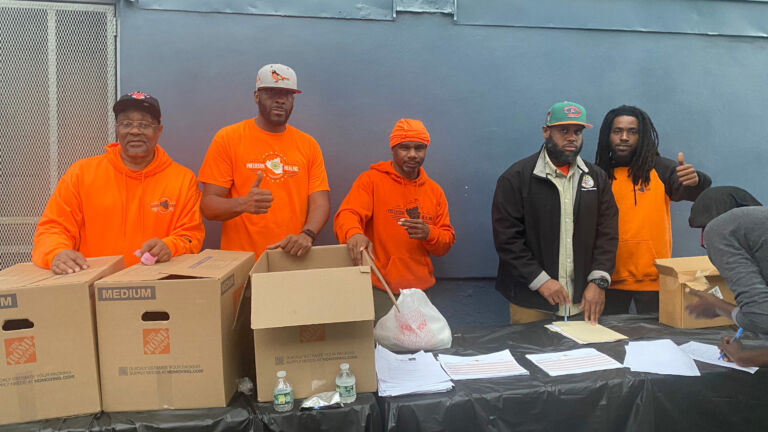
Other programs working to prevent and reduce violence this summer include the Paterson Healing Collective, a hospital-based violence intervention program in Passaic County. The healing collective pairs medical staff at St. Joseph’s University Medical Center in Paterson with community members who have built trusting relationships with their peers to mentor victims of gun violence — many of whom are young men of color — and limit retaliation among them.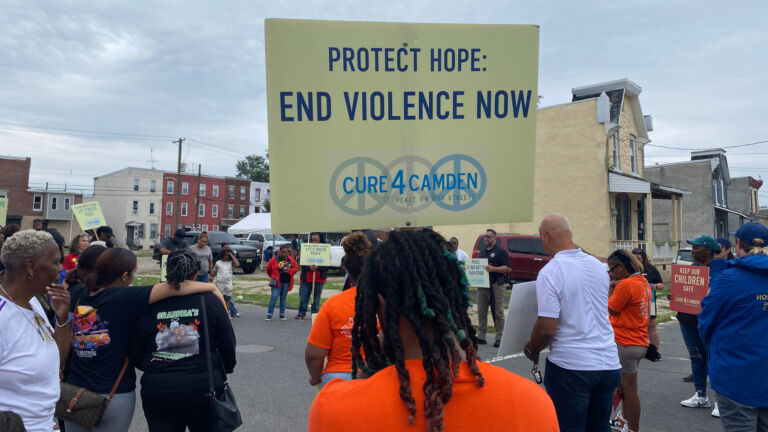
Earlier this month, the Paterson Healing Collective hosted its fourth annual Paterson Healing Fest concert in the city. The event, which included live music and free food, took place on “Wear Orange” weekend, a national effort spearheaded by the Everytown for Gun Safety Support Fund “to honor survivors of gun violence and demand a future free from gun violence.” Around 500 people attended, according to Liza Chowdhury, executive director of the Paterson Healing Collective and Reimagining Justice Inc.
‘My fear is that now in the summer, when there’s a little bit more of a lag time, we might start to see the implications of these funding cuts.’ — Daniel Semenza, New Jersey Gun Violence Research Center
The day after the event, June 8, the healing collective began its second annual “Summer Peace Challenge,” according to Casey Melvin, the director of both field operations and the crisis response team for the collective. The challenge encourages every neighborhood in the city, especially those considered to be high-crime areas, to take part in a 90-day contest to lower the number of gun violence incidents and to push for a summer free from shootings and homicides.
The top three neighborhoods that have no gun violence or have the least amount of gun violence by the end of the 90 days will win a block party in their section of the city, according to Melvin.
“The community believes in us and we’re a trusted agency,” Melvin said in a recent interview with NJ Spotlight News. “The more support we receive, the better we’ll do because our end goal is to end gun violence as the slogan for National Wear Orange Day states.”
‘Familiar faces’
The Paterson Healing Collective is “so effective” because staff members are from the community and are “familiar faces” who are going to a hospital bedside after a person has been shot, according to Chowdhury.
Rahshon Dixon is one of those staff members that visits gunshot victims at St. Joseph’s University Medical Center. Dixon said in a recent interview that gunshot victims often face depression after surviving the experience.
“We leave a card, we’ll take their information and give them our information,” Dixon, a safety planning coordinator at the healing collective, said of the hospital visits. The healing collective offers one-on-one and group mental health counseling to gunshot victims, along with many other services, Dixon said.
 Credit: (Bobby Brier/NJ Spotlight News)
Providers of hospital-based violence intervention programs worked with over 2,500 people affected by violence in 2024, according to the attorney general’s office.
Violent crime rates and homicide rates have also been down nationally and in New Jersey over the last couple of years due in part to “historic investments” made by the Biden administration and states putting money into violence prevention, according to Daniel Semenza, an associate professor at Rutgers University.
“Community violence intervention and the adjacent hospital-based violence intervention has been a big part of that investment over the last couple of years,” said Semenza, who also serves as the director of research at the New Jersey Gun Violence Research Center.
Semenza noted that violence has decreased at some of the fastest rates nationally since homicide data started being recorded.
However, he said his biggest concern is the reversal of these positive trends due to the federal funding cuts that happened in April.
“The news that is currently still coming out — the quarterly news that you might see from something like the Real-Time Crime Index that is tracking homicide rates on a monthly, quarterly basis — it’s still good news,” said Semenza. “It’s still showing drops in violence throughout the state and throughout the country, but there’s always going to be a lag.”
“My fear is that now in the summer, when there’s a little bit more of a lag time, we might start to see the implications of these funding cuts,” Semenza said.