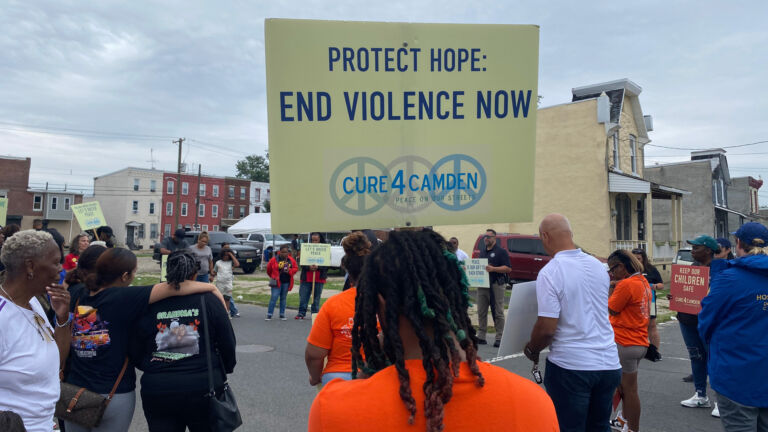
Credit: (AP Photo/Jose Luis Magana, File)
Community violence prevention organizations across the state may soon be able to bill Medicaid for the services they provide under a bill that recently won approval from an Assembly committee.
Without Medicaid coverage, community-led violence prevention programs are struggling to secure sufficient funding, advocates say, which can lead to interruptions in services and leave communities vulnerable to gun violence.
“By securing these dedicated funding streams through Medicaid, we can really help support these programs and maintain their operations and expand their reach,” said Racquel Romans-Henry, the policy director at Salvation and Social Justice. “And that ultimately helps to lead and support safer and healthier communities.”
The push by lawmakers to move the bill comes as over 200 children have been killed by guns across the country so far this year, according to the Gun Violence Archive. Additionally, over 27,700 people nationwide have been injured by gun violence as of early November, according to the archive.
In June, U.S. Surgeon General Dr. Vivek Murthy declared gun violence to be a public health crisis nationwide. Since 2020, gun-related injury has been the leading cause of death for children and adolescents across the country, surpassing car crashes, cancer, drug overdoses and poisonings, according to studies cited in Murthy’s advisory. In 2022, Black children and adolescents accounted for about half of all gun-related deaths among children and adolescents, despite making up only 14% of the child and adolescent population in the United States.
Improvements in NJ
In New Jersey, a year-end report from the State Police said there were 924 shootings in 2023, the first time the total fell under 1,000 since the state began tracking these numbers in 2009. The latest numbers represented a 13% drop in shootings from 2022, according to the governor’s office. State leaders in early January touted New Jersey’s tougher gun laws and violence intervention programs for the declines.
The bill, if signed into law, would require Medicaid coverage for community violence prevention services for a person who has received medical treatment for an injury sustained due to community violence, including gun violence, and has been referred by a health care provider to receive services from a violence prevention professional.
Community violence prevention services are trauma-informed programs provided by “certified violence prevention professionals.” These services can include peer support, counseling, mentorship and conflict mediation aimed at improving health outcomes, promoting positive behavioral change and reducing the likelihood that people who are victims of community violence will commit or promote violence themselves, according to the bill. A “certified violence prevention professional” has completed an accredited training and certification program in violence prevention that has been approved by the state Department of Health.
‘Being able to leverage Medicaid not necessarily to fully fund, but to be able to use to supplement funding, would be huge for a lot of the programs that are doing this work around the state.’ — William Simpson, Equal Justice USA
“What this allows us to do now is that there’s some kind of legal guideline and policy in place for Medicaid to reimburse us for the work that we do that is public health-related,” said Dr. Liza Chowdhury, the executive director of Reimagining Justice Inc. and the Paterson Healing Collective.
The Healing Collective is a hospital-based violence intervention program focused on addressing the impact of violence in Passaic County. The program pairs medical staff at St. Joseph’s University Medical Center in Paterson with community members who have built trusting relationships with their peers to mentor victims of gun violence — many of whom are young men of color — and limit retaliation.
Not enough funding
People who work on community violence prevention are fighting “tooth and nail” daily and putting their lives on the line, but still don’t have the resources to be able to sustain their staffs, said William Simpson, the director of community safety and justice at Equal Justice USA.
“What’s important here is we acknowledge that the work that’s being done is a real complement to the public safety strategy that’s being employed around the state,” said Simpson. “Being able to leverage Medicaid not necessarily to fully fund, but to be able to use to supplement funding, would be huge for a lot of the programs that are doing this work around the state.”
In September, the state announced that $14.5 million will be made available through a “competitive grant process” to support community-based violence intervention programs, according to a news release from the attorney general’s office. The state’s total financial commitment, as of late September, to community violence intervention, including hospital-based violence intervention programs and trauma recovery centers, is more than $115 million, according to the news release.
The push to provide more sustainable funding for these organizations is not unique to New Jersey.
More than 800 people from the violence intervention community across the country joined a recent White House briefing to learn how states can access federal dollars provided by Medicaid for violence prevention services. Medicaid reimbursement has been available to states since 2021 for such services. However, only eight states provide reimbursement for community violence prevention strategies.
Under the bill in the Legislature, the Department of Health would be required to approve at least one accredited training and certification program for violence prevention professionals that would include at least 35 hours of initial training. This would address the effects of trauma and violence on people, conflict mediation and retaliation prevention strategies, and case management and advocacy practices, according to the bill.
“In New Jersey already we’ve made some investments around community-based violence intervention work and this bill is just really a continuum of that commitment to supporting these programs and ensuring their success,” said Romans-Henry of Salvation and Social Justice.
The bill was approved by the Assembly Health Committee and referred to the Assembly Aging and Human Services Committee.