Credit: (AP Photo/Jacquelyn Martin)
WASHINGTON — President Donald Trump, who campaigned on the idea of helping average citizens financially, is ready to end the rule limiting most overdraft bank fees to $5.
Republican majorities in Congress voted to do away with a rule projected to save the public billions of dollars every year.
The Consumer Financial Protection Bureau, a financial watchdog agency created after the 2008 financial crash, finished the rule in December. Fiercely opposed by the banking lobby, including challenges in federal courts, the proposal was scheduled to take effect in October. The agency estimated it would save the public $5 billion a year and found average overdraft fees are $35 per transaction.
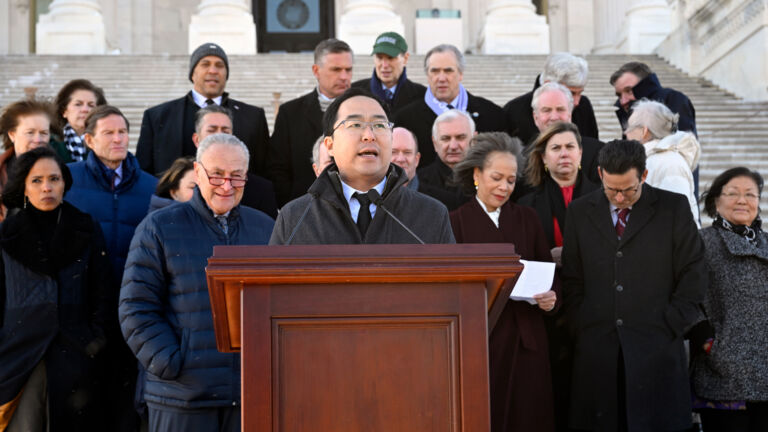
New Jersey Sens. Cory Booker and Andy Kim, both Democrats, voted to retain the rule.
During a House vote last week, almost all Republicans — including New Jersey Reps. Jeff Van Drew, Chris Smith and Tom Kean Jr. — voted to end the rule while every New Jersey Democrat except Reps. Josh Gottheimer and Donald Norcross voted to keep it. Neither Gottheimer nor Norcross voted.
Gottheimer, who sits on the House committee that regulates banking and is a significant recipient of campaign donations from Wall Street, did not vote though he was present at the Capitol and voted on other bills the House considered on the same day.
Gottheimer has received $40,000 in campaign donations from the American Bankers Association since the 2018 election cycle, according to OpenSecrets, a nonpartisan group that tracks money in U.S. politics.
Norcross was away from Washington recovering from an emergency medical issue.
The resolution is now cleared for Trump to sign it into law and end the CFPB rule. It would have applied to banks and credit unions with $10 billion or more in assets. Republicans in Congress have used a 1996 law called the Congressional Review Act, which lets lawmakers avoid the 60-vote requirement in the Senate — a demand of the filibuster — and nullify regulations federal agencies have recently completed. This Congress has used this law to end several policies from the Biden administration, including a climate program and a requirement for oil and gas companies to file archeological reports.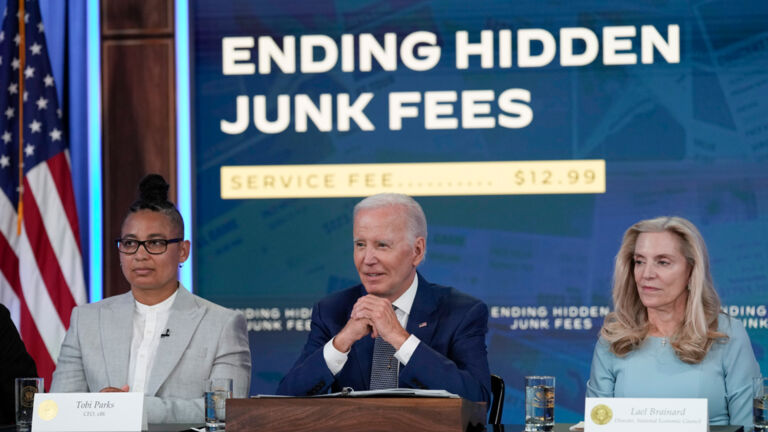
Banking industry officials and Republicans argued the rule would limit the options of low-income in need of money during a financial emergency.
“Congress has acted decisively to right that wrong and ensure America’s banks can continue offering this important, optional service consumers rely upon to meet their short-term financial needs,” Rob Nichols, president and CEO of the American Bankers Association, said in a statement after the House vote. “We appreciate the administration’s support and look forward to President Trump quickly signing this resolution into law.”
Kenneth Burt, chief financial officer Visions Federal Credit Union, which has branches in New Jersey, New York and Pennsylvania, criticized the proposal in a letter to the agency in March 2024.
“Overdraft protection is important to our members living paycheck to paycheck, for whom a small overdraft fee can prevent a cascade of financial hardships, such as utility shutoffs, eviction, or the inability to purchase essential goods,” Burt wrote the head of the agency.
Members of the New Jersey Bankers Association met with CFPB officials, according to a memo of the meeting the agency issued last year. They also opposed the rule.
One banker, Joseph Rehm of Century Savings Bank, “expressed concern about the possible unintended consequences” of the proposal. “In particular, he noted that the costs of new regulation might cause financial institutions to consider passing along such costs to customers through minimum balance requirements, monthly fees, or by other means,” the memo said.
Research from the New York Federal Reserve, issued in 2023, found relaxing overdraft fees led to banks raising overdraft fees while also “leading more low-income households to open accounts.”
Some banks, like Capital One, Citibank and Ally, no longer have overdraft fees and others have lowered their fees in recent years.
“They are showing, to their credit, that it can be done and not somehow mess up their business model,” Booker said about banks that have eliminated such fees.
During floor debate, Booker said “the customers who are being charged overdraft fees are overwhelmingly folks who are low-income, who work really hard and don’t get that much pay, and a $20 overdraft fee just further pushes them into a financial trap, into this cycle downward of financial instability that is hard to pull out of.”
Last year, the CFPB ordered Navy Federal Credit Union to refund more than $80 million in refunds to customers after it was found to have charged “illegal” overdraft fees even when their account showed they had enough money to cover a withdrawal or purchase.
In 2022, the agency ordered Wells Fargo and Regions Bank to pay $205 million and $141 million, respectively, due to illegal overdraft fees. And in 2023, the CFPB issued a $5 million fine against Atlantic Union, a regional bank in Virginia, that had been illegally charging overdraft fees.
— Editor’s note: This story has been updated to clarify that neither Reps. Josh Gottheimer nor Donald Norcross voted on ending the overdraft rule.