Credit: (Daniel Kirsch from Pixabay; Victoria from Pixabay)
 From batting cages and driving ranges to bowling alleys and skating rinks, it could soon cost more to use a wide range of “participatory sports” facilities in New Jersey.
If Gov. Phil Murphy has his way, New Jersey’s 6.625% sales tax will expand to cover a number of services and transactions now tax free, drawing revenue needed to support a record-high proposed annual budget.
Murphy’s overall sales tax proposal, which needs approval from already skeptical legislators, would generate nearly $280 million annually in new revenue, according to estimates drafted by the Department of the Treasury.
To raise those funds, New Jersey would begin taxing things that include digital services, interior design and vehicle trade-ins, according to budget documents.
Baseball, basketball, billiards, bowling
And also among the items that would become newly subject to the sales tax is admission to a long list of what the administration has labeled “participatory sports” in budget documents.
Some examples, according to a list drafted by the nonpartisan Office of Legislative Services, would be use of baseball batting cages; basketball courts; billiard parlors (pool halls); bowling alleys; bungee jumping; fishing piers; go-cart rides/speedways; golf courses (greens fees only) and driving ranges. Other examples include health and fitness club guest and class fees; laser tag; mini golf; parachute jumping; paintball; skating rinks; skeet shooting ranges; skiing facilities (lift tickets); speedways; swimming pools; and tennis courts, according to the OLS list, which was not widely distributed prior to recent legislative budget hearings. During their recent testimony before lawmakers, Murphy administration officials added pickleball to the list of facilities whose use would become newly subject to the sales tax under the governor’s proposal. They also explained that under current law a sales tax exemption is in place for admission fees paid to enter such sports facilities in New Jersey, but membership fees for access to or use of sporting facilities, including health or fitness clubs and golf courses, are generally considered taxable. State Treasurer Elizabeth Maher Muoio told lawmakers during the budget hearings that overall revenues are projected to grow during the new fiscal year, but the tax hikes are needed to help narrow the gap between revenues and projected annual spending. That gap measured more than $2 billion at the start of the current fiscal year, she said. The broader list of tax increases put forward by Murphy includes higher levies on alcohol, cigarettes and marijuana, online gambling and online sports betting. Still, at times during the budget hearings, Republican lawmakers have been taking aim at Murphy’s call for numerous tax hikes, which are known as “revenue raisers” in budgeting parlance. And some have been using the phrase “fun tax” as a shorthand reference to the Democratic governor’s proposal to tax participatory sports. At one point, Assemblywoman Aura Dunn (R-Morris) suggested the administration’s revenue raisers could end up including a tax on children attending a weekend birthday party. “The revenue raisers are kids that want to go to the batting cage or . . . participate in good, wholesome fun, like bowling,” Dunn said. Over in the Senate Budget and Appropriations Committee, Sen. Michael Testa (R-Cumberland) said Murphy’s proposal, if enacted, would result in “pretty much taxing almost everything you can have fun on in the state of New Jersey.”Tax target list
A budget gap to fill
Other new taxes
The broader list of tax increases put forward by Murphy includes higher levies on alcohol, cigarettes and marijuana, online gambling and online sports betting.
New taxes on things including warehouse truck traffic and drone sales would also be established, according to budget documents released by the Murphy administration.
Enthusiasm gap
Murphy’s pitch to hike taxes comes during his last year in office since he cannot run for reelection under term limits written into the state Constitution. And he’s asking lawmakers to approve the increased levies just as many of them are gearing up for elections.
In November, control of the 80-member Assembly will be in contention, and Democrats are hoping to retain their wide majority. Meanwhile, the deadline to pass the new state budget is July 1.
While Republicans, currently in the minority in both the Senate and Assembly, have widely panned the participatory sports tax proposal, many Democrats have also sought to distance themselves from the governor’s tax plans in recent weeks.
‘These (tax) changes will ensure we are able to serve the people of New Jersey and fulfill our obligations, while at the same time reducing the structural budget gap.’ — Treasurer Elizabeth Maher Muoio
During the Senate Budget and Appropriations Committee hearing last week, chair Paul Sarlo (D-Bergen) immediately responded after an OLS budget analyst read from the list of participatory sports facilities whose use would become subject to the sales tax under Murphy’s plan.
“I want to make it clear to everybody who’s listening to this, there’s no desire from this Legislature to tax those services,” Sarlo said.
A day later, during an Assembly Budget Committee hearing chair Eliana Pintor Marin alluded to the constitutional role lawmakers play in the state budget process, which includes the right to draft the annual spending bill that becomes the state budget.
A budgetary dilemma
Lawmakers also have the power to reject or modify tax proposals put forward by the governor.
“I’ve been doing this long enough that I’m not going to say everything is off the table, but there’s clearly some that, you know, when you have a family, and the cost of living is what it is, now you’re participating in some of these events for pleasure on the weekend, you know, it just brings it to a whole different level,” Pintor Marin said.
If the Legislature does reject some or all of Murphy’s tax proposals, that would create another fiscal dilemma for lawmakers to solve in the coming months.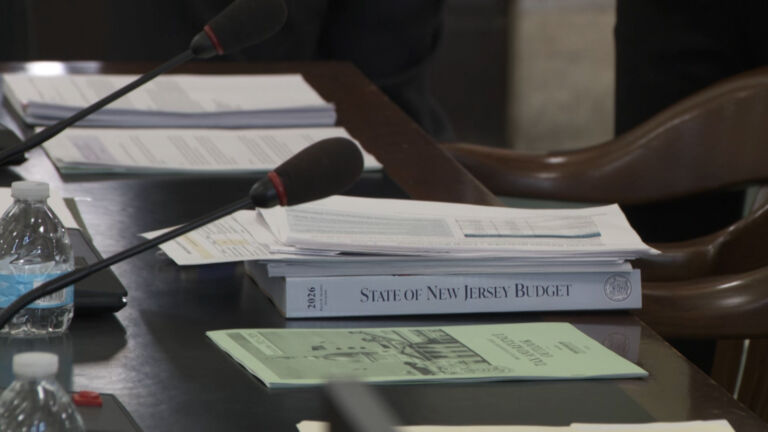
Eliminating all the revenue from the proposed tax hikes would widen the gap between projected annual revenues and expenditures in Murphy’s proposed fiscal year 2026 budget that already totals more than $1 billion, even with the tax hikes.
During her testimony before lawmakers last week, Muoio offered a defense of the governor’s tax proposals in the context of a broader budget plan that calls for increasing direct property-tax relief and fully funding the state’s public school-aid law and public-worker pension obligations.
“These [tax] changes will ensure we are able to serve the people of New Jersey and fulfill our obligations, while at the same time reducing the structural budget gap,” Muoio said.
This story is made possible in part by the Corporation for Public Broadcasting, a private corporation funded by the American people.