
 Credit: (Rich Hundley III/NJ Governors Office)
For the second straight year, Gov. Phil Murphy is asking state lawmakers to approve more than a billion dollars in tax hikes as overall annual state spending creeps closer to $60 billion.
Last year, high-earning corporations were hit hardest by state tax-policy changes, but consumers buying electric vehicles and parents shopping for back-to-school supplies were also among those who were dealt increases.
Meanwhile, commuters were charged higher mass-transit fares last year, and highway tolls and the state gas tax were also increased at the start of 2025.
This time around, Murphy, a second-term Democrat, is seeking to hike taxes and fees on items including alcohol, marijuana, cigarettes, drones, online gambling and online sports betting, according to new budget documents released by the Murphy administration earlier this week.
Meanwhile, Murphy wants lawmakers to expand the list of “services and transactions” that would be subject to the state’s 6.625% sales tax.
Revenue raised by the proposed tax and fee increases would largely go to support the $58 billion annual budget unveiled by Murphy on Tuesday.
Election-year impact?
Murphy’s proposed budget also includes the latest attempts by the governor to enact tax and fee hikes lawmakers have previously rejected. Among them are higher taxes and fees on guns and ammunition and a tax on warehouse truck traffic.
It remains to be seen how many of Murphy’s tax proposals will win favor from the Democratic-controlled Legislature in a year when all 80 seats in the Assembly will be up for grabs in the fall. Many Republicans and some Democrats have already raised concerns about at least some of the proposed tax and fee increases.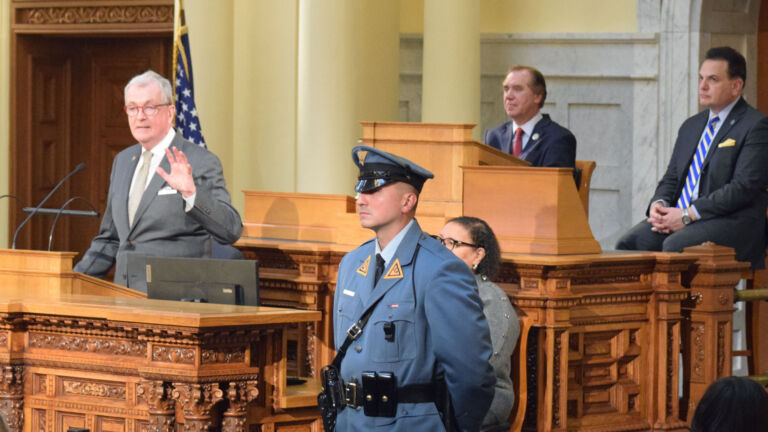
Earlier this year, public polling of New Jersey voters found the economy — defined as jobs, inflation and taxes — was identified as the single most important issue facing the state in 2025.
Lawmakers have until the July 1 start of a new fiscal year to make a final decision on Murphy’s tax-hike proposals. They also have the constitutional authority to accept some, all or none of the governor’s tax proposal as they draft a spending bill for the next fiscal year in the run-up to the July 1 deadline.
While the full details of Murphy’s tax and fee proposals have yet to be released by the administration, the following is a list of the proposed tax and fee increases outlined in the latest budget documents.
Sales tax: While Murphy is seeking to exempt some baby products from the sales tax, including cribs and car seats, his budget proposal calls for making new items subject to the state’s 6.625% rate. According to budget documents, the sales tax would be levied on “participatory sports”; interior design; vehicle trade-ins; digital services; second-hand airplane sales; certain complimentary meals, rooms, and tickets; and horse training. A partial sales tax exemption and $20,000 sales tax cap on the sale of boats or other vessels would also be repealed. The net amount of revenue generated by Murphy’s proposed sales-tax changes is projected to total $270 million during the fiscal year that begins July 1.
Alcoholic beverage tax: If lawmakers accept this Murphy proposal, the state’s alcoholic beverage tax rates would be increased by 10%, across the board. According to the state Division of Taxation, the alcoholic beverage tax is applied to the first sale or delivery of alcohol to retailers in New Jersey and is based on the number of gallons sold or otherwise disposed of in New Jersey. This includes the sales of beer, liquor, still wine, vermouth, sparkling wine, mead and hard apple ciders. Murphy’s budget plan counts on an estimated $18.5 million in revenue coming from this proposed change during the next fiscal year. If enacted, this excise tax increase could be passed onto consumers.
Online gambling and online sports betting taxes: Murphy is proposing to increase the taxes levied on both online gambling and online sports betting, activities that are increasing in popularity in New Jersey. For online gambling, the current state tax rate of 15% would be raised to 25%, and for online sports betting, the current state tax rate of 13% would also be raised to 25%. The two changes are projected to generate an additional $400 million in revenue, spread across the state’s casino revenue fund and the annual budget’s general fund.
Mansion tax: Murphy’s budget counts on the state collecting more revenue by increasing the tax levied on the sale of property over $1 million. Under this proposal, the state “mansion tax” would increase to 2% on the sale of property over $1 million, and go up to 3% on the sale of property over $2 million. Under current tax policy, the state imposes an “additional fee” of 1% on all property sold for more than $1 million to be paid by the buyer, on top of the realty transfer fee of $6.05 per $500 paid by the seller. This proposed tax-policy change is expected to generate $317 million during the fiscal year that begins July 1.
Cigarette, tobacco and vapor taxes: A per-pack tax on cigarettes that currently totals $2.70 would be hiked to a flat $3 under Murphy’s proposed budget. The increase in the per-pack tax rate is projected to generate $41 million in new revenue over the course of the next fiscal year. Murphy’s proposed budget would also hike the state’s liquid nicotine tax rate, from $0.10 per milliliter to $0.30 per milliliter, and container e-liquid tax rate from 10% to 30%, raising an additional projected $10 million over a full fiscal year.
Marijuana and intoxicating hemp product taxes: A state Social Equity Excise Fee, or SEEF, that is currently levied on cannabis sold by a Class 1 license holder would be raised from $2.50 per ounce to $15 per ounce, under Murphy’s budget plan. A new $30 per ounce SEEF would also be levied on the sale of intoxicating hemp products. These changes would generate a projected $70 million in new revenue over the course of the next fiscal year.
Warehouse truck traffic fee: Billed by the Murphy administration as “a way to mitigate the impact of new warehouse development on traffic and road quality,” a new excise fee of $2 would be levied on warehouses throughout New Jersey, “based on the number of truck trips,” according to budget documents. If lawmakers agree to enact this new tax, it would generate an estimated $20 million during the next fiscal year.
Guns and ammunition taxes and fees: Murphy’s proposed budget counts on nearly $8 million in new revenue generated by increases to firearm fees and the establishment of new excise taxes that would be levied on both firearms and ammunition. The full details of this proposal were not immediately released by the Murphy administration, but in past years the governor has unsuccessfully sought to hike many gun-related taxes and fees, such as doubling the cost of an individual’s firearms purchaser card, from $50 to $100, and increasing the cost of a gun retailer’s license, from $50 to $500.
— Colleen O’Dea contributed reporting.

