Credit: (AP Photo/Rod Lamkey Jr.)
Robert F. Kennedy Jr., President Trump’s pick to lead the nation’s sprawling network of health agencies, sees chronic disease at the heart of America’s problems and claims long-term conditions like obesity, diabetes and hypertension are blocking economic growth.
Republicans in Congress largely welcomed Kennedy’s pledge to “make America healthy again,’” while Democrats said he is unfit to lead the U.S. Department of Health and Human Services. On Tuesday a Senate panel voted 14-13 along party lines in favor of Kennedy’s nomination, clearing the way for a full Senate vote on his confirmation.
“Mr. Kennedy is manifestly unqualified for the job he seeks,” Sen. Raphael Warnock (D-GA) warned his colleagues before the committee vote. “And I dare say everybody here knows it.”
Sen. Ron Wyden (D-OR) called Kennedy “a grave threat to the health of the American people.”
 Credit: (AP Photo/Ben Curtis)
A California resident and attorney, Kennedy has built a lucrative career raising concerns about vaccine safety, sometimes spreading misinformation. Wyden and other critics point to his involvement in a measles outbreak in Samoa that left 83 people dead, many of them children. Samoan officials pushed back last week on Kennedy’s efforts to downplay the incident during Senate hearings, according to multiple reports.
‘Existential crisis’
During last week’s hearings Kennedy — once a Democrat who became an independent during his bid for the presidency last year — repeatedly sought to refocus senators’ attention on chronic health conditions, a concern he said crosses party lines. “No issue united us more than chronic health conditions,” Kennedy said. “There’s no such thing as Republican children, Democratic children.”
‘Mr. Kennedy is manifestly unqualified for the job he seeks.’ — Sen. Raphael Warnock (D-GA)
Chronic diseases — defined by the federal Centers for Disease Control and Prevention as conditions that last longer than a year, require ongoing medical attention and impact daily life — include things like cancer, liver disease, depression, high blood pressure and more. Six in 10 Americans have at least one such condition, 4 in 10 suffer from two or more, the agency reports. These conditions are the leading driver of health care costs, requiring $4.5 trillion in spending annually, and are the primary cause of death and disability in this country, it said.
“We need to refocus [on chronic disease] if we are going to save our country,” Kennedy told senators. “This is an existential crisis.”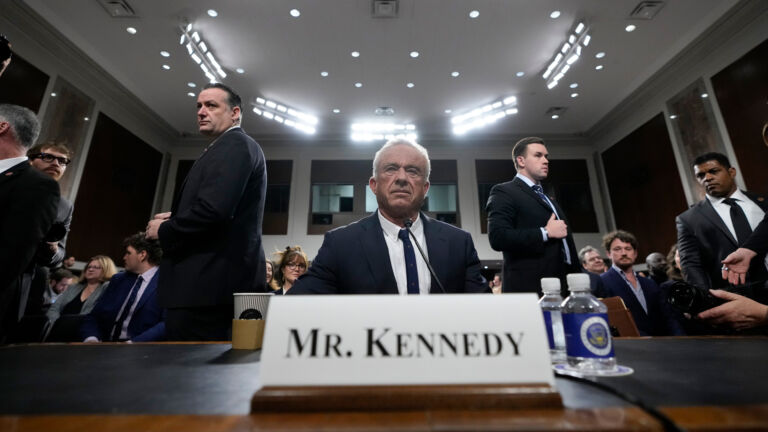
Dr. Nicole Henry-Dindial, a family doctor in Westfield, agreed chronic diseases have a huge impact on health care and its costs. She said health care analysts sometimes talk about “HONDA,” an acronym for hypertension and heart disease, obesity, non-compliance (not following the doctors’ orders, because of cost, lack of transport or other reasons), diabetes and addiction, which she said are some of the main drivers of health care costs.
“If we had to pick one thing, I’d say focus on obesity,” Henry-Dindial told NJ Spotlight News. Heart disease has long been the leading cause of death nationwide and in New Jersey, but she said reducing body weight can have positive benefits on other conditions, like diabetes and blood pressure, which in turn reduces stress on the heart.
People with chronic diseases are also at greater risk when they contract diseases like the flu or COVID-19, something Kennedy highlighted during the confirmation hearings. Of the nearly 37,260 COVID-19-related deaths recorded in New Jersey, 59% of these patients had cardiovascular disease, 37% had diabetes, 18% had lung disease and 10% had cancer, not counting the 39% with “other chronic conditions.” Clearly, many people had more than one chronic disease.
Complicating factors
Chronic diseases are influenced by various factors, Henry-Dindial said, including social determinants of health — things like access to healthy food, safe places to live and walk and options to avoid and reduce stress. She called for increasing the supply of primary care doctors and greater investment in public health.
“If you have food deserts, it’s hard to eat healthy food,” Henry-Dindial said. “If you want to move the needle on these illnesses, you have to get them before they start.”
‘Let the science be science and know that change will take time.’ — Dr. Nicole Henry-Dindial
Henry-Dindial said personal choices do play a role in disease — smoking cigarettes is clearly bad for your health, she stressed — but she cautioned against blaming people for their decisions, something she warns could further inflame a divided country. In his confirmation hearings, Kennedy talked about a desire to restore “accountability” to government programs, suggesting that an individual’s decision to smoke, for example, could impact what health care services they could receive.
Some critics are troubled by this approach. “As far as government support, we don’t take a blame-the-victim approach” in this country, Dr. Eddy Bresnitz, the former New Jersey epidemiologist who served as an adviser to Gov. Phil Murphy’s administration during the COVID-19 pandemic.
Bresnitz and Henry-Dindial agreed that reducing America’s chronic disease burden will take time, likely far more than the four years Trump has in office. They also agreed that focusing additional resources on these concerns should not come at the expense of other health care programs, like infectious disease studies, something Kennedy had suggested.
“Chronic disease requires cooperation and collaboration amongst the different agencies,” Henry-Dindial said. “It’s not going to change overnight.”
Her advice: “Let the science be science and know that change will take time.”