Credit: (AP Photo/Charlie Riedel)
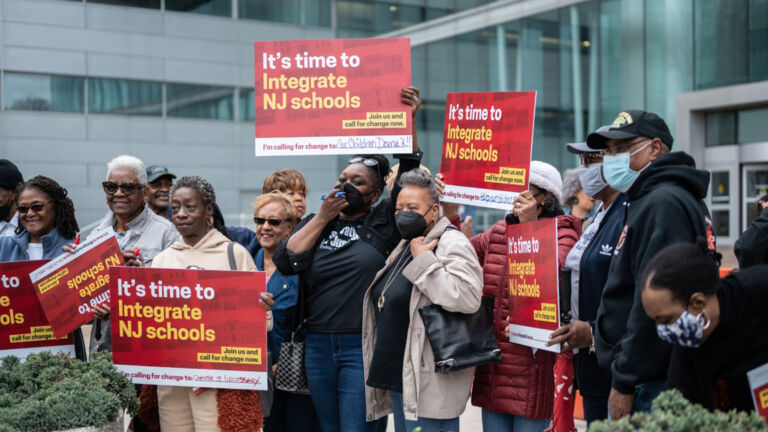
Mediation in a major school segregation lawsuit could soon be ending after more than a year of talks between the state and plaintiffs.
The most recent court filing from the plaintiffs’ lead attorney, Lawrence Lustberg, asked for a one-month extension of the process, noting that it will likely be the last extension request. Previous requests have been for additional three-month periods.
The outcome of mediation could bring about significant changes to New Jersey schools, considered among the most racially segregated in the country. Some potential solutions being widely considered include regionalizing schools and expanding interdistrict and other school choice models.
“We believe this will be our last extension request,” Lustberg wrote in the motion filed on Jan. 10 that brings the new deadline to Feb. 14. If mediation is not concluded by then, Lustberg wrote the parties will likely return the matter to the court.
Lawyers for the Murphy administration and the plaintiffs in Latino Action Network v. New Jersey entered mediated talks to come up with an agreement to address long-standing segregation in New Jersey schools in November 2023.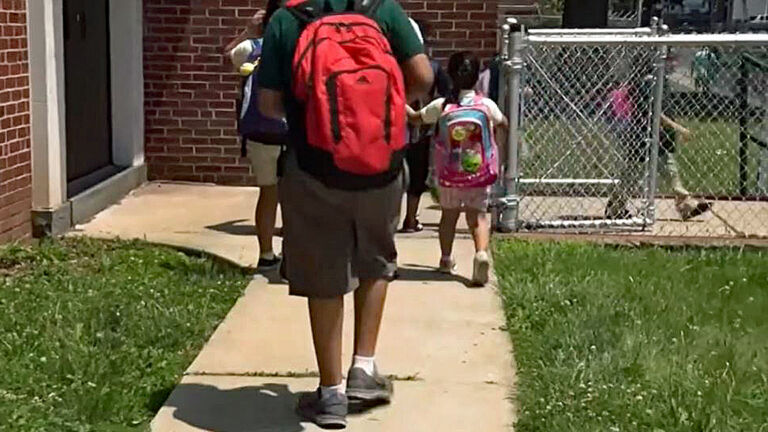
The parties continue to report having “good faith discussions.” According to court filings, they have engaged in 11 mediation sessions with Justice Barry Albin and continue to meet and confer with each other between sessions.
Lustberg wrote that it remains true that mediation may resolve the matter more quickly than litigation, saving the state time and money.
“The parties accordingly wish to continue to attempt, for at least a brief time more, to devote their efforts and resources to this mediation process, rather than to litigation,” the Jan. 10 filing reads.
Complex issues to resolve
Lawyers for both sides previously said they hoped mediation would provide the quickest path to resolving the complex issues concerning school segregation, which can vary by district and community. The case had already lasted five years before entering mediation.
The sweeping lawsuit was initiated in 2018. State Superior Court Judge Robert Lougy ruled in October 2023 that the state has failed to ensure children’s constitutional rights to an education free of racial segregation. The ruling did not say what the state must do where school segregation exists.
‘In terms of the life chances of students, it matters enormously whether New Jersey can make progress on school segregation.’ — Richard Kahlenberg, Progressive Policy Institute
School segregation has been a long-standing issue in the state, with many legal challenges over the last 50 years. New Jersey has some of the most segregated schools in the country, in large part due to residential segregation and the requirement that students attend schools in their communities. This has put attention on remedies that would change which schools students attend, such as interdistrict choice, magnet schools and charter schools.
The state already has an interdistrict public school choice program that allows “choice districts” to admit students who don’t reside in the district without cost to their families. The choice districts must be approved by the state Department of Education; there are 119 choice districts for the 2025-2026 school year. New Jersey also has 85 charter schools and a smaller number of county-run magnet schools.
New Jersey is the seventh-most segregated state for Black and Latino students, according to an analysis by the Civil Rights Project at the University of California, Los Angeles. The state has almost 600 school districts, with some of them serving very small communities with minimal socioeconomic and racial diversity.
Long-lasting effects
Segregated schools tend to produce lower educational outcomes, in turn limiting lifetime opportunities, for students who attend high poverty, high minority schools, according to a report on New Jersey from the Civil Rights Project. A growing body of research is showing that desegregated schools are linked to benefits for all children.
“In terms of the life chances of students, it matters enormously whether New Jersey can make progress on school segregation,” said Richard Kahlenberg, expert on education and housing policy at the Progressive Policy Institute.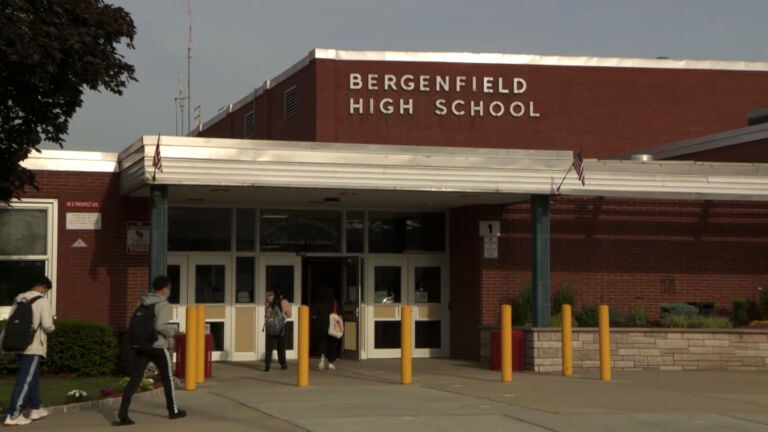
One of the best ways to integrate schools, according to Kahlenberg, is through choice programs that provide incentives for parents to send their kids to schools outside of their neighborhood, such as a Montessori program or one with a special focus on the arts. This works best when there are established fairness guidelines, he added, warning that completely unregulated choice can lead to more segregation. Choice also works best when parents have a say in what types of magnet schools would work best for their families, Kahlenberg said.
“There are magnet schools that are not magnetic. They don’t draw, so that’s why it’s important to do careful planning and survey parents to find out what would be attractive and work to integrate the student bodies,” Kahlenberg said.
Political impact
Whatever the agreement, Gov. Phil Murphy and the Legislature would have to sign off on the path ahead and any legislation and funds necessary to pay for it.
If that doesn’t happen before Murphy leaves office next year, things could become more complicated. Most of the candidates for governor have not much addressed the desegregation issue on the campaign trail, although there have been some sparks.
Republican candidate and state Sen. Jon Bramnick (R-Union) has been a vocal opponent of remedies that would mean students cannot attend their neighborhood schools. Democratic candidate and Jersey City Mayor Steve Fulop has named school desegregation a top priority if he is elected governor.