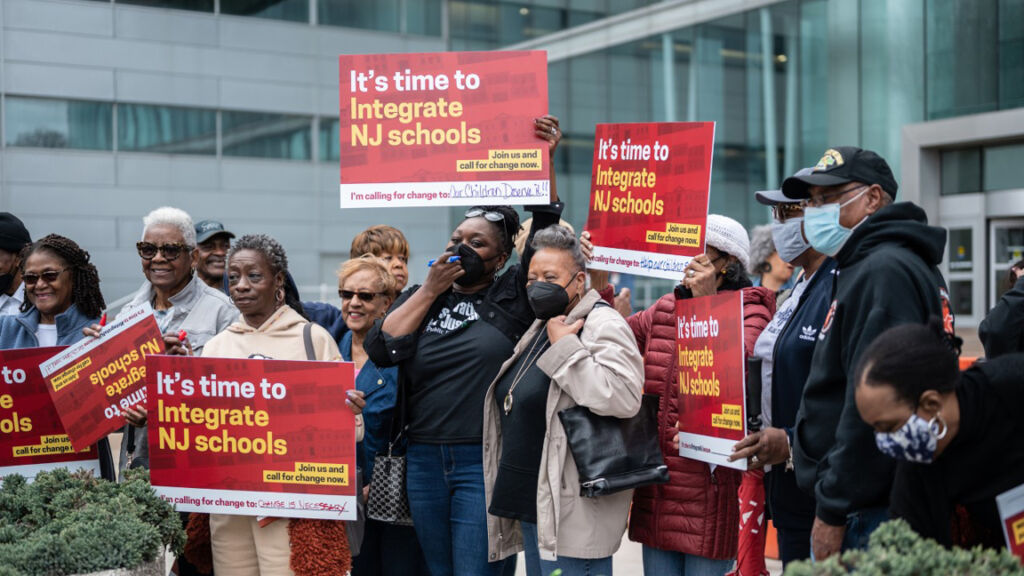
The Murphy administration and plaintiffs in a major school segregation lawsuit have agreed to try mediation to come up with a settlement, with a tentative deadline set for January.
Lawyers for the administration and the plaintiffs in the Latino Action Network v. New Jersey were granted a request to enter into mediated talks to come up with an agreement to address the state’s long-standing segregation in its schools.
The talks would begin Tuesday, Nov. 21, with a confidential meeting of attorneys for the plaintiffs, defendants and other intervening parties. It’s worth noting that the chosen mediator will be retired state Supreme Court Justice Barry Albin, one of the court’s more liberal members in the past half-century.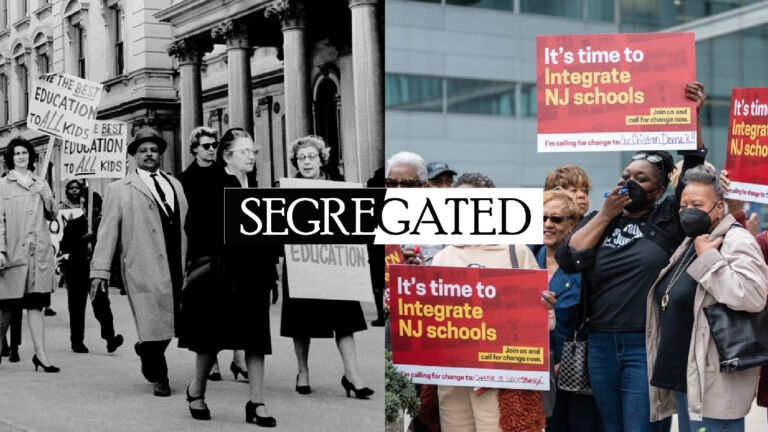
Lawyers on both sides said they hope mediation will allow for the quickest path to resolving what are extremely complex issues concerning segregation in New Jersey, often varying by district and community. The case has already lasted five years, without even agreement on which parties are responsible, let alone any remedies.
Saving time and money
“If successful, this mediation process holds the promise of saving the people of New Jersey and the courts of this State from years of complex, highly charged litigation,” the motion reads.
State Superior Court Judge Robert Lougy of Mercer County ruled in October that the state has failed to ensure children’s constitutional rights to an education free of racial segregation. But the judge cited only 23 of nearly 600 districts and did not provide a clear guidance about what happens next.
Lawrence Lustberg, the lead attorney for the plaintiffs, said in a statement that the invitation came from the state. He agreed the mediation would allow the state and its schools to address the disparities as quickly as possible. The plaintiffs are a coalition led by the Latino Action Network and the New Jersey chapter of the NAACP.
New Jersey court guidance defines mediation as not so much about determining who is right or wrong but rather allowing the parties to find common ground and create their own solutions.
“Plaintiffs are pleased to accept the state’s invitation to undertake a confidential mediation process with Justice Albin and we are hopeful that it will result in an effective solution to New Jersey’s longstanding problem of school segregation, more expeditiously than would be the case if it is necessary to continue the ongoing litigation,” Lustberg said.
A spokesperson for the attorney general’s office said the involved parties hope the mediation process resolves this “complex and difficult” matter.
“The State is committed to providing a thorough and efficient education to every student, and recognizes the innumerable benefits of a diverse school environment,” the statement reads.
Finding common ground
During mediation, Albin is expected to facilitate negotiations to help the parties reach a settlement. New Jersey court guidance defines mediation as not so much about determining who is right or wrong but rather allowing the parties to find common ground and create their own solutions.
The parties had engaged in settlement talks early in the litigation but didn’t reach an agreement.
Now, they will be aided by Albin, who served on the State Supreme Court from 2002 to 2022 after he was appointed by former Gov. Jim McGreevey (D). In an interesting twist, Albin replaced on the bench retiring Justice Gary Stein, now one of the lead lawyers for the plaintiff.
Harry Lee, president and CEO of the New Jersey Public Charter Schools Association, said his group will have a seat at the table as an intervenor in the lawsuit. Public charter schools are uniquely positioned to be part of the solution to school segregation since they can serve students from across multiple municipal boundaries, he said. This is key since municipal boundaries are the biggest challenge to integrated schools, he said.
Mediation is supposed to be wrapped up by Jan. 16, a date proposed by the court. If more time is needed, the parties can request it by Jan. 15.
Lee said he believes this will be among the many solutions that are discussed during mediation, with many of them likely coming from the plaintiffs.
“All parties acknowledge the need for more integrated school options. It’s an important issue here. We’re hoping we can find solutions that can be mediated during these sessions,” Lee said.
He said Albin will be able to bridge different perspectives during the mediation.
“We’re looking forward to being part of it, being at the table to try to provide some meaningful solutions to increase the number of diverse schools in New Jersey,” Lee said.
The parties will file status reports with the court on Dec. 15 and Jan. 10 indicating that they are making progress. Mediation is supposed to be wrapped up by Jan. 16, a date proposed by the court. If more time is needed, the parties can request it by Jan. 15. The status reports serve to ensure both parties are continuing to negotiate in good faith. Any of the parties can choose to abandon the mediation if they aren’t happy with how it’s progressing.