
 Credit: (Bobby Brier/NJ Spotlight News)
In 2011, Rebecca Deo of Quakertown, Pa. tried a small amount of Suboxone for the first time, the drug given to her by her then-boyfriend, she said. Weeks later, he introduced her to heroin, which she began using regularly with him, she said.
“I started going in and out of jail constantly, and then I discovered Kensington, and it’s like a candy store for people that have substance use disorder,” said Deo, 32, who now resides in that Philadelphia neighborhood. “I was perfectly OK with dying on the sidewalk there.”
From 2012 until July 2017, Deo said she lived on the streets of Kensington, finding it difficult to connect with outreach workers to access housing services. On July 11, 2017, Deo stopped using heroin after being arrested again. While incarcerated, she initially did not have plans to stay in recovery, she said, but that changed when she realized that she needed to be a more consistent presence in her nephew’s life.
After going through probation in three separate Pennsylvania counties and then to a recovery house in March 2018, Deo was eventually able to rent an apartment of her own. She has been living independently since and today is sober and working as the supervisor of medical care coordination in the emergency department at Cooper University Hospital in Camden.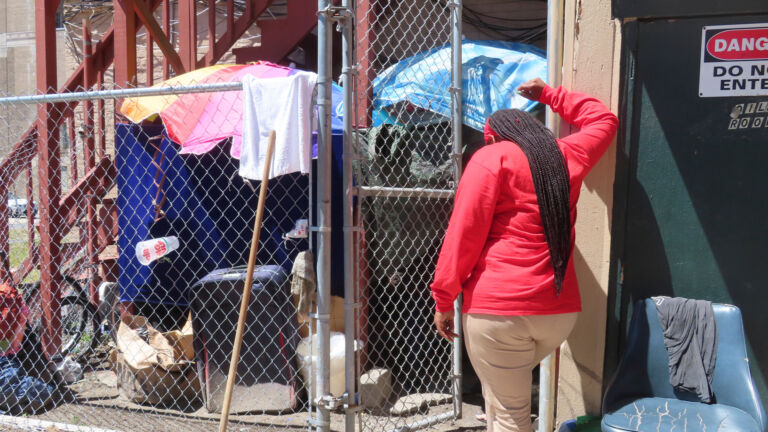
“I will continue to remain as open as I possibly can be about my recovery because when people recover out loud, people don’t need to suffer in silence anymore,” Deo said.
Deo was one of several speakers at a seminar Friday sponsored by Cooper University Health Care’s Center for Healing along with the Camden Coalition, a community-based nonprofit that works to improve care for people with complex health and social needs. The seminar, “Housing First: From the Street to Stability,” addressed the prevalence and causes of homelessness in New Jersey and nationwide, the impact that homelessness has on personal health and the “housing first” approach to the issue.
Supreme Court decision
The conference comes months after the U.S. Supreme Court cleared the way for local governments to enforce bans on homeless people sleeping outside in public places. The ruling in the Grants Pass lawsuit was the most significant to come before the court in decades on the issue of homelessness; several New Jersey towns already make it illegal for people to sleep on streets, in public parks or in their cars. The decision drew outrage and prompted fears among housing advocates across the country and in New Jersey, who vowed to fight against the potential implications. Across the state, 10,267 people were homeless on Jan. 24, 2023, according to a summary of the state’s annual count.
“This event today is so incredibly timely and so incredibly essential because it raises awareness of what’s going on. It raises awareness of the Grants Pass decision and it helps our community understand what the stakes are, which are very high,” said Ashley Maddison, the managing attorney of the housing justice program at Rutgers Law School in Camden. The program is part of the New Jersey Housing Justice Project.
‘Come on in, even if you’re not ready to be abstinent from substances. Come on in, even if you’re not ready to start taking psychiatric medicines.’ — Laura Sorensen, Camden Coalition
The conference was also intended to get people with different experiences and expertise in one location to share strategies, brainstorm and “dream” about what solutions might look like in communities throughout the state, Maddison said.
“Just as we put emphasis on preventative medicine, preventative legal intervention, preventative resource intervention, providing people with more rental assistance, making sure they have the money or the resources to feed their family, daycare, [and] other supports is absolutely critical in shoring up the housing situation,” said Maddison.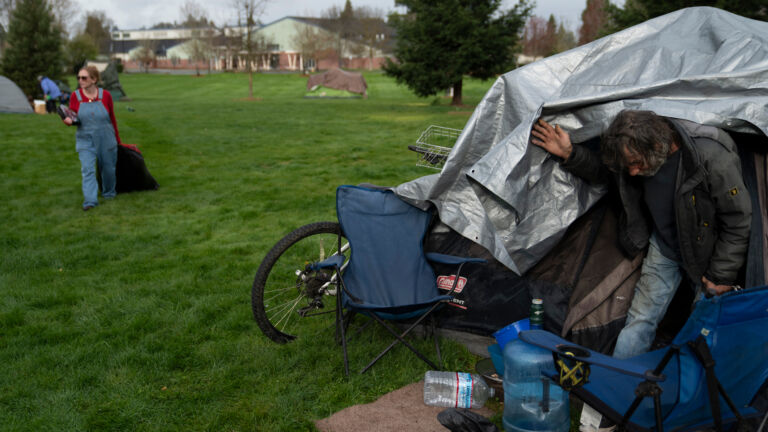
A “housing first” approach prioritizes providing permanent housing to people who are homeless, which not only ends their homelessness but also serves as a platform from which they can pursue personal goals and improve their quality of life, according to the Washington, D.C.-based National Alliance to End Homelessness.
The approach is guided by the belief that people’s basic needs — including food and a place to live — should be met before attending to anything deemed less critical, such as getting a job, budgeting properly, or addressing substance use issues, according to the National Alliance. Notably, the housing first approach does not require homeless people to address all their problems, including behavioral health issues, or to graduate through a series of service programs before they can attain housing.
A Camden perspective
The Camden Coalition introduced the housing first model in South Jersey in 2015. It uses the approach to identify people who are frequently hospitalized and experiencing chronic housing instability in Camden to provide them with safe, dignified housing and extensive support services so that they can improve their health and manage chronic conditions.
“Harm reduction is such a critical component of housing first because housing first says there’s no preconditions to housing,” said Laura Sorensen, the associate director for harm reduction programs at the Camden Coalition.
“Come on in, even if you’re not ready to be abstinent from substances. Come on in, even if you’re not ready to start taking psychiatric medicines. There is a place for you here, and when you’re ready to drive that bus, when you’re ready to set those goals for yourself, then we’re going to be here to support you. And in the meantime, we want to make sure you are sleeping safely in your own bed every night,” said Sorensen.
The seminar, held in Camden, was free and open to health care professionals, social workers, community agencies, faith congregations, law enforcement and anyone concerned with issues related to homelessness, according to Cooper University Health Care. There were 115 people registered to attend the event, according to Sorensen.
“With the fact that so many people are so overburdened by rent and it’s such a disproportionately high percentage of their income, it’s really absolutely essential that we prevent homelessness in the first place,” said Maddison.
