
 Credit: (AP Photo/Julio Cortez)
Citing average property-tax bills that now top $9,800 statewide, lawmakers are questioning whether New Jersey homeowners would get more relief from state property-tax rebate programs if they appeared as direct credits on local tax bills.
That way, popular annual relief benefits that now total as much as $1,750 under the Anchor program could directly reduce a homeowner’s property-tax bill instead of coming much later as a check in the mail or a direct deposit into each recipient’s bank account.
“If it could be figured out how to get this money on the tax bill, what a significant difference it makes to that tax bill, which is what the taxpayer sees, and, frankly, complains about the most,” said Sen. John Burzichelli (D-Gloucester) during a recent budget hearing in Trenton.
Complicated calculations
But making that change may not be as simple as it sounds, according to state officials who testified during the same hearing.
It could require significant work behind the scenes, including coordinating closely with local government officials who facilitate the collection of property taxes paid on a quarterly basis by millions of households throughout the state.
Still, a state task force has been closely studying whether such a distribution method could be utilized as part of a broader review of state-funded relief programs that also includes exploring ways to enhance the size of benefits provided to senior homeowners.
A final report from that panel is due to be released by the end of the month.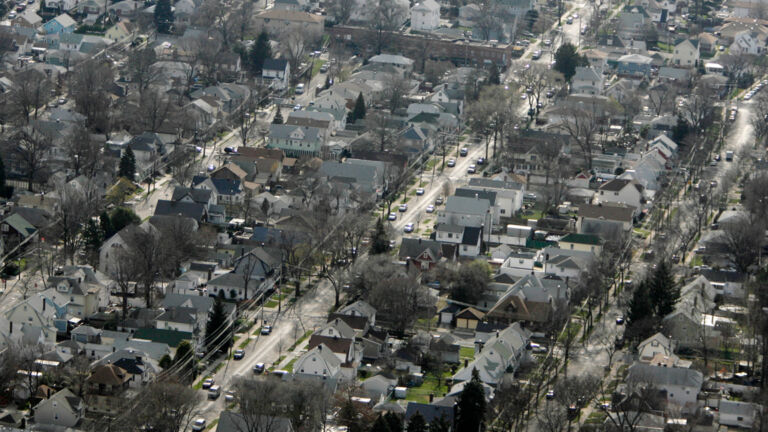
The task force has examined “whether the credits are something that we can look forward to,” said Marita R. Sciarrotta, acting director of the state Division of Taxation, during the same budget hearing.
“It is still on the table,” she said.
In all, average New Jersey property-tax bills rose last year to a record-high $9,803, according to the latest data released by the state Department of Community Affairs.
And in many counties in northern New Jersey, property-tax bills are among the highest in the nation, according to the Tax Foundation, a nonpartisan group based in Washington, D.C. that closely tracks tax policies throughout the country. These include Bergen, Essex, Hunterdon, Morris, Passaic and Union counties, according to a report the group released last year.
Sky-high levies
To help residents combat sky-high property levies, Gov. Phil Murphy and lawmakers launched the Anchor program in 2022. It replaced the long-standing Homestead Benefit.
Under Anchor, benefits are now distributed every fall to more than 1 million homeowners and roughly 700,000 renters who meet income and eligibility requirements.
‘With all good intentions, the Anchor program does not reach the tax bill, as we’d like it to, and we still go home and are hollered at because property taxes are too high.’ — Sen. John Burzichelli (D-Gloucester)
The maximum benefit for eligible senior homeowners is $1,750, and the maximum benefit for eligible senior renters is $700. For other homeowners and renters who meet the income and eligibility requirements, the maximum benefits are $1,500 and $450, respectively.
But unlike the benefits provided through the Homestead program, which appeared as direct credits on property-tax bills for most eligible homeowners, Anchor rebates are delivered to recipients via check or direct deposit.
According to Sciarrotta, some of the challenges posed by shifting from checks and direct deposits to direct credits on tax bills involve the timing of the current billing and rebate cycle. Other challenges stem from the sheer volume of taxpayers who are now receiving benefits through Anchor, she said.
Anchor, Stay NJ
In all, more than $2 billion gets distributed annually to nearly 2 million residents, making Anchor — which operates with more generous income limits than those in place for Homestead — a much bigger program overall.
Anchor benefits go to “five times as large a population of persons” as under the earlier Homestead property-tax relief program, Sciarrotta explained during the hearing.
“You can imagine that, doing this on a level where we are literally [reaching] over 2 million people, would be a significant challenge,” she said.
The law that established the property-tax relief task force also laid the groundwork for the creation of an envisioned new program called Stay NJ that calls for it to operate as a “tax credit program.”
Under Stay NJ, benefits as large as $6,500 have been promised to income-qualified senior homeowners, with the first credits to be distributed as early as 2026, according to the law.
How the state will afford to pay for such inflated benefits at a time when revenue growth has slowed compared to prior years will also be a major challenge. And it also remains to be seen whether the panel drafting the pending report has figured out how to distribute relief credits that would appear directly on a recipient’s tax bill or come up with another way to achieve a similar outcome.
Burzichelli suggested such an approach could establish a more direct connection to the ongoing efforts by policymakers in Trenton to ease New Jersey’s record-high property levies.
“With all good intentions, the Anchor program does not reach the tax bill, as we’d like it to, and we still go home and are hollered at because property taxes are too high,” he said.
