Credit: (AP Photo/Michael Probst, File)
A $50 million quality incentive fund that rewards nursing homes that have higher staffing levels and fewer reports of falls and pressure sores among residents. Another $5 million to support nursing homes in crisis. More frequent inspections. Tougher penalties for facilities with repetitive violations of regulations.
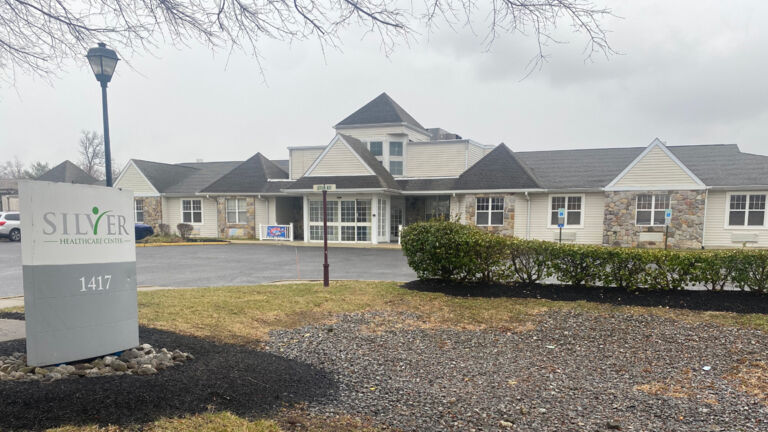
These are just some of the steps New Jersey is taking to improve oversight of the 230-plus licensed nursing homes in the state following multiple reviews in recent years that identified long-standing problems — exacerbated by the COVID-19 pandemic — that leave fragile residents vulnerable to infections, accidents and substandard care.
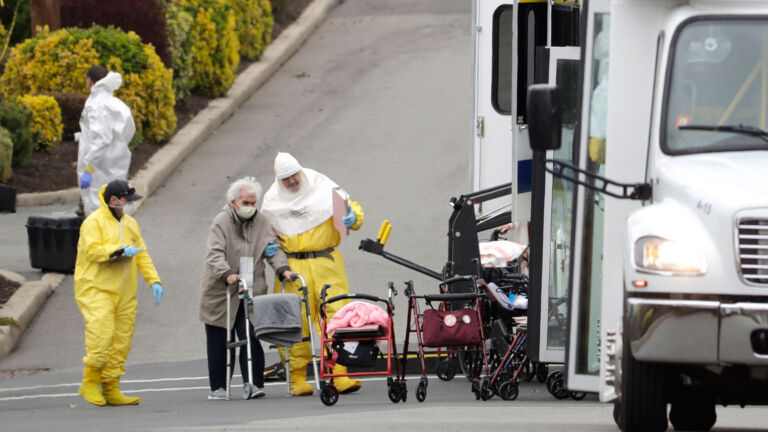
The reforms also align with recommendations from the latest assessment released earlier this month by the state’s Task Force on Long-Term Care Quality and Safety. A state-appointed advisory body, it was established in 2020 following a consultant’s report that raised multiple concerns about the industry’s ability to safely provide for patients — and the state’s capacity to monitor this work. More than 9,000 nursing home residents died during the pandemic, that assessment noted, roughly one-quarter of all COVID-19-related deaths in New Jersey.
The task force commended New Jersey officials for some ongoing reforms but said the “COVID-19 crisis laid bare the need to reimagine and fundamentally transform” the way the state funds and regulates services for people who are elderly, disabled or otherwise need assistance. The state’s policies continue to favor institutional or nursing home care, the group said, instead of services to help residents remain at home or live within the community in small group homes with some staff — options preferred by 8 in 10 people, experts note.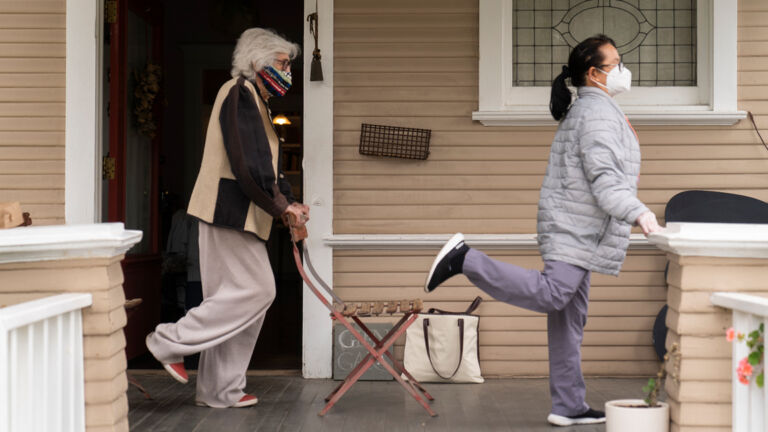
“Our nursing homes are often large, hospital-like spaces, but today’s consumer prefers smaller, homelike settings that offer greater levels of person-centered care,” the task force wrote, noting that there are also not enough workers to care for the aging population. New Jersey is home to some 1.7 million seniors, a demographic that is growing.
“These dynamics are historic, deep, systemic, and cultural; to change them requires a shift in thinking and planning that transcends year-to-year budget cycles and piecemeal policymaking,” the report says of the state’s policies and practices and the physical limitations of existing nursing homes.
More on the details of the changes
What about aging at home?
Elder advocates have long complained about New Jersey’s overuse of nursing home care and urged the state to do more to support people aging at home. “Nursing homes in New Jersey are entirely too large and not homelike. The report recognizes that New Jersey should follow the lead of other states and implement policy changes and investments to create smaller nursing homes with more person-centered models of care,” Laurie Facciarossa Brewer, the state’s Long-Term Care Ombudsman, said in a statement. “These smaller, person-centered homes should become the norm.”
AARP New Jersey is also prioritizing long-term care transformation in its advocacy work this year; a recent policy bulletin calls on the state to expand support for family and paid caregivers, invest in smaller nursing home facilities and do more to support the long-term care workforce and transparency around nursing home ownership, according to a recent policy bulletin. The task force report is a “clear framework for reform,” Chris Widelo, AARP state director, said in a statement. If more people can “age in place and avoid nursing homes,” there is less chance we will “see a tragedy of (COVID-19’s) scale in the event of another public health emergency,” he said.
‘The report’s failure to focus on the current underfunding of our existing system undermines all of its recommendations.’ — Andy Aronson, Health Care Association of New Jersey
Nursing home operators had a different view of the task force findings. They said they have struggled to find and retain quality staff and that low payments from New Jersey’s Medicaid program, the state and federally funded health insurance program that foots the bill for nearly two-thirds of nursing home residents, don’t cover the full cost of care.
Andy Aronson, president and CEO of the Health Care Association of New Jersey, which represents long-term care facilities, said the task force report offers “an aspirational vision” of the system not grounded in reality. “We are limited by real shortages in workforce and funding, and we need to focus on how to best care for vulnerable seniors in the context of those real-world constraints,” he said. “The report’s failure to focus on the current underfunding of our existing system undermines all of its recommendations.”
Medicaid issues
One point of agreement is that Medicaid is a powerful mechanism for change. Some 68,300 New Jersey residents who are older or disabled will qualify for long-term care support services through Medicaid next year, according to state budget documents, and 23,700 will live in nursing homes. Medicaid will fund modifications like wheelchair ramps, home health aides and other support services for the remaining 44,600 participants living at home or in small community residences.
New Jersey has already made significant progress toward this goal, state officials say, with Medicaid spending on home and community services increasing 90% since 2019 and changes recently made to smooth the approval process for people seeking services at home. In all, the state plans to spend $4.5 billion on long-term care in the coming fiscal year, according to Gov. Phil Murphy’s budget proposal, which lawmakers must decide on before July. Just over half of this would be spent on nursing care, if the current pattern continues.
The state is now involved in a multiyear review of its Medicaid payment rates for nursing home and other long-term care services, something the task force said was desperately needed and industry leaders eagerly support.
“Through significant investments and innovative approaches, we’re strengthening and prioritizing independence, community options, and person-centered care, while making critical wage enhancements and improving services families depend upon,” Department of Human Services Commissioner Sarah Adelman, whose agency oversees Medicaid, said in a statement on the task force report.
Workforce gaps
In recent years Human Services has invested in strengthening the social services workforce, with $100 million dedicated to recruit, train and retain those who work in home and community programs and a public campaign to highlight available jobs. The department is now seeking $50 million to strengthen its nursing home Quality Incentive Payment Program, which rewards facilities that perform well, and realigning the program to better support safe-staffing goals, changes the task force recommended.
The task force praised the state for several unique policies to protect nursing home residents, including a requirement that 90% of Medicaid revenue be spent on people’s care, not administration or executive salaries. New Jersey has one of the nation’s only patient-to-staff ratio requirements, a measure implemented in late 2020 despite significant industry opposition. The state has also strengthened the financial reporting requirements for nursing homes, although the sudden closure of a Princeton facility last summer suggests more can be done.
‘People cannot age in place or transition from nursing homes back to the community if there is not enough affordable, accessible housing to meet the needs.’ — Task Force on Long-Term Care Quality and Safety
But the task force found enforcement of these regulations has been hampered by a lack of surveyors at the state Department of Health, which licenses health care facilities. New Jersey is one of seven states with more than half of the surveyor jobs vacant, it said, and 4 in 10 homes have not been inspected in at least 15 months. A consultant’s report released in June 2020 warned the department faced a backlog of some 4,000 nursing home complaints, including 700 considered urgent.
The Health Department has been actively recruiting for these surveyor positions, officials said, and is seeking additional funding for nursing home inspections in the upcoming state budget. “As a result, the Department has made substantial progress in timeliness of surveys and is committed to sustaining this momentum to ensure timely and effective survey completion,” Deputy Communications Director Nancy Kearney said.
Increasing penalties
New laws also enable the Health Department to increase penalties on nursing homes that are found to have similar violations over several years, Kearney said, and the number of repeat offenders has begun to decline. The budget proposal for the 2025 fiscal year also includes $4.5 million to create a crisis-intervention team to support struggling nursing homes and to fund immediate expenses, like payroll, to keep residents safe, she said. Another $500,000 has been requested to expand the department’s “mission critical” teams, groups of experts that are dispatched to help nursing homes before they reach a crisis point, a program that the Task Force praised.
All new nursing homes must have single rooms, Kearney said, and multi-person rooms will be phased out if facilities undergo construction. State officials are also open to new concepts designed to encourage smaller, community-based residences, she said. “As these facilities are residents’ homes, the Department’s priority continues to remain ensuring a safe and healthy environment,” she added.
Remaining in the community — instead of a nursing home — is further complicated by New Jersey’s chronic lack of affordable housing, however, something the task force called “one of the primary barriers to rebalancing” the state’s elder-care system. “People cannot age in place or transition from nursing homes back to the community if there is not enough affordable, accessible housing to meet the needs,” the report notes.