
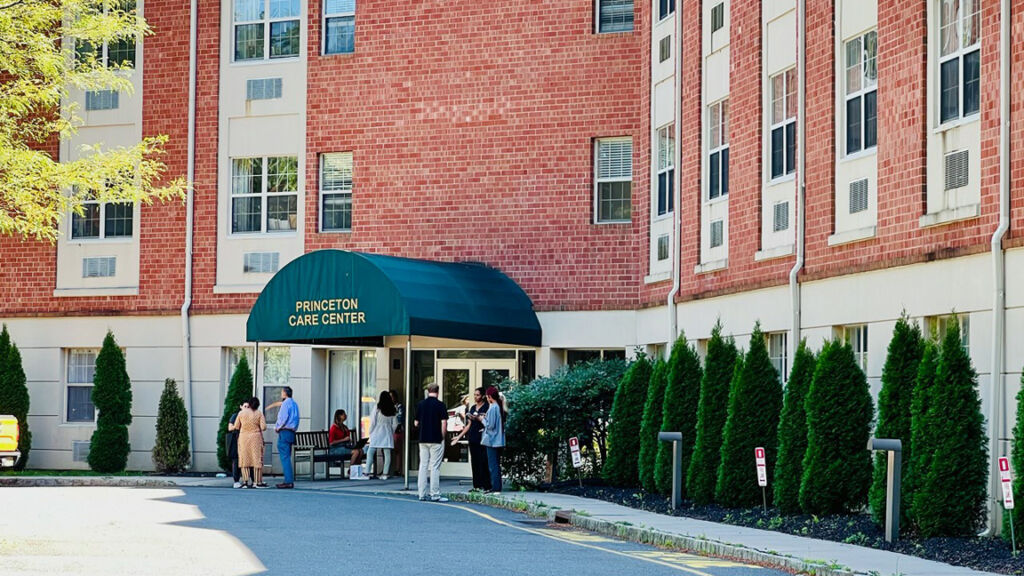
State health officials face growing questions about their oversight of a Princeton nursing home that suddenly shut down on the eve of the Labor Day holiday, resettling 72 elderly residents with only hours of advance notice.
Officials at the family-owned Princeton Care Center on Friday morning told residents they would need to move in with relatives or be transferred to another nursing home before the end of the day. Family members canceled weekend plans and rushed to the Bunn Drive facility to find a chaotic scene, observers said, with police directing traffic and comforting distressed residents, their belongings in boxes and trash bags.
“It was shocking. Just horrifying. It was outrageous,” Sen. Andrew Zwicker said of the scene at Princeton Care Center last Friday. Zwicker (D-Somerset), who represents the community, said the manner of the closure “is an indication of enormous, enormous flaws in the system.”
Stephen Crystal, an expert in health care policy and aging research at Rutgers School of Social Work, agreed.
“When you create a situation where people are given 12-hours’ notice to relocate frail, elderly residents, that’s elder abuse,” he said. “The phenomenon of transfer trauma is a real thing, documented and written about,” Crystal explained. “And when you do it in this fashion, it is unacceptable for frail, elderly people. This is their world.”
 Credit: (Courtesy of Amita Mehta via Planet Princeton)
The operators of Princeton Care Center — who did not respond to emails and calls for comment — blamed financial troubles for the closure and media reports indicate staff members had not been paid in at least a week. But Crystal and others said it should never have come to this, especially since state health officials had been closely monitoring the facility for at least six weeks.
“This type of abrupt closure should never happen,” said Andrew Aronson, president and CEO of the Health Care Association of New Jersey, which represents nursing homes. State regulators have “many tools” available to work with struggling nursing home operators to “assure that residents are prioritized, and an orderly closure takes place. In short, nursing home residents and their families deserve better,” he said.
Crystal compared Princeton Care Center’s shutdown to a “never event,” the term for a medical error that should not have occurred, like operating on the wrong side of a patient.
“The system is supposed to be designed — or has to be designed — so that it can’t happen,” he said. “It’s an unacceptable failure when it happens.”
Laurie Facciarossa Brewer, the state’s long-term care ombudsman, whose office was on scene Friday to help resettle residents, also worried about the impact of trauma. “This is the worst possible outcome,” she said, noting that her office will continue to track those who have been relocated.
What’s supposed to happen
While nursing home residents are supposed to get at least 60 days’ notice of a potential closure, officials at the state Department of Health said they can waive this requirement if an emergency requires them to be relocated more quickly, according to media reports. All nursing homes must have an emergency closure plan too, a protocol experts said is largely designed for crises like floods and power failures.
Dalya Ewais, the health department’s communications director, said the agency is “committed to protecting and promoting the health, safety and welfare of all nursing home residents” in the state through regulatory oversight and initiatives to improve resiliency.
“We are actively reviewing this case and working with partner agencies and state departments to discuss regulatory and/or operational solutions to further strengthen the quality and resiliency of our long-term care system and that may help to avoid a situation like this from occurring again,” she said in an email.
‘When you create a situation where people are given 12-hours’ notice to relocate frail, elderly residents, that’s elder abuse.’ — Stephen Crystal, Rutgers School of Social Work
Nursing homes in New Jersey — and in many states — have struggled over the past decade to keep up with the rising cost of staff and services, as their resident numbers, and related revenue, have declined. (The Princeton facility was licensed for 119 beds but had just 72 residents by last week.)
The COVID-19 pandemic exacerbated these problems in nursing homes, further stressing the workforce and highlighting the challenges of controlling infection in tight quarters with vulnerable residents. Many of these problems were identified in a report by Manatt Health, commissioned by the state in May 2020.
Since then, New Jersey has strengthened the health department’s oversight capacity for long-term care, invested more than $160 million in pay for frontline workers and created new programs to support struggling nursing homes. The department deployed its “mission critical strike team” — a small group of state-paid experts who assist nursing home operators — to Princeton Care Center throughout August, Ewais said, and has been monitoring the facility’s financial troubles since late July.
Letter of intent
The Princeton Care Center — a for-profit facility founded in 1985 and owned and operated by a mother-and-son team, Gail and Ezra Bogner — was involved in a rent dispute with the company that owns the property and faced several lawsuits from suppliers who claimed they had not been paid, according to reports. But officials there had been negotiating to sell the facility to a larger nursing home operator, Ewais said, and a letter of intent was signed in August.
“The agreement was abruptly terminated on Thursday, triggering this emergency situation as the facility was unable to pay its staff, despite repeated assurances to the Department that payroll would be made, and could no longer provide care to its residents. Because of this, the facility initiated its emergency evacuation plan,” Ewais said.
Health department officials were notified of the change on Thursday night, she added. The first public report of the closure was a story posted at noon on Saturday by Planet Princeton; reporter Krystal Knapp wrote that the facility’s management barred her from the building and yelled at her to leave the property.
Some state lawmakers and Princeton municipal officials question why the health department could not have done more to avoid such a traumatic closing. Zwicker said the health department alerted him and others about the facility’s struggles in late July and continued to brief them on developments weekly. Zwicker said when he or Princeton Mayor Mark Freda raised concerns about potential problems the health department assured them the situation was under control.
‘Why was the state in such a passive role? … What we need to do is ensure this never happens again.’ — Sen. Andrew Zwicker (D-Somerset)
Zwicker, who drove to the Princeton Care Center after receiving news of the closing, said that by 2:30 p.m. Friday, just two residents had been transferred and the last didn’t leave until after 11:30 p.m. He described family members screaming at staff to try and get answers, crying residents being consoled by police and a lack of any clear leadership from care-center employees or the state official he encountered on scene
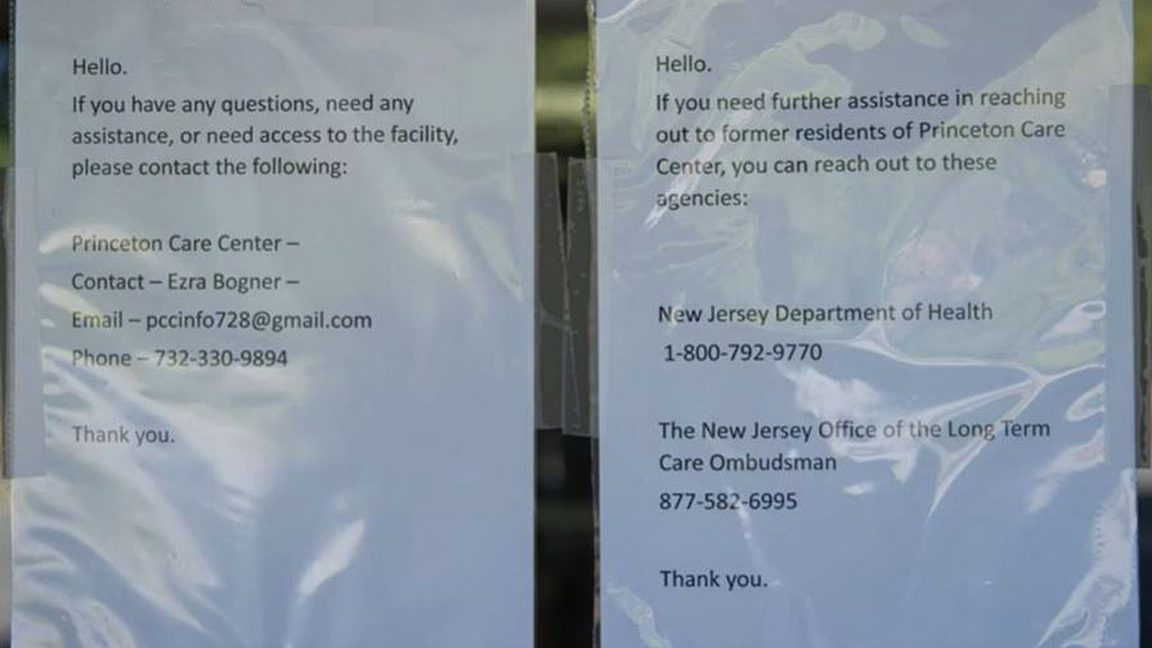 Credit: (NJ Advance Media; Dave Hernandez)
“We’re still in fact-gathering mode to figure out what went wrong. And there’s some very, very obvious questions that have to be answered,” Zwicker said. “Why in the world wasn’t there some level of emergency funding made available to keep residents in place and keep staff paid?”
Zwicker is also concerned about how and where residents were resettled, as many were sent to a Morristown nursing home apparently owned by the company that was seeking to purchase Princeton Care Center. “Why was the state in such a passive role?” he asked.
“What we need to do is ensure this never happens again. Because you’ve either got loopholes that somehow have existed and were not identified, or the rules and regulations weren’t followed, or both. I just don’t know,” Zwicker said.
A different approach
When state and federal regulators uncovered multiple violations — infection control problems, staffing shortage, potential abuse — and financial troubles last year at Woodland Behavioral and Nursing Center, a 360-bed facility in Sussex County, they took a very different approach. State officials got a judge to appoint a receiver with expertise in bankruptcy and hired a hospital system to oversee acute care while it worked with insurance companies to resettle residents over a period of several months
Zwicker and others wondered why the state didn’t take a similar approach with Princeton Care Center. “Clearly there was another model, another example in place,” he said.
Health department officials insisted these closures are not analogous. “Woodland was a unique situation unlike Princeton Care Center,” Ewais said, underscoring that Princeton chose to activate its emergency evacuation plan.
The department said multiple representatives were on site during Friday’s closure, with a survey team observing the transfers to make sure residents received proper care. The mission critical team leader was also there to “to assist the administrator with addressing the needs of the residents, staff and families (and assure) the residents were safe and secure until transferred to another facility,” deputy director of communications Nancy Kearney said. The department will also continue to monitor the residents who were resettled to ensure their needs are being met at the new facilities, she said.
But Crystal, with Rutgers, said the Princeton Care Center closure raises questions about the power, or perceived power, of these regulators. While many of these government workers are skilled and caring, he said, “they have a perception of their lack of authority that is very concerning,” he said. “I think that the balance of power is wrong between the state and the industry.”
The situation in Princeton also highlights problems within the industry’s business model, Crystal said, in which a growing number of nursing homes are operated by for-profit companies. It might take a governor’s commission or legislative hearings to find real solutions, he added.
“If you’re trying to treat (residents) like widgets, like commodities, there’s something very wrong,” Crystal said. “There’s something very callous and greedy happening somewhere on the business side.”
