
New Jersey officials continue to invest in strategies intended to improve care for vulnerable nursing-home residents — including those at state-run veterans homes — and they are seeking millions of additional dollars to expand this work in the year to come.
Leaders at both the state departments of Health and Military and Veterans Affairs told members of the Senate Budget Committee on Tuesday that protecting these vulnerable residents remains a top priority in the wake of the COVID-19 pandemic, which tore through these facilities early in the outbreak. A recent report found more than 10,000 nursing-home residents died in the first four months of the outbreak — 45% of New Jersey’s COVID-19 fatalities during that time — and two of the state’s three veterans homes were particularly hard-hit.
“It is about constant and never-ending improvement. It is about change and it is about implementing evidence-based practices. Those who we serve deserve no less,” said Major General Lisa Hou, the commissioner of the state’s military and veterans affairs department, the focus of scathing criticism by federal and state agencies for not effectively protecting the former service members in its care.
Gov. Phil Murphy’s $56 billion budget proposal for the coming fiscal year, which lawmakers are likely to modify before signing off by July 1, includes $121 million for military and veterans affairs and $1.3 billion for the Department of Health.
Among other things, the Department of Military and Veterans Affairs is seeking an additional $2 million to purchase new mattresses and modern medical equipment for the three veterans homes, which are slated to undergo major renovations to reduce infection risk by replacing double rooms with singles and creating isolation wings. The state has set aside $21 million for this capital work, Hou said, and is seeking more than $40 million more from the federal government.
360 private nursing homes
The Department of Health has asked for an additional $5.5 million to further improve operations and control infection at the 360 private nursing homes it licenses, Commissioner Dr. Kaitlan Baston told the committee. Funds would be used to create a long-term care crisis operations team, to establish a “stabilization fund” to support struggling facilities temporarily and to enhance the state’s existing “mission critical teams” — infection-control experts that are dispatched to assist nursing-home operators facing an uncontrolled outbreak, she said.
Baston said long-term care has been a priority since she took the helm at the department last summer, shortly before a Princeton nursing home that had been under state watch for weeks suddenly announced it would close, forcing 72 residents to relocate the Friday before a long weekend. The department was criticized for what some said was a lack of oversight at Princeton Care Center, but Baston praised the work of her predecessor Judy Persichilli for launching the ‘mission critical teams’ and making other reforms.
“We still have more to accomplish,” Baston told lawmakers, “but with your partnership, we are on a path to have the infrastructure and policy changes to support long-term care in New Jersey at this critical time.”
Baston, an addiction specialist, also underscored the need to better support local public health and prevention. The need for greater investment in those areas was identified in the recent report from attorney Paul Zoubek, who was hired by the Murphy administration last year to review the state’s COVID-19 response. In findings released last month, Zoubek said the state was unprepared for the pandemic and remains unprepared for a similar crisis.
“Today, we have an incredible opportunity to build the future of health care. A future that actually drives health and wellness, rather than just treating illness. A future that bends the cost curve of health care by going upstream and addressing the causes of illness before they take hold,” Baston told lawmakers Tuesday. “Modernizing the department means creating public health that empowers individuals and local communities and uses innovative solutions to help us solve problems and work smarter, not harder.”
Baston said that the department has taken steps to improve emergency preparedness by stockpiling protective equipment and improving its data collection and analysis. It also hired a workforce development director to help beef up the ranks in public-health and clinical services, a growing problem statewide.
Earlier concerns
Zoubek’s report also reiterated some of the concerns raised by consultants the state hired in the spring of 2020 to assess the COVID-19 response in nursing homes. That first report, from Manatt Health, found multiple vulnerabilities that predated the pandemic, including a large number of shared rooms and regular staff shortages.
“We still have more to accomplish, but with your partnership, we are on a path to have the infrastructure and policy changes to support long-term care in New Jersey at this critical time” — Health Commissioner Dr. Kaitlan Baston.
Since then, the state provided hundreds of millions to provide hazard pay to frontline workers in nursing homes, has invested in infection control training and taken steps to improve communications with nursing-home operators, among other changes.
But outbreaks continue to plague long-term care facilities and, with costs increasing, several have closed since COVID-19 first emerged. The state also took the unusual step of closing one facility in Sussex County — Woodland Behavioral and Nursing Center, previously known as Andover Subacute — in 2022 after operators failed to address dozens of violations involving staffing and patient care and federal officials suspended it from the Medicaid program.
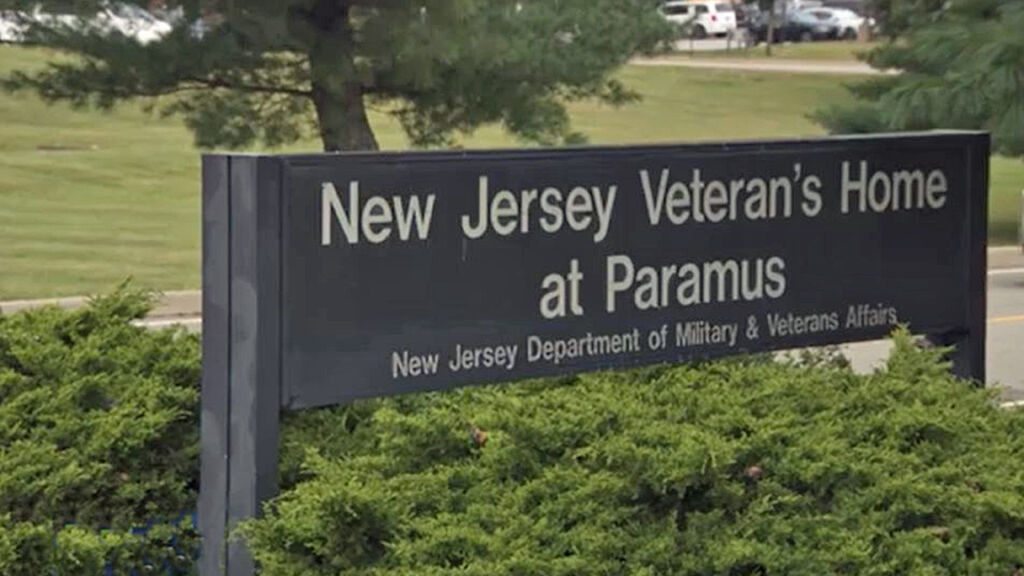
At the state veterans homes — in Vineland, Menlo Park and Paramus — Hou said investments made through previous state budgets are paying off. While paper charts were still in use during the height of the pandemic, Hou said residents at all three locations now have full electronic medical records. The staff has undergone hours of training and refresher courses and infection-control teams are now in place at each site.
Perhaps most important, wages for nursing aides, supervisors and other frontline caregivers were increased, Hou said.
“These increases are game changers. For decades, our veterans homes were unable to compete with the private sector for top tier talent,” she said. “Today and going forward, we can do just that.”
