 Credit: (Laura Galarza/NJ Spotlight News)
Patients visiting one clinic in Newark can now get their prescriptions filled on-site, right after their medical appointment. And upstairs they can talk privately with a registered dietitian about their condition, get tips for healthy eating and fill a bag with their choice of fresh fruit and produce, locally baked bread and everything they need for a balanced dinner — all at no extra cost.
The new in-house pharmacy and the food bank suite staffed by trained dietitians opened earlier this year thanks to a partnership between Saint James Health, a federally funded primary care system, and RWJBarnabas Health, one of the state’s largest hospital systems. The two organizations have teamed up to address social determinants of health among Newark residents — issues like access to quality food, safe housing and education that dramatically shape individual and community health.
“When evaluating the different areas of need, food and transportation rise to the top, regardless of where you go in the city of Newark,” said Balpreet Grewal-Virk, senior vice president for community health with RWJBarnabas Health. “We started thinking, ‘Where can we embed something that makes more sense than just giving out food, which is what most [food] pantries do?’”
More on how the ‘Food Farmacy’ works
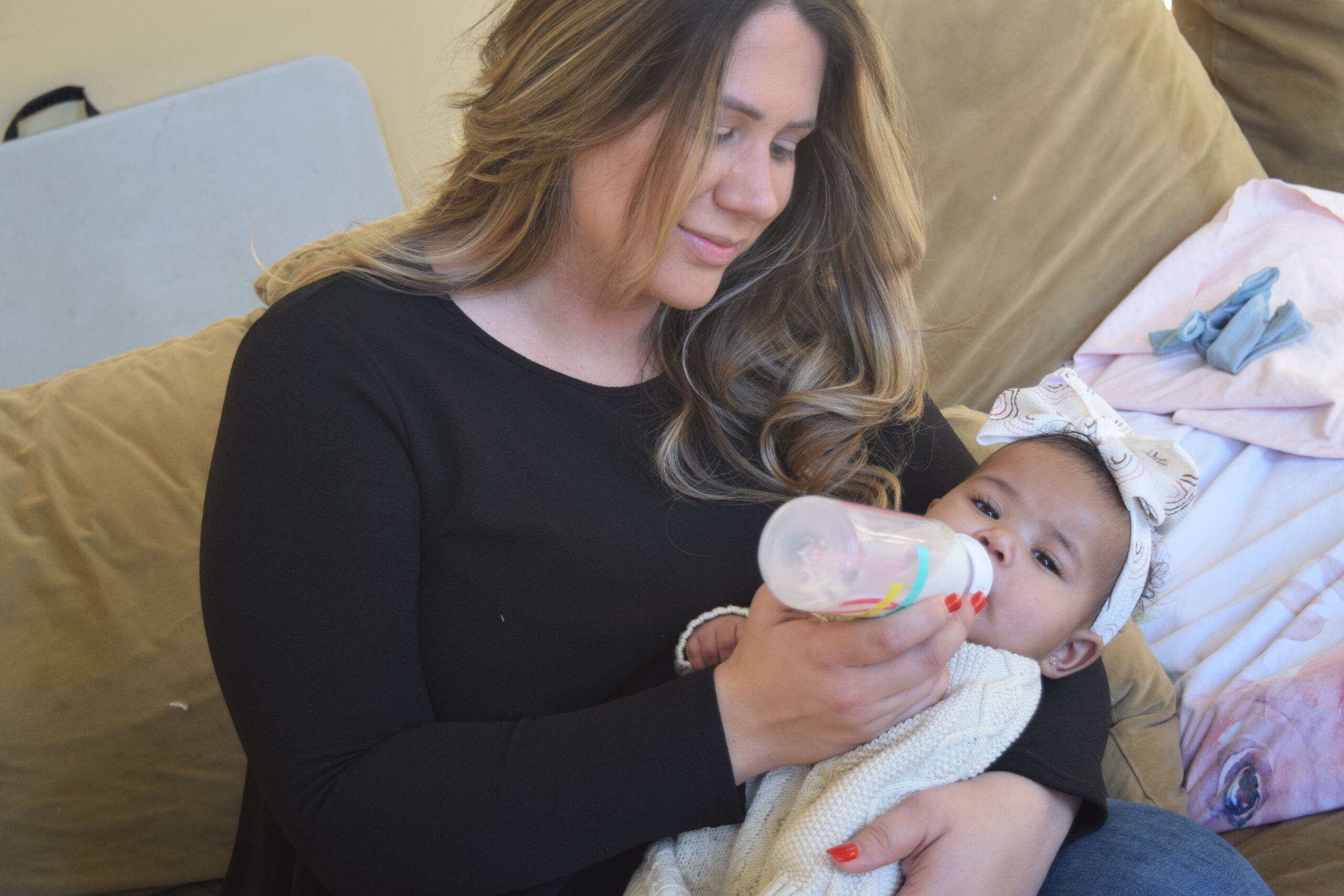
Now, patients of Saint James, which operates three clinics in Newark, can get free healthy meal options — as well as diapers and baby wipes — at the “Food Farmacy” inside the East Ward clinic on Lafayette Street. They can talk to a trained dietitian about what foods are good and bad for their condition and learn about portion size and the dangers of fats and salt.
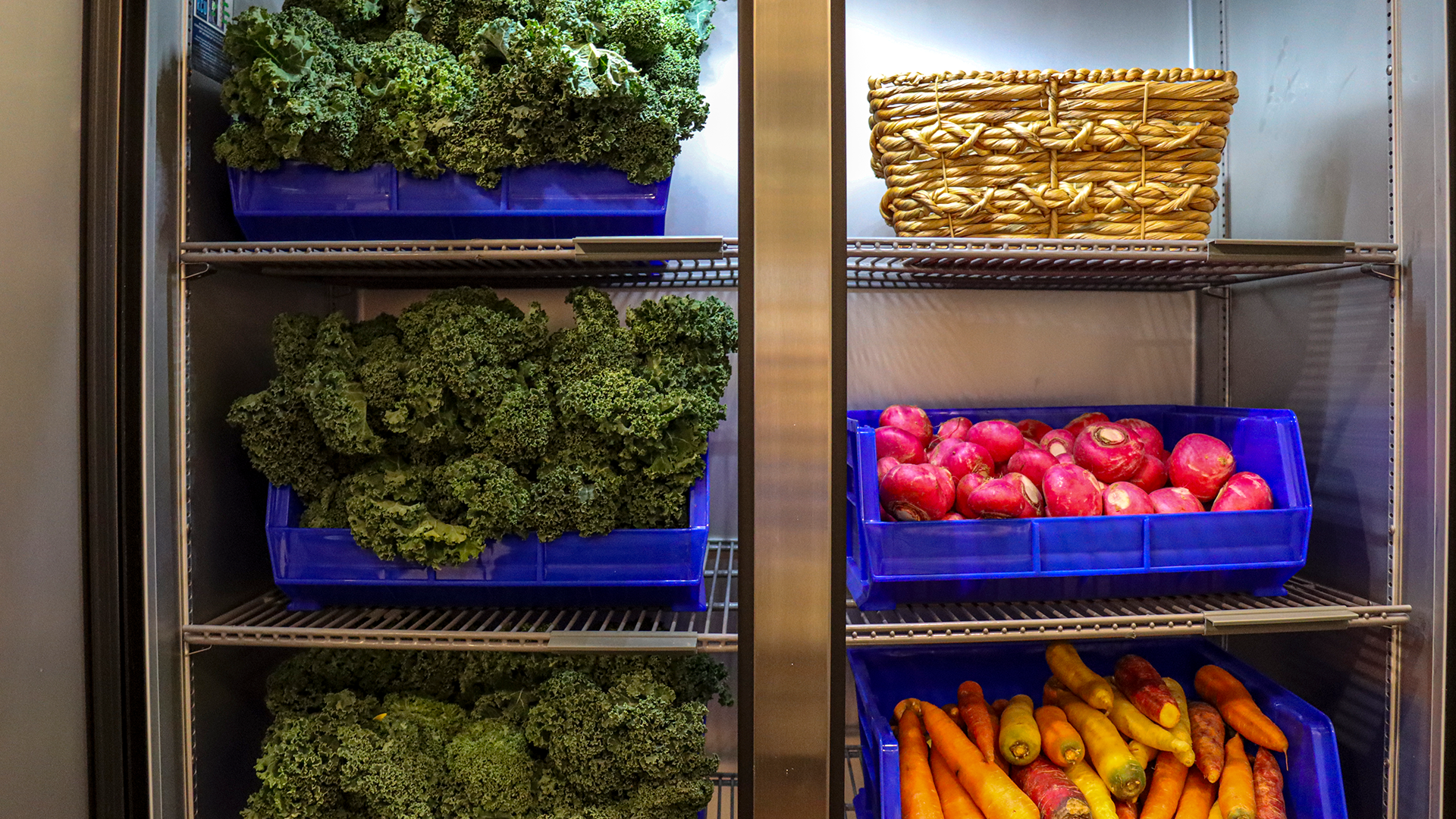
Afterward, they can fill a bag from the large stainless steel refrigerators, which in March were filled with dark green curly kale, brilliant rainbow chard, farm-fresh eggs, multicolored carrots and more. Shelves were stocked with rice, beans, pasta, canned vegetables, cereal, boxed milk and more. More than 100 people have visited since it opened in February, RWJBarnabas said.
A larger initiative
The ”Food Farmacy” and the prescription-drug program, which is supported by a federal initiative to help outpatients with low incomes get medications, are also part of a larger RWJBarnabas initiative to improve public health in Newark, funded in part with $25 million that state officials allocated in recent years. RWJBarnabas is using the money to improve health care delivery in the city, where residents receive care from a mix of hospitals, emergency clinics and outpatient offices. It has hired community health workers that are embedded at various sites and is working to knit together disparate networks of electronic medical records, to improve care coordination.
Grewal-Virk said the key is connecting the various stakeholders already working in Newark and capitalizing on their strengths. The “Food Farmacy” also involves the Community Food Bank of New Jersey, along with a network of local farms and a neighborhood bakery, she said.Newark residents have long had rates of diabetes, high blood pressure and obesity that are higher than the state and national averages, statistics show, underscoring the need for healthy food.
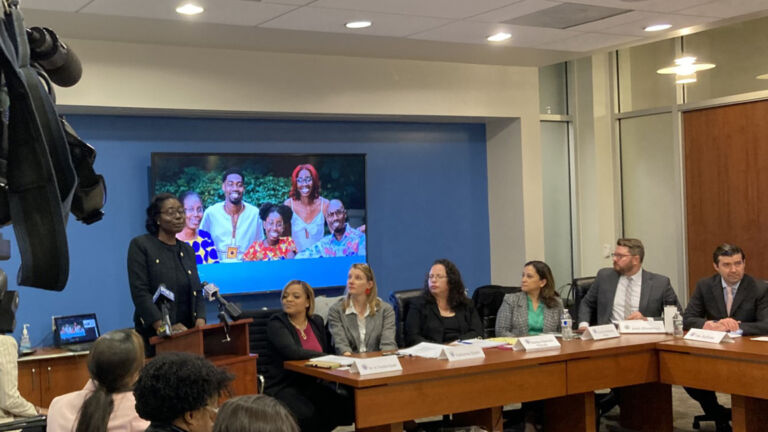
“Collaboratively we can tackle more, versus everyone trying to do this single-handedly,” Grewal-Virk said. “And everyone has different resources.”
Some health care advocates have questioned the decision to funnel public resources to RWJBarnbas Health, a private hospital system that runs Newark’s Beth Israel Medical Center. Critics wonder why state officials didn’t opt to invest in the community through Newark’s University Hospital — the state’s only public hospital and a key academic medical center for clinical health programs at Rutgers University — which is three miles from Beth Israel.
 Credit: (Laura Galarza/NJ Spotlight News)
Lawmakers who championed the public funding declined to talk about the investment last fall. But several, including Senate Democratic Leader Teresa Ruiz and Assembly Budget Committee Chair Eliana Pintor Marin (both D-Essex), joined Newark Mayor Ras Baraka and other dignitaries at Saint James to announce the new programs in early February.
Social determinants
RWJBarnabas Health has worked to address public health in Newark over the years with initiatives designed to address social determinants of health, things like housing, education and environment that have an outsized impact on clinical outcomes. A wellness program at Beth Israel led to a community garden, then a hydroponic greenhouse with cooking classes and more.
Newark is a “majority minority” city, where 1 in 5 people identify as white, according to U.S. census data, and its residents have long had rates of diabetes, high blood pressure and obesity that are higher than the state and national averages, statistics show, underscoring the need for healthy food. But healthy food options are not always easy to find. “We are lucky that we do have a couple of food stores” in the East Ward area, said Saint James CEO Nicole Fields, “but they’re really expensive.”
 Credit: (Laura Galarza/NJ Spotlight News)
Regardless of food availability, significant poverty means food insecurity plagues at least half of the patients at Saint James, Fields said, meaning many are skipping meals or struggling to buy groceries when their paycheck runs out. A food closet outside their West Ward clinic proved popular with patients, she said.
“They’re grabbing just what they need to make dinner that night,” Fields said of the West Ward program, noting that it also attracted parents who were picking up kids at a school across the street. She said creating the more robust “Food Farmacy” in the East Ward facility made sense, adding, “We would like to have access to this type of food in all our sites because our patients do need it.”
Information is key
The “farmacy” program does more than provide healthy meal options for free. Information is also key to patients’ success, dietitian Danielle Wolf said, so that people truly understand portion size and how to cook things in a way that fits their taste and culture. “A lot of times people say, ‘What is this? Can you educate me on what this is?’ And that’s so important,” she said.
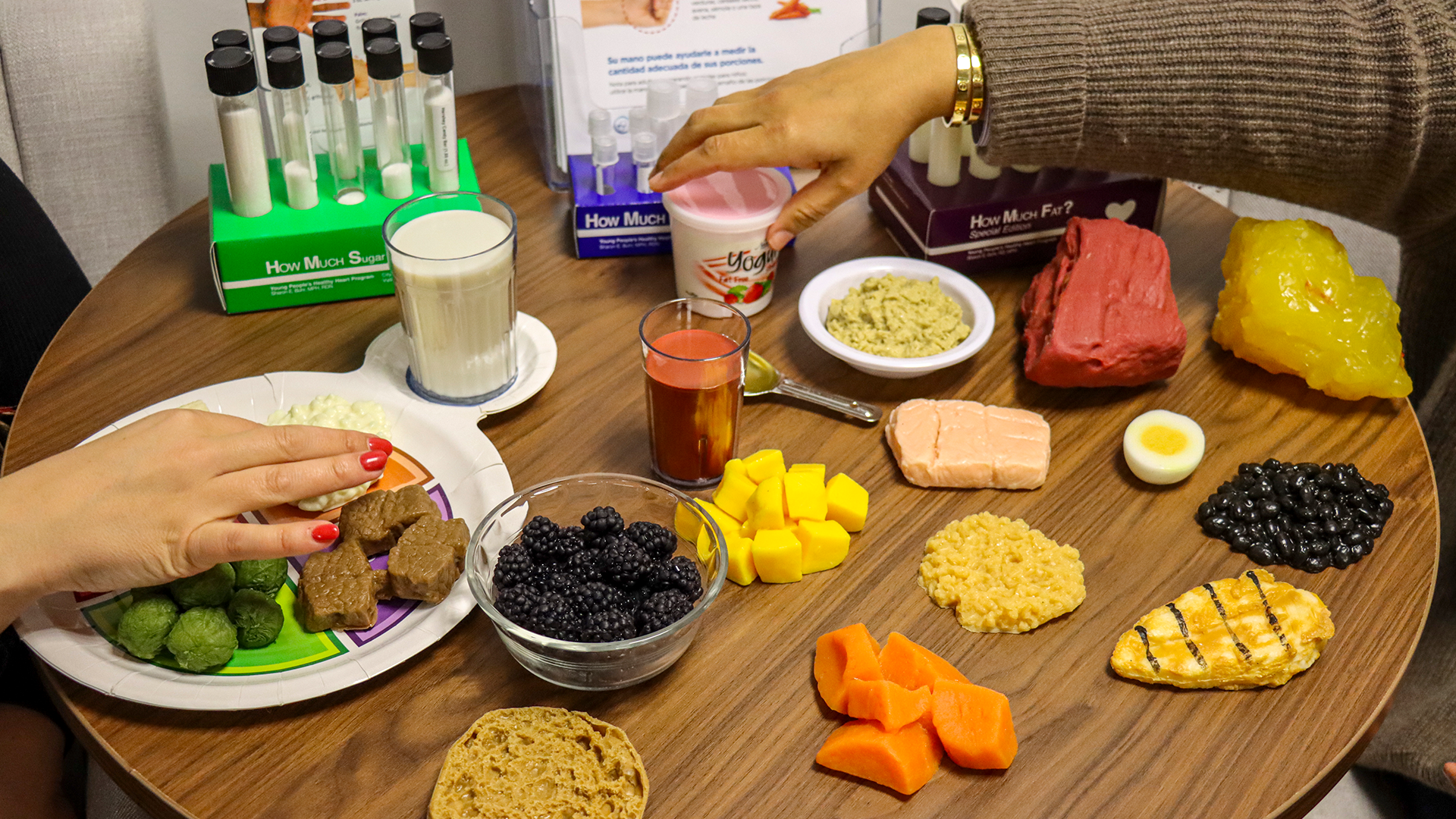
Wolf leads private counseling sessions in a comfortable corner of the room, where armchairs pull up to a table covered with bright plastic food models. She asks about people’s medical condition, cultural background, food preferences and family meal habits. She can offer tips, recipes and connections to other support services too.
Occasionally Wolf stumbles on something that could significantly shape clinical outcomes, like she did with a healthy-looking patient with high blood pressure. “After looking at her diet, I realized that she’s consuming two, three times the amount of sodium that she should in a day. So people just don’t realize that. And it’s not them to blame,” she said, explaining that excess salt can exacerbate high blood pressure.
RWJBarnabas’ investment has also enabled Saint James to expand outpatient access to medications, thanks to the on-site pharmacy that opened in January. Fields said the system has worked with community drugstores in the past to offer discounts, but having pills dispensed on-site could be a game-changer, she said.
“It gives our patients access to the prescriptions that same day, in a place they know,” Fields said, and gives pharmacists a better opportunity to explain the medication and answer questions. “We also know, really quickly, if the patient can’t get [their prescription] due to an insurance problem and we’re fixing it on the spot. The patient doesn’t walk away without them.”