
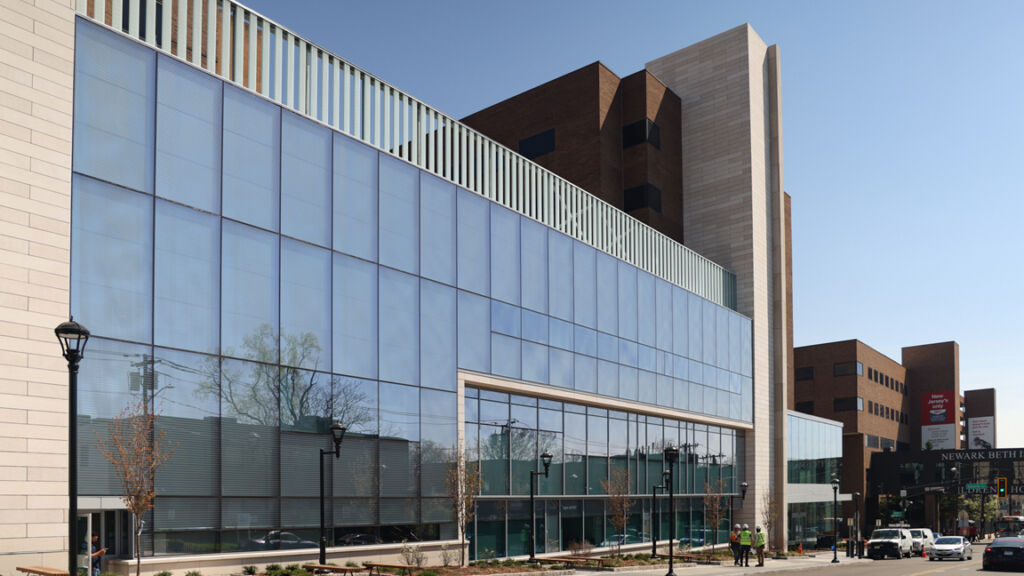
A new commitment to better connect and deliver health care in New Jersey’s struggling communities is taking shape, with the first phase scheduled to be launched in Newark in late October.
Pediatric and maternal health experts are being drafted to rotate among local health clinics, so that patients in Newark can see medical specialists closer to home. Additional community health workers are being hired and trained to work in the city’s clinics, emergency rooms and schools to schedule follow-up appointments and arrange transportation, if needed. Technical experts are installing a unified electronic health records system to link hospitals and primary care providers and give clinicians a broader view of a patient’s history.
These are just a few of the investments RWJBarnabas Health has in mind — and that are underway — thanks to more than $100 million in state funding allocated through a trio of budget resolutions sponsored by several Newark Democrats over the past two years.
But questions have been raised about how the project is organized and the role in it of Newark’s University Hospital, the state’s only public acute-care facility and the region’s only Level 1 Trauma Center.
State’s commitment?
Dr. Catherine Mazzola, a pediatric neurosurgeon with the New Jersey Pediatric Neuroscience Institute who serves patients at University Hospital, and is a vocal advocate for University Hospital and the health of Newark residents, said the decision to have RWJBarnabas lead the project raises questions about the state’s dedication to University Hospital and the community it serves.
University Hospital’s own commitment to city residents is codified in a historic agreement with the community called the Newark Accords, drafted in the wake of the 1967 Newark Uprising, in which a Black neighborhood was essentially destroyed to build a hospital and medical school. University is now a critical teaching site for Rutgers University’s New Jersey Medical School, which shares its 43-acre campus, and several other clinical programs based in Newark.
“University Hospital is kind of a stepchild in all of this,” Mazzola said, even though the public hospital is known for providing care to generations of Newark families. “When there are resources or opportunities,” she said, “those opportunities have to be shared with the children of Newark and University Hospital.”
First phase
RWJBarnabas Health, which operates Newark’s Beth Israel Medical Center, located three miles south of University Hospital, has a track record of building programs designed to benefit patients’ broader health and wellness and reduce their reliance on hospital care. The system operates a garden and greenhouse in Newark, where it has worked to address food insecurity, and has conducted safe-home assessments in several communities to reduce tripping hazards and other dangers for seniors.
 Credit: (RWJBarnabas Health)
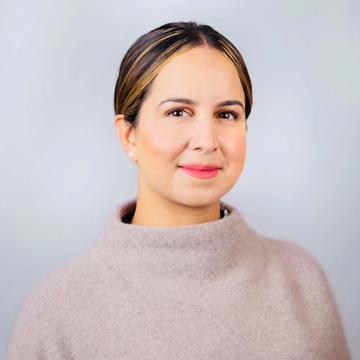
The new state-funded work continues this trend and is designed to benefit Newark residents of all ages, regardless of where they go to hospital or get other care, according to Balpreet Grewal-Virk, senior vice president for community health at RWJBarnabas Health, who is overseeing the project. Better connecting the city’s health care system will not benefit one hospital specifically, she said, as “referrals are made based on where and what makes sense for the patient.”
The initial phase of the Newark project involves $25 million allocated in last year’s state budget that Grewal-Virk said is focused on four broad targets: linking a core group of federally funded clinics to the electronic health records system in place at Beth Israel and many other hospitals, including University; training and deploying more than two dozen community health workers to help patients navigate care in Newark; recruiting 25 medical specialists — starting with maternal health experts and then various pediatric specialists — that can expand care at local clinics, emergency rooms and other short-staffed locations; and addressing social determinants of health — nonclinical factors like poverty and nutrition that significantly impact medical outcomes — by supporting community-based food banks, churches and other organizations.
“This patient population likes to get their care locally,” said Grewal-Virk. ”When you talk to residents, they say, ‘You’ve got to bring the care to us,’ There are residents that will not leave their ward” to see a doctor elsewhere in the city or state, she said.
Newark has three acute-care hospitals, a network of community clinics, an active city health program and a host of social services, but providers say there is a disconnect among these programs that leaves patients struggling to get the care they need.
Grewal-Virk said the hope is that by better connecting people with the right care, it will not only reduce repeat use of Newark’s emergency rooms — which are the only source of primary care for a significant number of patients — but ensure people get appropriate treatment at a site that makes sense. Maternal health and child welfare are a key focus, she said, along with addressing chronic health problems like asthma, diabetes and hypertension. Dental clinics for children are also under discussion, Grewal-Virk said, and she is regularly updating the state on progress.
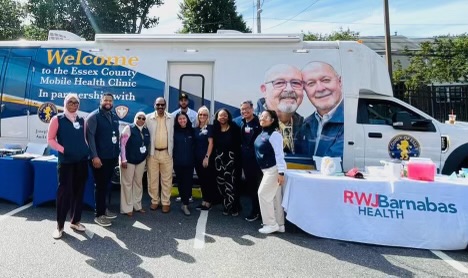
Ten of the community health workers have been hired and trained to date, according to RWJBarnabas, and on Saturday they joined officials from Essex County’s health department and leaders at Metropolitan Baptist Church in Newark for an event that included flu shots, screenings for stroke and opportunities to connect residents with other care.
“We are building partnerships with people who are already there, but bringing our resources to them,” Grewal-Virk said. The current state budget — which took effect in July — appropriates $30 million to build on this platform through a partnership RWJBarnabas expects to form with University Hospital. An additional $50 million in this year’s budget was set aside for RWJBarnabas Health to expand this work in other communities it serves that experience significant disparities in access to care — or clinical outcomes — related to race, income or other demographics, an initiative RWJBarnabas leaders said is under development.
Newark’s needs
Health outcomes in Newark, a racially and ethnically diverse city of more than 300,000 people, often lag those recorded statewide. Newark also has higher rates of diabetes, obesity and low-birthweight babies than the average for more than 900 urban areas nationwide, according to 2020 data compiled by the City Health Dashboard, a project created by NYU Langone Health and the Robert Wood Johnson Foundation. Opioid deaths in Newark are three times the national cities average and people there are twice as likely to lack health insurance, the data shows, while fewer than 6 in 10 women in Newark get prenatal care. (The foundation also supports NJ Spotlight News.)
Newark has three acute-care hospitals — Saint Michael’s Medical Center, a half mile northeast of University Hospital, is not directly involved with the state-funded program — a network of community clinics, an active city health program and a host of social services, but providers in the city say there is a disconnect among these programs that leaves patients struggling to get the care they need.
‘The state of New Jersey needs to renew its commitment to fully fund our only public hospital and provide the resources necessary to build a new campus, instead of giving money to a wealthy private hospital corporation.’ — Debbie White, HPAE health care workers’ union
“There’s no continuity of care. That’s a huge problem for kids in Newark,” said Mazzola, who has seen patients in Newark for several decades. The prospect of deploying additional community health workers to help bridge these gaps, as RWJBarnabas seeks to do, makes sense to her. “We need nurse navigators or clinic coordinators translating medical language into language parents understand,” she said.
But Mazzola and others wonder why this work isn’t being led by University Hospital, given its historic role in the community, connection to the state university and public status. For some, the concerns are magnified by a complex collaboration RWJBarnabas Health established with Rutgers Biomedical and Health Sciences — which oversees medical schools and other clinical programs in Newark and New Brunswick — that they fear will drain resources from University Hospital and Newark care in general.
Overhauling University Hospital
Debbie White, a nurse and the president of HPAE, the state’s largest health care union, is another University Hospital advocate. The public facility “must be nurtured, protected and supported. If we are looking to ‘improve access to health care for the residents of the City of Newark,’ as this program claims, we should focus our efforts on University Hospital,” she said in a statement.
 Credit: (AP Photo/Ted Shaffrey)
White and others have called on the state to provide more money to overhaul and rebuild the University Hospital complex, a project estimated to cost $1.8 billion, as of early this year. She said she was disappointed when the budget Gov. Phil Murphy signed in July included just $60 million for this capital work, in addition to nearly $58 million in operating funds that University has received for years based in part on the number of state workers on its payroll, including Rutgers University staff.
The documents which lawmakers must file as part of the budget process contain little detail about the program, with the $50 million resolution describing the work as the ‘Newark projects.’
“The Newark Accords provided University Hospital as a commitment to the underserved city of Newark but currently this facility is crumbling, and state budget funding has been woefully inadequate,” White said. “The state of New Jersey needs to renew its commitment to fully fund our only public hospital and provide the resources necessary to build a new campus, instead of giving money to a wealthy private hospital corporation.”
When asked about the program’s design with RWJBarnabas as the lead, the state Department of Health — which will allocate the bulk of the funding — referred questions to Murphy’s office. Staff there recommended speaking with the lawmakers who sponsored the budget resolutions, Sen. M. Teresa Ruiz and Assemblywomen Eliana Pintor Marin and Shanique Speight, all Democrats from Newark; Ruiz and Pintor Marin have historically been strong supporters of the city and University Hospital. The Assembly Democratic office deferred to Ruiz, who declined to comment through staff in the Senate Democratic office.
Few details
The documents which lawmakers must file as part of the budget process contain little detail about the program, with the $50 million resolution describing the work as the “Newark projects.” The resolution for $30 million indicates that money will be for work done through a partnership between Beth Israel and University to improve access to care for Newark residents. It also calls for a report on this work to be filed with the state Health Department by May 30, but doesn’t specify which year.
Officials at University Hospital declined to discuss their role in the project before the partnership with RWJBarnabas is in place, but offered a statement from a hospital spokesperson: “University Hospital has played a critical role in the delivery of healthcare to Newark for decades, and so is well attuned to the issues facing Newark residents in this space. UH has devoted significant focus, particularly in recent years, to developing projects that are responsive to the needs of the community. The Hospital looks forward to expanding its reach through collaboration with RWJBarnabas.”
The initial $25 million allocated in the last fiscal year, is to improve access to primary and specialty care and better integrate those services, according to the budget resolution, and “to support RWJBH commitment and investment in the City of Newark to catalyze collaboration between government and non-profit organizations spanning across various aspects of the health care delivery pyramid with a focus on social, health, and acute care infrastructure.”
