Credit: (charlesdeluvio via Unsplash)
Adults 55 and older who have a serious mental illness can see a therapist more quickly after some nonprofits are using state funding to reduce wait times for behavioral health care in three New Jersey counties.
“With the understanding that wait times are a major barrier to older adults receiving proper treatment for [a serious mental illness], the Department decided to focus on improving outpatient services in regions identified as having the longest wait times for outpatient counseling and prescriber services,” Valerie Mielke, the assistant commissioner for the state Division of Mental Health and Addiction Services, said in a statement.
The move by state officials and nonprofit leaders to address barriers to behavioral health care for older adults comes as 15.4 million adults aged 18 or older in 2022 had a serious mental illness in the past year, according to a report from the federal Substance Abuse and Mental Health Services Administration. In New Jersey, 248,000 adults have a serious mental illness, according to the National Alliance on Mental Illness, based on data from February 2021.
In Sussex County, the wait time for outpatient services was about 13 weeks for people 18 years and older who were seeking access to a therapist or clinician, according to Mielke. In Burlington and Union counties, it was about eight weeks. The state grants will cover services in those three counties.
Delays add to issues
While long wait times are an issue for anyone seeking medical care, they are extremely problematic for older adults with serious mental illness, according to Dr. Karen Zurlo, an associate professor at Rutgers School of Social Work. These longer wait times exacerbate conditions and leave older adults feeling isolated and not cared for by the medical community, she said in an email.
Additionally, delayed treatment can lead to increased levels of disability, substance use, homelessness, incarceration and decreased quality of life, Zurlo said. Caretakers then have the added responsibility and burden of attending to these long wait times, too, because a serious mental illness affects the entire family.

“If you have to wait for your care, and you run out of meds, for example, your symptoms may reemerge and it’s going to be a cascading effect into the various functions of your life,” added Dr. Carrie Ditzel, director of geropsychology and neuropsychology at Baker Street Behavioral Health in Franklin Lakes. “It’s not only that you’re going to feel distressed, but you then may not be able to be organized enough to take care of yourself anymore independently,” said Ditzel, who’s also a clinical psychologist.
Serious mental illness is defined as a mental, behavioral, or emotional disorder, resulting in serious functional impairment that significantly interferes with or limits one or more major life activities. While there are many kinds of serious mental illnesses, common ones include bipolar disorder, major depressive disorder and schizophrenia, according to the Substance Abuse and Mental Health Services Administration.
Federal funding
The one-year state contracts were given to Legacy Treatment Services in Burlington County and Bridgeway Behavioral Health Services in Sussex and Union counties, according to a news release from the state, with awards of up to $213,812. The money comes from the federal American Rescue Plan Act, according to Mielke.
The services provided include “linguistically and culturally appropriate” outpatient and prescriber services, with the providers employing, at a minimum, one full-time master’s level clinician and a “part-time prescriber” to provide services, according to the news release.
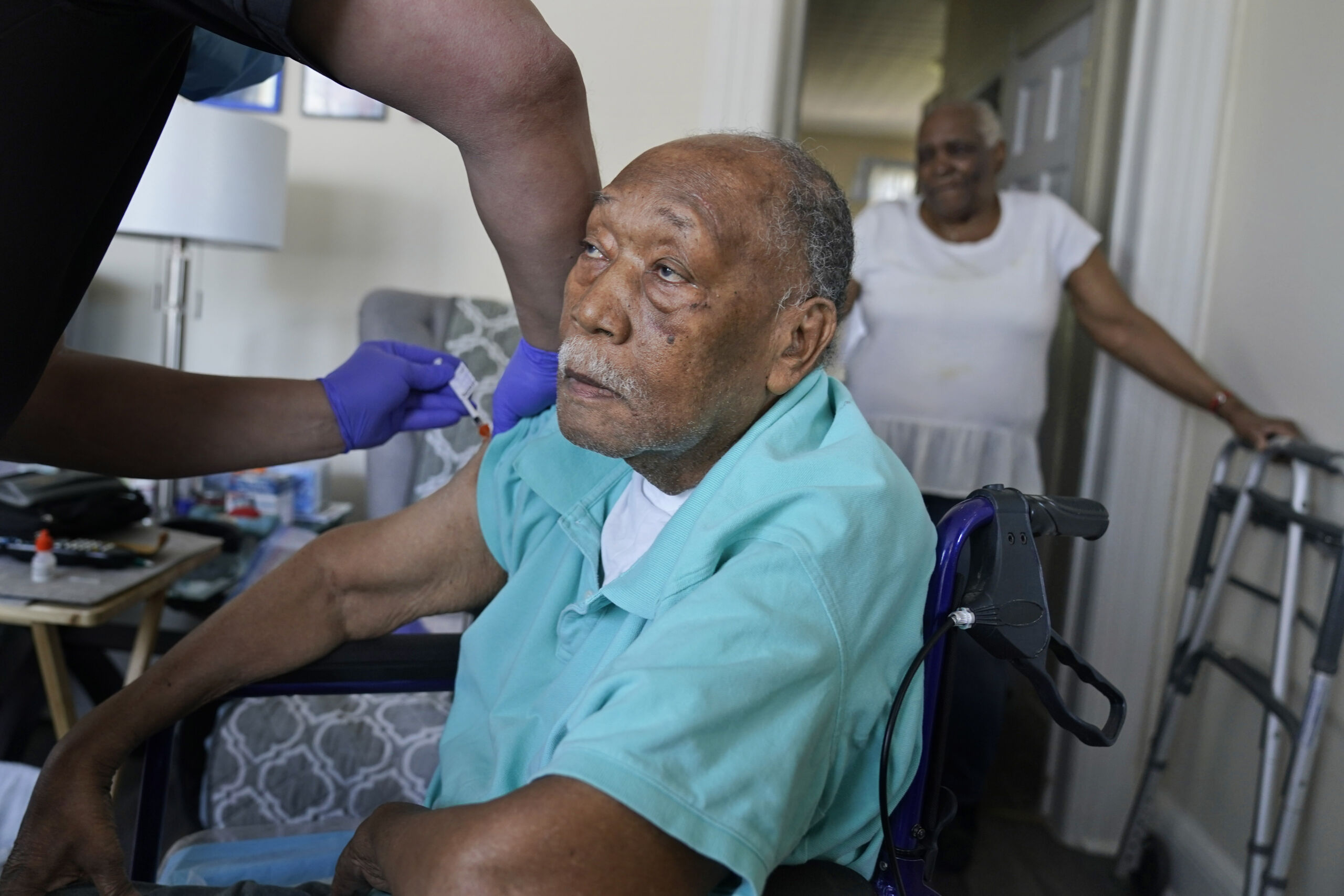
Legacy Treatment Services has already started tapping the funds, with services beginning Dec. 1, according to Christine Kirkbride, the chief operating officer at the nonprofit. The organization hired a full-time therapist as well as a part-time psychiatric advanced practice nurse, both of whom are dedicated to working solely with older adults, Kirkbride said.
With the funding, the nonprofit is offering individual therapy, psychiatric evaluation and medication monitoring, according to Kirkbride. After hiring another full-time therapist, Legacy will begin offering group therapy for older adults.
“Over the years, we’ve identified older adults as those who need the services, but for whatever reason, the systems don’t tend to reach them,” Kirkbride said.
Improved wait times
Kirkbride says wait times for older adults with a serious mental illness can now be under 72 hours from the time they call Legacy. Before the hiring of this additional staff, older adults would have to wait for about a week, on average, before their first appointment.
But while outpatient therapy for older adults has been “fantastic,” Kirkbride would like to see the nonprofit expand more into “community case management,” where caseworkers go to the homes of older adults to assist with grocery shopping or help them pay their bills.
“Especially for those adults who are still isolating quite a bit, having somebody come out and be that point of contact for them would be helpful,” Kirkbride said.
And as for older adults who are feeling depressed, anxious or alone, Ditzel recommended mimicking coping strategies that have been helpful during similar experiences in the past.
“At minimum, if you’re kind of struggling, reach out somehow,” she said. “It doesn’t mean you have to go find a therapist right away. But reach out to someone — maybe it’s a medical doctor, maybe it’s a friend, family member — and connect in some way.”