
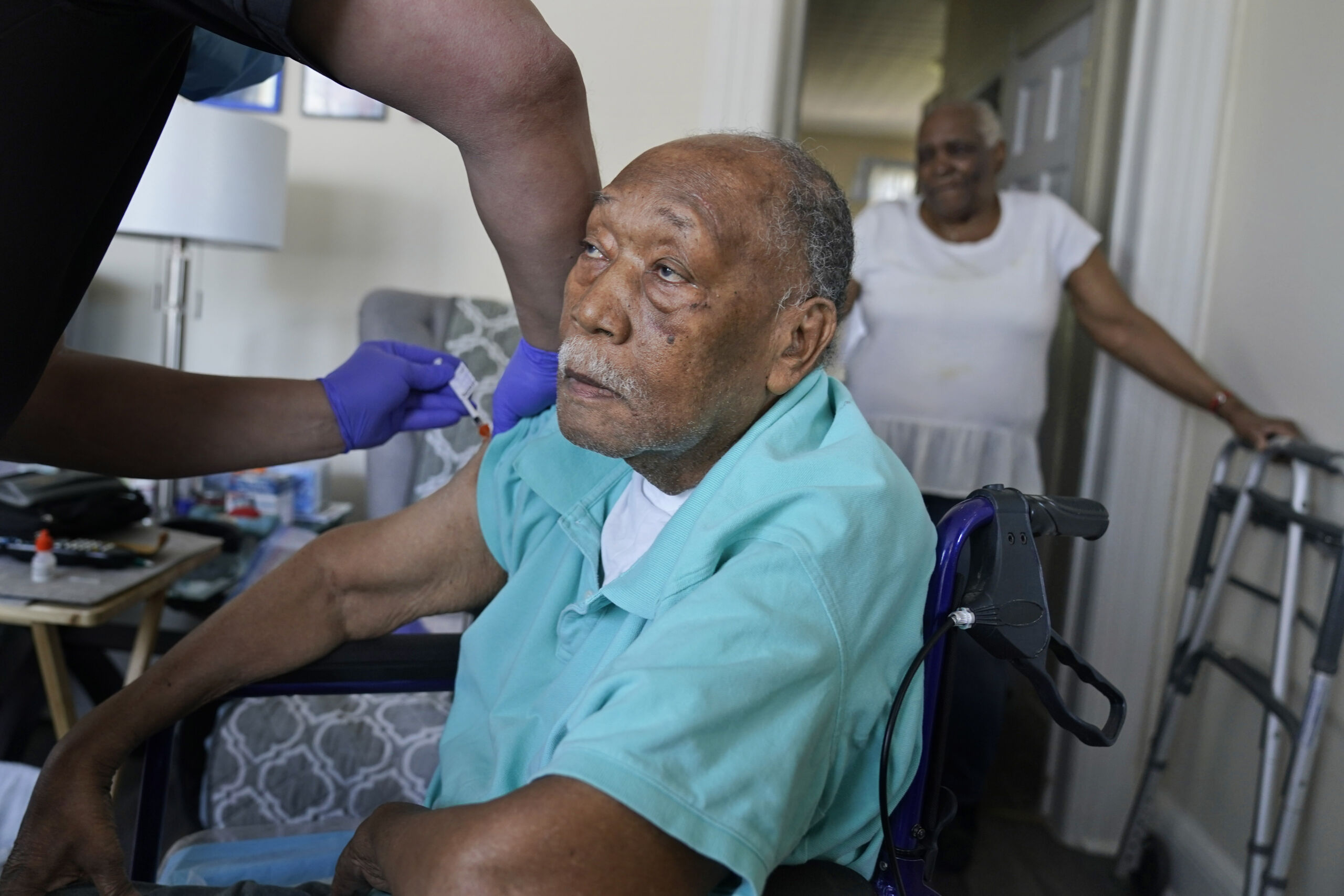
 Credit: (AP Photo/Seth Wenig)
New Jerseyans of all ages have felt the psychological burdens caused by COVID-19 as the pandemic continues for a third straight summer.
That includes the older adults in the state forced to isolate from friends and loved ones at the height of the pandemic. It also applies to those shuttered inside nursing homes, where they were extremely vulnerable to the virus. Nursing home residents represented 40% of COVID-19 victims in the state by May 2020.
That helps explain why one in four adults 65 and older reported anxiety or depression in August 2020, according to the Kaiser Family Foundation, a rate that has been constant since the start of the pandemic.
True, there are now vaccines and other treatments in place, but older adults face the challenge of regaining a sense of normalcy while battling mental health issues that can often be confused as being simply part of the aging process. And older adults who have struggled with symptoms, including depression, are sometimes reluctant to come forward to seek treatment and to speak to others about how these issues are impacting their lives.
Not just part of growing older
“So for example, feeling down … feeling a little lonely, maybe some changes in appetite, maybe not sleeping as great, those kinds of things sometimes happen when life changes, and you become older or medical issues are present,” said Dr. Carrie Ditzel, the clinical manager of the geropsychology program at Baker Street Behavioral Health.
“But those are also symptoms of clinical depression. So it’s really important now for older adults … to recognize in themselves and for family and friends to recognize if they’re seeing those symptoms and figuring out exactly what is going on,” Ditzel added.
New Jersey has appropriated $6.99 million in state aid to the Division of Aging Services in the new budget and has received a $4.5 million share in state aid from the Older Americans Act, federal legislation originally signed into law in 1965 to address the lack of community services for older adults. Today, the Older Americans Act supports a variety of social services and programs for people 60 and older, including funding meals served at senior and community centers and family caregiver support.
The newly signed state budget gives more than $283 million in grant money to the Division of Medical Assistance and Health Services for Medicare Parts A and B. Part A covers inpatient care in hospitals, hospice care and home health care. Part B covers mental health services, including inpatient and outpatient care and partial hospitalization.
“I think Medicare and other agencies and governments are recognizing that your mental health does have an impact on your physical health,” Ditzel said. “We are part of one whole system and that there is a need to address mental health in order to help with good health outcomes.”
The spectrum of seniors
Baker Street Behavioral Health also provides Medicare to address the different socioeconomic needs of older adults seeking mental health services, according to Dr. Adeola Sonaike, the chief operating officer at the behavioral health center. “You have some seniors who live in multigenerational homes. You have some seniors who live in assisted living facilities. You have some seniors who rely solely on Medicaid and Medicare, and the seniors who have great retirement policies. And so there’s this really significant spectrum,” said Sonaike.
The solutions for addressing the range of mental health needs for older adults are multilayered but include individual care coupled with providers who are culturally competent in addressing the needs of their clients.
“I think that the way in which we provide equitable care is that we create a very diverse workforce in our mental health sector,” Sonaike said. “We need diverse providers who have the training, the experience (and) who have access to the training and the experience to be able to provide the best quality of care to whoever’s sitting in front of them.”
In terms of day-to-day steps to improve mental health in older adults, Ditzel recommends moving every day, decent nutrition and having sleep routines. “Connecting to others is another big category, again to deal with that isolation and loneliness in whatever way is possible,” Ditzel added.
But in order to address these solutions, there remains a need for more people who can professionally address the mental health needs of older adults.
“We need more folks out there doing this really good work and we need more support for the folks doing this really good work to respond to any sort of mental health challenges an older person may have in the community or in any kind of long-term care setting,” said Dr. Lauren Snedeker, an assistant professor of teaching and the coordinator for the Aging and Health Certificate program at the Rutgers University School of Social Work.
