Credit: (Hannah Gross/NJ Spotlight News)
On the eve of an election in which the topic of LGBTQ+ rights in schools has been an explosive issue, the state Board of Education on Wednesday narrowly reaffirmed new equity rules for New Jersey’s public schools that supporters said were protective of LGBTQ+ and other rights.
The state’s so-called equity code had become the center of controversy after it was readopted in August, sparking criticism from some politicians and activists that it should have been given more deliberation.
Facing a motion to reconsider the code, the board on Wednesday voted 5-4 against reconsideration and the new code will remain in effect as is.
Adopted on a seven-year cycle, the equity code is meant to ensure all students have equal access to educational opportunities regardless of race, gender identity, sexual orientation and other protected categories. It includes rules on a wide range of school responsibilities and functions, from their facilities to class enrollments to instruction materials.
In August, the board approved what are typically routine revisions to the code that included switching out the word “equality” for “equity” and using more gender-neutral language. It voted 6-5 to approve the changes that supporters said would be more inclusive for students. Some board members said they would have liked more time to revise the code and review the hundreds of comments the board received, many in opposition.
Pushback after August vote
The August vote prompted pushback from advocates for “parental rights” who said they want more control over what is taught in schools. State officials maintain the updated regulations do not require any changes to local district curriculums.
That was just the beginning of the storm. State Senate President Nick Scutari and Assembly Speaker Craig Coughlin also questioned the board’s August decision, saying the vote needed further discussion and the Legislature should have been conferred with.
Directing districts to separate students based on gender identity rather than biological sex is discriminatory to girls who don’t want transgender students in their class, board member Andrew Mulvihill said.
The board’s action also drew outcry from mostly conservative “parental rights” groups and surfaced as an issue in local and state races where policies around gender and equity have been contentious.
This prompted board vice president Andrew Mulvihill — the leader of the board’s opposition to the code — to move a motion for state Commissioner of Education Angelica Allen-McMillan to reopen the issue for reconsideration at the board’s meeting on Wednesday.
“It’s important to listen to the public,” Mulvihill said in introducing the motion. “Sometimes we can get things wrong. I’ll leave it to the board members and whether they think there are some things that need to be revisited.”
Request to reconsider
After initial discussion, Mulvihill revised his motion to ask the commissioner to reopen the code and look at just two items — the timeline for districts to implement their equity plans and guidelines for sex education classes. The revised code says that classes dealing with human sexuality “may be conducted in separate developmentally appropriate sessions based on gender identity.” Previously, it said classes could be conducted separately for male and female students.
Mulvihill said directing districts to separate students based on gender identity rather than biological sex is discriminatory to girls who don’t want transgender students in their class. He said how to proceed should be left up to local boards of education, so the state board does not need to pick between the rights of trans students and girls.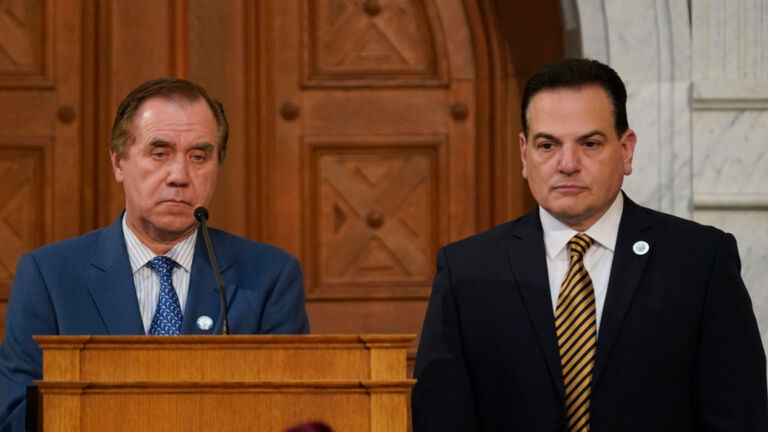
“We’re dictating to them which class they should protect. We’re picking the trans kids over girls,” Mulvihill said.
Board member Sylvia Sylvia-Cioffi responded that sex education classes are not required to be separated at all. McMillan added that parents have the right to opt their child out of lessons on human sexuality.
Guidance from the state on transgender students says that all students should be permitted to participate in gender-segregated activities in a way that aligns with their gender identity. This guidance has been in place since 2018 without controversy until this year.
The basic concerns
Mulvihill also opposed the shortened timeline for districts to implement their “comprehensive equity plans” which must be created every three years to ensure equitable access to educational opportunities for all students. Board members on both sides of the initial vote had previously expressed concerns about the timeline being reduced from 180 days to 60 days. Allen-McMillan said that under the current code, school districts may request extra time to implement their plans.
But Mulvihill could not change enough board members’ minds. Board president Kathy Goldenberg changed her vote to an abstention after the vote was already decided, citing protocol for a board president under Robert’s Rules of Order.
‘We’re hearing a lot of opposition from a smaller percentage of the population that has a very vested interest.’ — Ronald Butcher, member, state Board of Education
Board member Arcelio Aponte said while the code is not perfect, it should be up to the state Department of Education to determine whether any changes are needed.
“The core principle of this document is that all students should have access to a thorough and efficient education in a fair and impartial environment. This chapter speaks to that and provides guidance in how to ensure each student has access to a thorough and efficient education,” Aponte said.
Ronald Butcher, the longest-serving member of the board, agreed there were some concerns, but not enough to warrant revisiting the code. He was not present at the initial vote in August but said he would have voted to approve the updated code.
‘Vested interest’
“We’re hearing a lot of opposition from a smaller percentage of the population that has a very vested interest. They’re well organized, they are very well able to communicate their interests, but I don’t know that those interests are in the best interest of all children,” Butcher said.
Unlike the action in August where the state board’s meeting was filled with protest and heckling, the meeting on Wednesday drew only a few people to the Trenton conference room and none of the rancor.
Politicians were keeping a low profile afterward, too, with just six days before elections for all 120 seats of the Legislature and scores of local offices.
Neither Scutari nor Coughlin’s offices responded to requests for comment. State Sen. Vin Gopal (D-Monmouth), chair of the Senate’s education committee and critical of the first vote, also did not respond to a request for comment. Gopal is in an especially tight race for his Monmouth County seat where the issues of LGBTQ+ rights have been prominent.