
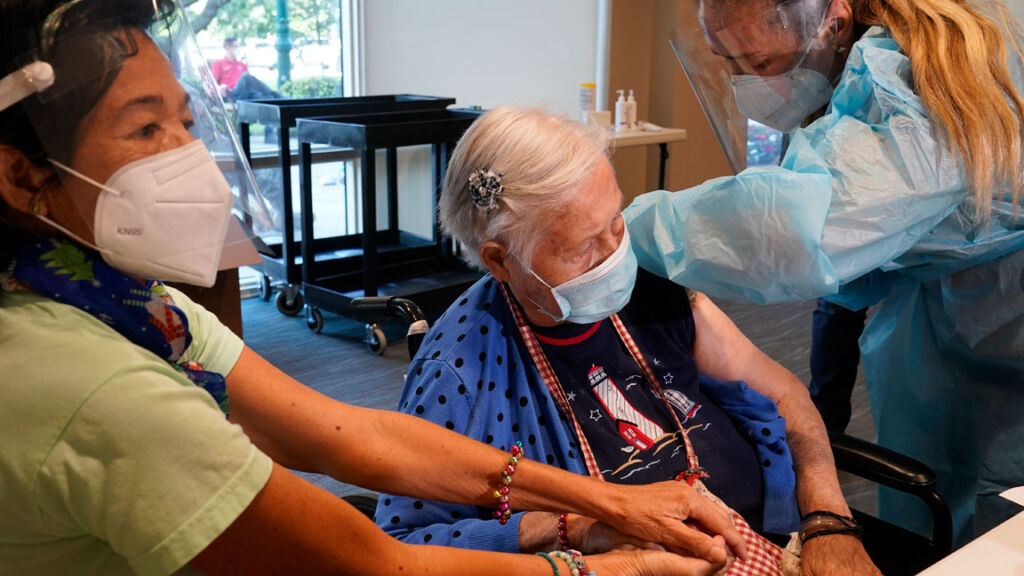
Four months after the health emergency officially ended, COVID-19 is seeing a new bump in cases and hospitalizations in New Jersey — along with a newly formulated vaccine and some questions about its availability.
The overall threat of COVID-19 remains relatively low, well below the figures of a year ago and a fraction of those during the height of the pandemic. But New Jersey is seeing an uptick from the all-time low points recorded this summer, and state figures show the number of new cases reported has more than tripled since late June, and related hospitalizations have doubled in the past six weeks.
The upward trend comes as federal officials expect a new COVID-19 vaccine — formulated to better target recent variants of the coronavirus – to be available nationwide by mid- to late September.
Questions about its affordability have some public health officials concerned about access to the new shots, particularly for people who are uninsured. Unlike during the pandemic, these shots will no longer be available for free. Insurance will cover the cost for most people, but experts are concerned some will fall through the cracks as the vaccine goes on the commercial market.
Who will pay?
After President Joe Biden called an official end to the COVID-19 health emergency in May, the federal government has phased out a number of pandemic-related health and welfare initiatives and no longer foots the bill for all COVID-19 vaccinations, tests and treatments. The reformulated shots will be distributed by the drugmakers like they do with other immunizations and are predicted to cost between $135 and $155 per dose, a price that could be a barrier — or even prohibitive — for some people.
“That’s a distinct difference” when compared to past years, said Brian Pinto, a pharmacist and owner of Tiffany Natural Pharmacy in Westfield, which will offer the new shots. When the federal government was paying, no one considered the cost, he said. “Now that we are in a commercial space, it will be a choice that [the uninsured] population will have to make,” Pinto said.
Lilo H. Stainton discusses the latest on COVID-19 in New Jersey
Health centers, drugstores and doctors’ offices that participate in a federal program that historically funds flu vaccines and other immunizations will also receive COVID-19 shots they can administer to adults for free, according to the state.
A separate federally funded program for children will be used to immunize uninsured children against COVID-19, officials said. Another short-term federal initiative — the Bridge Access Program — will funnel free vaccinations to nonprofits, community health clinics, local health offices and some pharmacies over the next 15 months, they added.
“The [state Health] Department will continue to work with providers, including the pharmacy chains, to ensure access for vulnerable populations,” said Nancy Kearney, deputy director of communications for the state Department of Health.
Still a public health priority in NJ
Kearney said the coronavirus — which has infected at least 2.6 million New Jersey residents and contributed to the death of more than 36,000 since the pandemic began here in March 2020 — remains a significant public health priority for the department.
“Many are still affected by COVID-19, particularly seniors and people with disabilities,” she said. “The Department remains committed to maximizing the availability of COVID-19 vaccines and treatments.”
We don’t have good metrics at all to track the [real] number of cases.’ — Dr. Denise Rodgers, Rutgers Biomedical and Health Sciences
COVID-19-related hospitalizations — considered a clear indicator of the disease’s impact on the health system — were listed at 311 on Thursday, according to state records, roughly double the all-time low of 155 recorded in early July, although still a far cry from the 6,000 patients hospitalized during previous peaks.
The state recorded 2,409 new diagnoses the week that ended Aug. 19, some 3.4 times higher than the 696 cases logged during the week ending June 24, another historic low, but a fraction of the nearly 28,000 cases reported during the peak week ending May 21, 2020. At least 65 people have died of COVID-19 in less than 10 weeks since diagnoses dipped to their lowest point in June.
How many cases? Who knows?
Experts warn that the case numbers are a vast undercount, given the popularity of home tests for which results are not required to be reported. With drugs like Paxlovid, which can be taken at home to treat COVID-19, hospitalization data also may not provide an accurate picture of the status of disease.
 Credit: (John Mooney; NJ Spotlight News)
“We don’t have good metrics at all to track the [real] number of cases,” said Dr. Denise Rodgers, a vice chancellor at Rutgers Biomedical and Health Sciences and a public health leader in Newark.
Like many people, Rodgers said her sense of COVID-19’s impact now comes largely from “how many people I know who have got it.”
Rodgers said that the lull in viral activity earlier this summer and impatience with the pandemic in general may have led people to discard their masks and other public health precautions while enjoying time with friends and family.
“That little false sense of security — that we are done with COVID” likely contributed to the uptick, she said.
Back-to-school campaign
State health officials launched an immunization campaign earlier this month, focused in large part on back-to-school shots for students, and they continue to urge people of all ages to stay up to date on their COVID-19 vaccinations. State data shows nearly 7 million New Jersey residents received their initial series of vaccines and 1.4 million also got a bivalent booster, the reformulated shot released last fall.
Experts note the formulation of the vaccine to be released within weeks is a monovalent that targets a single strain of the coronavirus. It was developed based on the highly infectious omicron variant that ravaged New Jersey in late 2021 and the winter of 2022. The new strains circulating today are offshoots of omicron.
Some pharmacies may not order all three brands of vaccine, said Brian Pinto of Tiffany Natural Pharmacy, Westfield
“The question is, should people wait until mid- or late September to get vaccinated,” Rodgers said. She said people with conditions like heart disease or diabetes that put them at higher risk for COVID-19 may want to get their shots sooner, but others might consider waiting for the updated version.
“It will have better protection against the newest variant,” she said.
Rogers also urged people to wear masks in public, avoid crowds if possible and consider testing themselves before attending an event. Epidemiologists predict that, as in past years, COVID-19 numbers could continue to rise as we move into fall, along with cases of the flu and other respiratory diseases that are more easily spread indoors.
Changes at pharmacies
Pinto, at Tiffany pharmacy, said ordering and stocking COVID-19 vaccines has become simpler since the pandemic formally ended. Instead of working through state or federal officials, he can now place orders for the vaccines directly with wholesale pharmaceutical brokers. Pre-filled doses instead of bottles that needed to be decanted into syringes will also speed the process and reduce waste, he noted.
“It makes it easier for pharmacies to be able to not hold on to so much inventory,” Pinto said. “The question is, how much does a pharmacist want to stock, now that we are going to have to pay for it” upfront, he said. Some stores may not order all three brands of vaccine, he said, adding, “Patients may have to make that extra phone call to make sure what they want is in stock.”
So far, Pinto said his team has been reimbursed by insurance companies, including Medicaid and Medicare plans, for almost all the vaccinations they have administered since the public health emergency was officially ended last spring. “It’s just like billing for any other prescription at the pharmacy,” he said.
While demand for COVID-19 shots nearly overwhelmed New Jersey’s system when they first became available, it has declined significantly. Pinto said he doesn’t expect a crowd at Tiffany and urged people to use the pharmacy’s online system to schedule an appointment. Walk-ins will also be welcome, he said.
“Some want the [new] shot immediately and will be banging on the door that first day,” Pinto said. “But that’s a smaller population than in the beginning.”
