Credit: (AP Photo/Jae C. Hong)
With the start of a new school year approaching and the seasonal rise in respiratory viruses soon after, public health leaders are urging people of all ages to get vaccinated to protect themselves and others against COVID-19, influenza and other diseases.
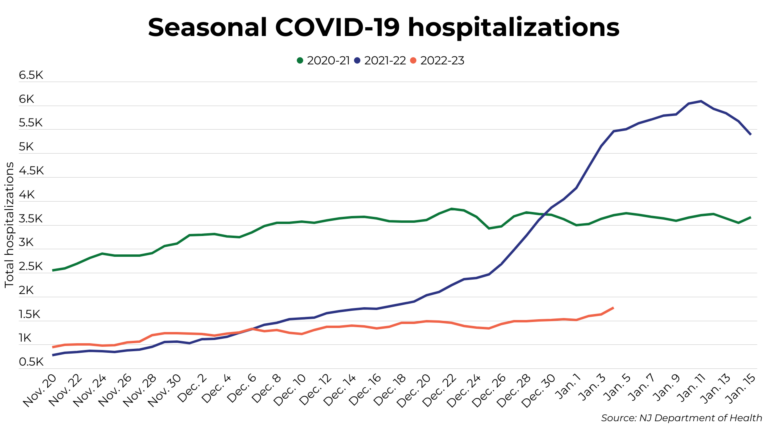
The public awareness campaign — during what state and federal officials have declared to be Immunization Awareness Month — is also fueled by concerns about declining vaccination rates among children, both nationwide and in New Jersey. And experts are worrying about the recent increase in COVID-19 cases across the country, which has driven up hospital admissions by more than 12% in recent weeks, and how last fall doctors reported an unusual “tripledemic” threat of COVID-19, flu and respiratory syncytial virus, or RSV.
“New Jersey has observed a decrease in routine, childhood immunizations as seen on the national level,” said Nancy Kearney, deputy director of communications for the state Department of Health. The state saw a drop in routine immunizations for children due to disruptions in routine medical services especially during the first two years of the pandemic, Kearney said, adding, “People were reluctant to seek routine medical care.”
“Routine immunization is rebounding but has not yet recovered to pre-pandemic levels. It is crucial that we take steps to help get everyone back on schedule with their routine immunizations,” Kearney said. The health department is working with doctors, schools and local health offices to boost immunization rates statewide, she said, and promoting routine vaccinations and COVID-19 shots through social media, public service messages and other outreach campaigns.
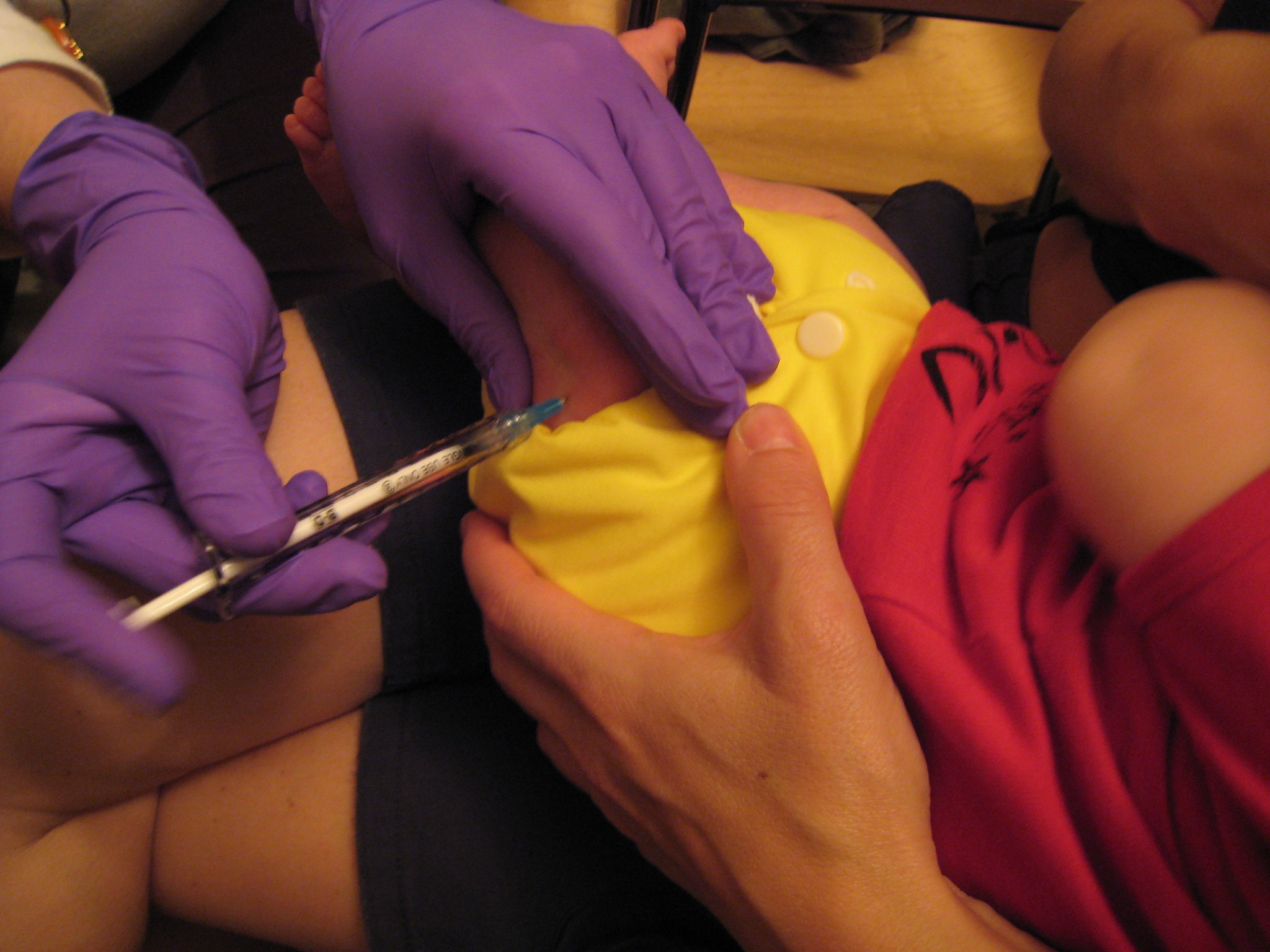
Some physicians are also encouraging elderly patients or others at risk, including infants, to consider protection against RSV. People over age 60 can get an RSV vaccination and the federal government recently approved a monoclonal antibody treatment to protect babies and young children from severe symptoms, which can be deadly for some youngsters. Like with COVID-19 and influenza, people can help reduce the spread of RSV by wearing masks, covering their mouths when they cough or sneeze, washing their hands frequently and avoiding crowds and sick people.
Downward trend
Since the COVID-19 pandemic, the percentage of children who receive some 14 recommended vaccines by age two has declined, slipping from approximately 95% in the 2019-2020 school year to 93% in 2021-2022, according to an analysis of federal data by the independent nonprofit research group Kaiser Family Foundation. A two-point drop nationwide over two years is not particularly worrisome, according to the Kaiser analysis, but it said the trend is disturbing to experts who have set a public health target of 95% immunization coverage for this group.
New Jersey’s vaccination rate for this age-2-and-under population — 94.1% in 2021-2022 — was above the national average but below the threshold recommended by experts, according to the Kaiser review. A separate Kaiser Family analysis of this toddler-age group found a racial disparity in immunization levels nationwide, with some children of color less likely than white kids to get their shots. This gap is even greater in New Jersey, where nearly 63% of Hispanic kids and 65.4% of Black children are vaccinated, compared to 70.5% of white kids.
‘Routine immunization is rebounding but has not yet recovered to pre-pandemic levels. It is crucial that we take steps to help get everyone back on schedule with their routine immunizations.’ — Nancy Kearney, deputy director of communications, NJ Department of Health
“Certainly, like everything else, the pandemic had a negative effect on children staying on their schedule for vaccinations. Early on, doctors’ offices were closed and not seeing children for regular visits which had a negative effect on children staying up to date on vaccinations,” said Monmouth County Health Officer Chris Merkel, who also heads the New Jersey Association of County and City Health Officials. State health officials launched a campaign in May 2020 to remind families to stay on track with the shot schedules, noting that compliance had dropped by as much as 60% since the pandemic’s start among older children, outreach that led to an increase in immunizations several months later.
Merkel and other public health leaders are also concerned about vaccine hesitancy, which grew nationwide with the emergence of COVID-19 immunizations but predates the pandemic in this state. “There is vaccine hesitancy and anti-vaccination groups in New Jersey and tons of misinformation on social media about vaccinations,” he added.
State and local public health officials, like Merkel, are also tracking a rise in religious exemptions to required vaccinations in New Jersey, meaning fewer children are fully protected each year. Democratic lawmakers tried to eliminate New Jersey’s religious exception option but backed off after facing massive opposition. No organized religion opposes vaccinations outright and most embrace them as public health protections. But unprecedented opposition driven largely by vaccine skeptics led lawmakers to scuttle the plan.
What’s been happening in NJ
New Jersey data from school districts shows that the number of children in pre-kindergarten through sixth grade who received their required vaccinations has also declined over the past decade. In the 2013-2014 school year, 95.3% of this group had received all these shots and in 2022-2023 the rate had slipped to 92.8%, according to the data.
Under New Jersey requirements, children must be vaccinated against about a dozen diseases, from chicken pox and measles to polio and whooping cough. New Jersey was among a handful of states that reported cases during a measles outbreak in 2018 and 2019, which health officials here said was spread by people visiting out-of-state communities where vaccination rates were especially low.
‘There is vaccine hesitancy and anti-vaccination groups in New Jersey and tons of misinformation on social media about vaccinations.’ — Chris Merkel, New Jersey Association of County and City Health Officials
Influenza vaccines are also required for children in daycare or attending school, and state officials encourage people of all ages to get these shots. While not mandated, experts also urge everyone to stay up to date on COVID-19 vaccinations and boosters. People can search the state website for sites that offer these shots for free, but the federal government no longer requires that COVID-19 vaccines be available for free.
The health department has also partnered with more than a dozen daycare facilities, local health offices — like the one in Monmouth County — and community programs on its fifth annual Hot Shots for Tots vaccination campaign. These entities compete to raise the number of toddlers who are fully immunized to better protect public health. Another promotion designed to encourage adolescents to be vaccinated against COVID-19, flu and other transmissible diseases is in its 11th year, according to state officials.