 Credit: (AP Photo/Matt Rourke)
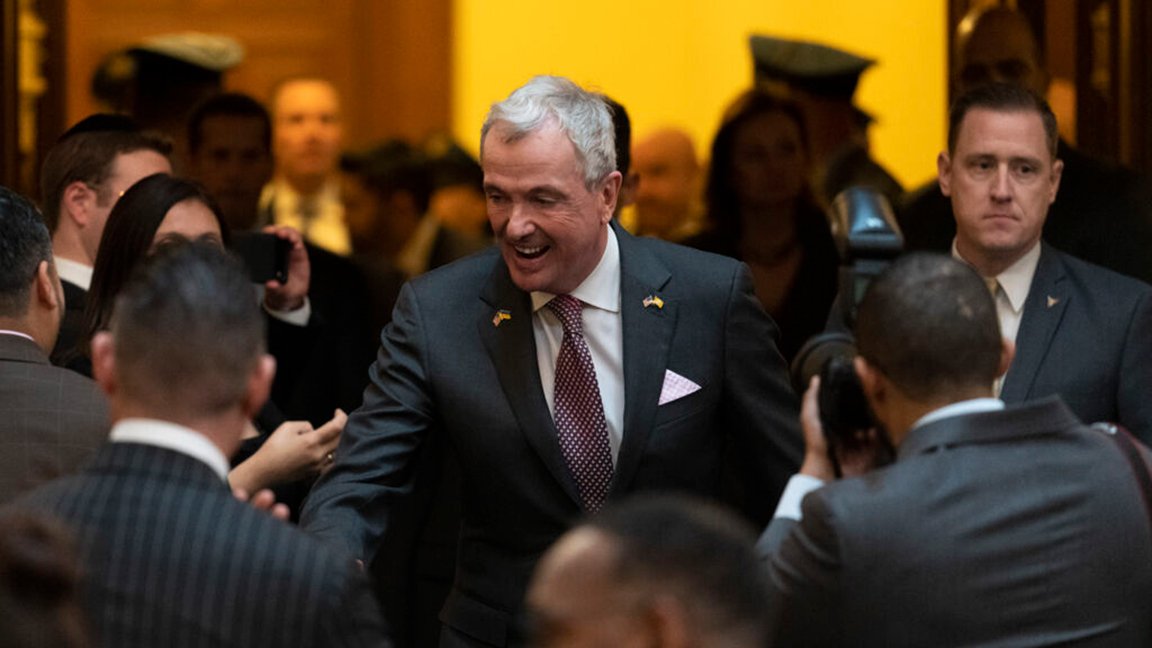
By many accounts, Gov. Murphy’s State of the State speech showed that he’s veering away from the publicly progressive politician he once campaigned to be. But he’s not the only one in the Democratic Party taking this strategy, worrying progressive advocates about their agenda in the years ahead.
Some advocates said Murphy’s speech was the final turn in the Democrats’ moderate direction, and they worried there will be less support for their favored issues in Trenton.
“I understand that the State of the State is not meant to be a comprehensive policy agenda,” said Amol Sinha, executive director of ACLU NJ. “But in the moment where national politics isn’t serving the people, we are more polarized than we’ve ever been. There is a backlash from the crowd. I think we were all eager for a social justice vision.”
‘The reality is that we have stark racial disparities in this state. Pretending they don’t exist doesn’t serve anyone.’ — Henal Patel, New Jersey Institute for Social Justice
Advocates pointed to continued efforts in police and criminal justice reforms in the context of racial justice. In his State of the State address, Murphy explicitly supported an auto theft bill, which advocates say might further marginalize Black and Latino residents. And he took the time to praise law enforcement efforts at repairing relationships with nonwhite communities, but failed to mention that police accountability bills are languishing in the Legislature.
What Murphy didn’t highlight
Other advances that Murphy has successfully championed during the last two years, like insurance coverage for undocumented children or tackling the racial wealth gap, were absent from his speech.
“We are more diverse than most other places in the country,” said Amy Torres, executive director of the New Jersey Alliance for Immigrant Justice. “And yet the people in the communities that are contributing to that diversity were nowhere to be found in (Tuesday’s) address.”
Murphy’s address reflected how the Democratic Party, in New Jersey and nationwide, is at a critical moment with how it responds to the Republican Party’s wins in the recent congressional elections. The progressive strategy that brought the Democrats success in 2017 — of which Murphy was a part — is losing moderate support, turning over key parts of government to Republicans.
And while Murphy can’t run for governor again, he still sets the political tone and direction for the state Legislature, where all seats are up for election in November. Progressive advocates fear their agenda could be watered down this year, just as they say Murphy’s speech was.
“The reality is that we have stark racial disparities in this state. Pretending they don’t exist doesn’t serve anyone,” said Henal Patel, law and policy director of the New Jersey Institute for Social Justice. “And to be fair, I truly believe the governor knows that, right? They haven’t shied away in the past ever … generally at least acknowledging that there are racial disparities across the era. So I think it’s just a matter of what we’re prioritizing for the year 2023.”
A question of justice
Patel said that one line in Murphy’s address stood out to her, when the governor said there was an “obligation to make the word ‘justice’ run true in every community.” But she said the address as a whole “was short on concrete racial justice priorities that would fulfill that [obligation].”
As Sinha noted, Murphy mentioned equality and justice several times in his speech. The governor mentioned that “underserved communities,” which are often nonwhite, non-English-speaking families at or below the poverty level, bear the brunt of environmental racism. He also talked about Black and brown restaurant owners who suffered during the pandemic.
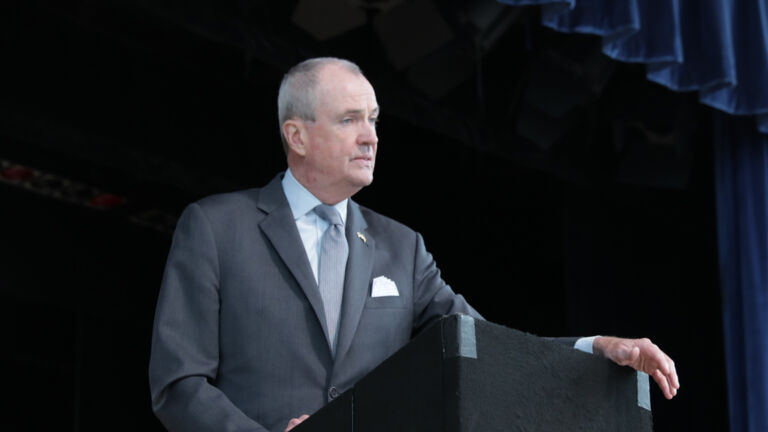
Murphy also said the American dream was hard to achieve for some, and would be “rebuilt” in New Jersey. But Sinha was left wondering, like Patel, how Murphy would help achieve those goals, especially since the only criminal justice policies he mentioned were “tough-on-crime” car theft bills.
“I’m worried that that’s only going to feed another era of mass incarceration,” Sinha said. “It’s going to separate more families, and it’s going to put Black and brown communities in harm’s way,” said Sinha.
Advocates said they were happy, at least, that Murphy mentioned the passage of the Freedom of Reproductive Choice Act in 2022 — although both they and the governor have agreed that more can be done to ensure racial and socioeconomic equity in access to abortion.
Advocates also said Murphy missed the opportunity to highlight certain policy directions or achievements.
What next?
They noted that when he called for environmental justice for underserved communities, the governor did not say what policies could take New Jersey there, especially as the environmental justice law he signed in 2020 has yet to be fully implemented.
When he mentioned voting protections for all, Murphy didn’t mention the same-day voter registration bill (A-1966/S-247) that advocates are pushing for and he supports, but which has not advanced in the Legislature.
Torres of New Jersey Alliance for Immigrant Justice said she was surprised Murphy didn’t mention his Cover All Kids program, which he signed into law in 2021. It expands Medicaid coverage for uninsured children in low-income families, including immigrant children with or without status.
“It was nowhere to be found” in the State of the State address, Torres said. “And over forty percent of New Jersey children come from immigrant families. This is a huge program; that’s a huge accomplishment to be proud of.”
‘We’ve reduced the prison population more than any other state. We pass marijuana legalization with a racial justice lens. We have … a national model for what bail reform should look like. And these things are the things that we need to lean into and not shy away from.’ — Amol Sinha, ACLU-NJ
“When we deemphasize wins, because they are for or on behalf of certain communities, it makes it that much harder for us to prioritize new campaigns that are really urgent and really needed for those very same communities,” Torres said.
Torres and other advocates said that because inequities in all facets of life in New Jersey — health care, wealth, education access, environmental safety, incarceration rates and more — persist, “bold” steps need to be taken to address them.
And to them, Murphy’s speech was not bold.
“New Jersey is bold in its leadership when it wants to be, right,” said Sinha of the ACLU. “We’ve reduced the prison population more than any other state. We pass marijuana legalization with a racial justice lens. We have a model, a national model for what bail reform should look like. And these things are the things that we need to lean into and not shy away from.”