Credit: (AP Photo/Lynne Sladky)
How Black, Indigenous, Latino and Asian Americans vote could determine some congressional seats this election, say political strategists, especially where the Democratic Party will need every vote it can get.
While the Black voting bloc has largely been essential to the Democratic Party’s wins on a national level, a CNN analysis of Gallup polls shows that the party is slowly losing support from Black voters — as well as Latino and young voters.
It’s long been an issue that the Democratic Party doesn’t know how to engage people-of-color voters, despite having a wider racial and ethnic diversity than the Republican Party.
But in these midterm elections, the Democratic Party is under fire for not having a cohesive message to move voters on a national level, when the opposite happens with its outreach to people of color. People of color criticize Democrats for treating them as a monolith — that all Black voters vote the same way, that all Latino voters vote the same way and so on. And they say the party only comes knocking on their doors closer to Election Day when it needs their votes.
This can leave those voters feeling misunderstood or like their vote doesn’t matter, political strategists say. And it is a complex task to capture the vote from people of color, who care about different topics because of their generation, their socioeconomic status, their religion or experience with immigration. Latinos, for example, have different party affiliations depending on the countries their families originate from, said Patricia Campos-Medina of Latina Civic Action.
Lack of diversity among campaign leaders
One long-standing issue is that campaign managers are mostly white, said Campos-Medina. A Politico investigation from 2007 showed that campaigns spent less than 1% of their funds on Black consultants, and a 2021 analysis by The Intercept found that white people still “dominated” the top echelons of party politics. So there can be a disconnect between the main Democratic campaign strategists and funders — who tend to be white and male — and the people-of-color strategists they bring on to secure the nonwhite vote, Campos-Medina said.
“Political operatives who are Latinos and Black, we might get an assignment for three months in September to November. And then (the campaigns) say, ‘Well, you didn’t meet your numbers.’ And I said, ‘You gave me three months. And you told me what the message was. You didn’t ask me what I thought the message should be,’” said Campos-Medina, who is a former political consultant.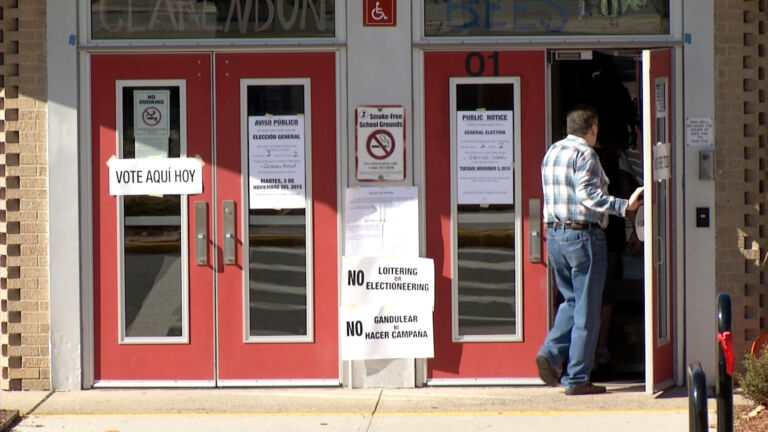
Kinn Badger, coalitions director for the New Jersey Democratic State Committee, said late outreach also happens with the South Asian American community during elections.
“That’s not building relationships with the community. It’s, ‘Hey, we need your vote and then goodbye and we’re not going to listen’,” she said.
Badger said she petitioned Leroy Jones, Jr., chairman of the state Democratic Committee, to create the role of coalition director so she could make some of the party’s outreach to the Asian American Pacific Islander community more sustained and lasting. She was offered a broader role that includes AAPI outreach.
“It’s really hard to sometimes go to our own community members and say, ‘We need your vote. We need your vote.’ They say, ‘What have you done for us for the last three years?’ It was learning to listen and also learning to put diversity first. Don’t give us a seat at the table and then take it away and pretend like we have a seat at the table and that we heard from the community,” Badger said.
Missy Balmir is a partner at the political consulting firm Thorough Planning who has worked on campaigns for Democratic U.S. senators Cory Booker and Bob Menendez. Her experience, Balmir said, was different working for two politicians of color who interact with nonwhite communities regardless of the election cycle. She said their campaigns needed “less convincing” on how to engage with their nonwhite electorate.
“They are much more willing to hear and understand the nuances of how to communicate to the Black or Latino community. So the conversation is different, it’s a lot less convincing — a lot more … saying: ‘This is … how we should move forward’ and a willingness to do so,” said Balmir.
Big impact in swing races
But does it matter if campaigns don’t engage people of color until last minute, when those Democratic campaigns are likely to win anyway? That attitude means ignoring a fast-growing and sometimes untapped electorate, strategists say.
In Rep. Tom Malinowski’s case, people of color who sit on the political margins could determine whether he wins. Malinowski’s 7th District became more Republican after redistricting. But he also gained several cities with people-of-color majorities.
On Halloween weekend, Malinowski was in Rahway, which is majority nonwhite and new to his district. Malinowski brought Rep. Donald Payne (D-10th) who had represented the city for decades as well as Booker and Rep. Bonnie Watson Coleman (D-12th), all of whom are Black.
Malinowski’s campaign did not respond to requests for comment about outreach to non-white voters.
‘One of the things I think is important is to have that grassroots organizing and long-term engagement in the community that you all want to be a part of.’ — political consultant Missy Balmir
A coalition of organizations — including SEIU 32BJ, NJ Citizen Action, Make the Road NJ, Latina Civic Action and others — has canvassed independently of campaigns and party affiliation to push voter turnout among Black, Latino and working-class New Jerseyans. SEIU 32BJ’s Multistate Deputy Political Director Elena Lavarreda said people they spoke to in Malinowski’s new district didn’t realize their congressional representative had changed. And not only that, people didn’t realize that their vote holds more weight now that they are in a more competitive district, she added.
Lavarreda said she was sure Malinowski was reaching out to people of color and didn’t want to disparage his campaign, but said she sees the situation less cynically. There’s a lot of work to be done to engage people of color so they understand their vote matters, she said.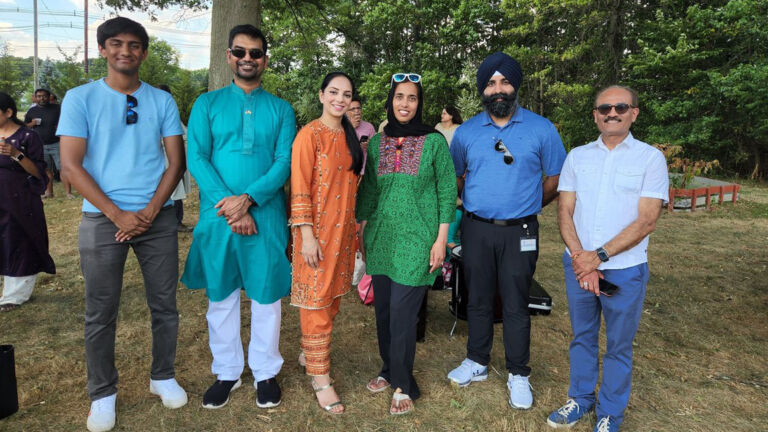
“It’s going to require engaging voters in a deeper way, especially disenfranchised voters — so working-class voters and voters of color, people who … feel that the system doesn’t work for them,” Lavarreda said. “And that work is like year-long work.”
That’s why it is critical for the politicians who win to continually engage people of color throughout the year, Balmir said — not just one to three months before an election. That’s where the Democratic Party can succeed by understanding the “nuances” of its people-of-color electorate, she said.
“The nuance is what happens on the ground. One of the things I think is important is to have that grassroots organizing and long-term engagement in the community that you all want to be a part of. The party needs to engage these communities regularly, consistently over time,” Balmir said.
— Ambreen Ali contributed to this story.