Credit: (AP Photo/J. Scott Applewhite, File)
Abortion rights, affirmative action and same-sex marriage protections all have faced, or are likely to, face significant challenges in a conservative-leaning U.S. Supreme Court.
It started with Dobbs v. Jackson in late June, which overturned the settled right to an abortion in Roe v. Wade. Majority-opinion justices said they made their decision so that power could be returned to the states, with some passing anti-abortion access laws as a result.
“That’s so disingenuous, because the people overwhelmingly support abortion rights,” said Tom Prol, former New Jersey State Bar Association president.
In his concurring opinion in the Dobbs case, Justice Clarence Thomas said other Supreme Court cases that extended the equal protection clause in the 14th Amendment to the right for people to access contraception, the right to same-sex intimacy and equal protections for same-sex marriage should be reconsidered. Thomas didn’t mention the right to interracial marriage, which is also rooted in the 14th Amendment; he is in an in interracial marriage himself. Thomas has been vocal that Obergefell v. Hodges — which extended the 14th Amendment’s equal protection clause to same-sex marriage — was wrongfully decided. He has been called out by law experts for showing his bias in which cases he highlighted in that opinion.
“That rightly struck fear into a lot of people’s hearts. And I think it was a really painful reminder that so much of what those of us who are from marginalized communities rely on in this country is a Constitution that was not built for us and that, in many ways, was never created to protect us,” said Kim Mutcherson. co-dean of Rutgers Law School.
Latest signals
Since the Dobbs decision in June, cases about voting rights protections, affirmative action, student loan debt forgiveness or anti-discrimination against LGBTQ couples are making their way to the Supreme Court. Law experts and advocates fear that the 6-3 conservative majority could erase protections and justice for marginalized communities.
During oral arguments Monday, conservative Supreme Court justices appeared sympathetic to a Colorado web designer who believes her state is violating her freedom of speech because its anti-discrimination laws would prohibit her from refusing to do work for LGBTQ couples.
And during arguments for two cases challenging affirmative action in late October, the same justices seemed poised to eliminate race-based admissions to universities.
‘There’s really no reason to think that any of the cases that have been deeply criticized … by any of the justices who currently sit on the Supreme Court are particularly safe at this point…’ – Kim Mutcherson, Rutgers Law School
Mutcherson, referring to the direction of the court, said the Supreme Court is in “slash-and-burn mode.”
“I feel like we’re in this very precarious set of circumstances that we are living with what I am very comfortably describing as a rogue U.S. Supreme Court. And the damage that they can do and seem poised to do is significant,” said Mutcherson. “And while not irreparable, it’s damage that might have repercussions for decades to come and for millions of people.”
‘Settled law’ no longer settled?
Both Mutcherson and Prol pointed out that the conservative justices called Roe v. Wade “settled law” in their Senate confirmation hearings, only to turn their backs on what was said. Thus, any settled law could be up for discussion.
“There’s really no reason to think that any of the cases that have been deeply criticized … by any of the justices who currently sit on the Supreme Court are particularly safe at this point, especially anything that is rooted in interpreting the Constitution,” said Mutcherson.
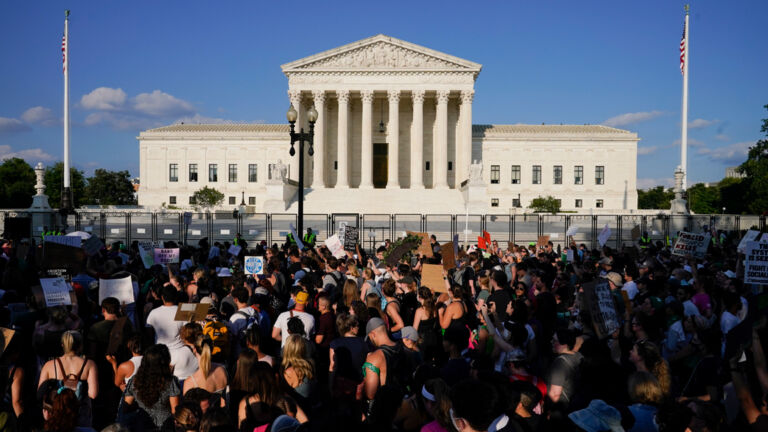
Mutcherson and Prol have mentioned in previous interviews with NJ Spotlight News that it’s only a matter of time before cases challenging protections of marginalized communities make their way to the Supreme Court.
And Republican-majority states know that, continuing to use the U.S. Supreme Court in their favor. Dobbs v. Jackson was a lawsuit started by Mississippi’s health commissioner. Texas is challenging the Biden administration’s immigration policy and has been accused by lawyers and immigrant advocates of choosing a sympathetic court to rule in its favor. That case made its way to the Supreme Court in November, with Justice Elena Kagan noting that the courts were used as a way to stop immigration policy.
Halting administration policies
“Immigration policy is supposed to be the zenith of federal power, and it’s supposed to be the zenith of executive power. And instead, we’re creating a system where a combination of states and courts can bring immigration policy to a dead halt,” Kagan said during oral arguments for the case.
The courts have also brought other Democratic policies to a halt. Student loan debt forgiveness, which advocates say would help advance racial justice, has been on hold as states have used the courts to challenge the policy. The Supreme Court will hear that case early next year. The Deferred Action for Childhood Arrivals program, or DACA, is also no longer taking new applicants since the Fifth Court of Appeals ruled the program was unlawful in October, throwing the case back to lower courts. This was a case also brought forth by states with Republican majorities like Texas, Alabama, Arkansas, Louisiana, Nebraska, South Carolina, West Virginia, Kansas and Mississippi.
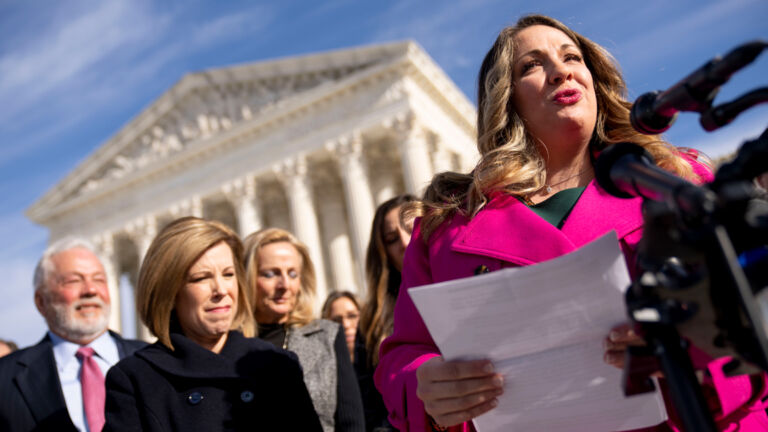
Mutcherson said the “only shining light” is that people are recognizing their political power. She noted how in the wake of the Dobbs decision, Kansas and Kentucky’s November ballots had proposed amendments to limit abortion access and the majority of residents in both states voted against the proposals.
“I do think that there are opportunities here for people, one, to stop being complacent and stop thinking, ‘Oh, well, you know, what, once we have a right under the Constitution, it just remains our right.’ That’s just not true. And two, to really think about how they mobilize and use power on a state level, to create the kind of country that they want to live in,” Mutcherson said.