
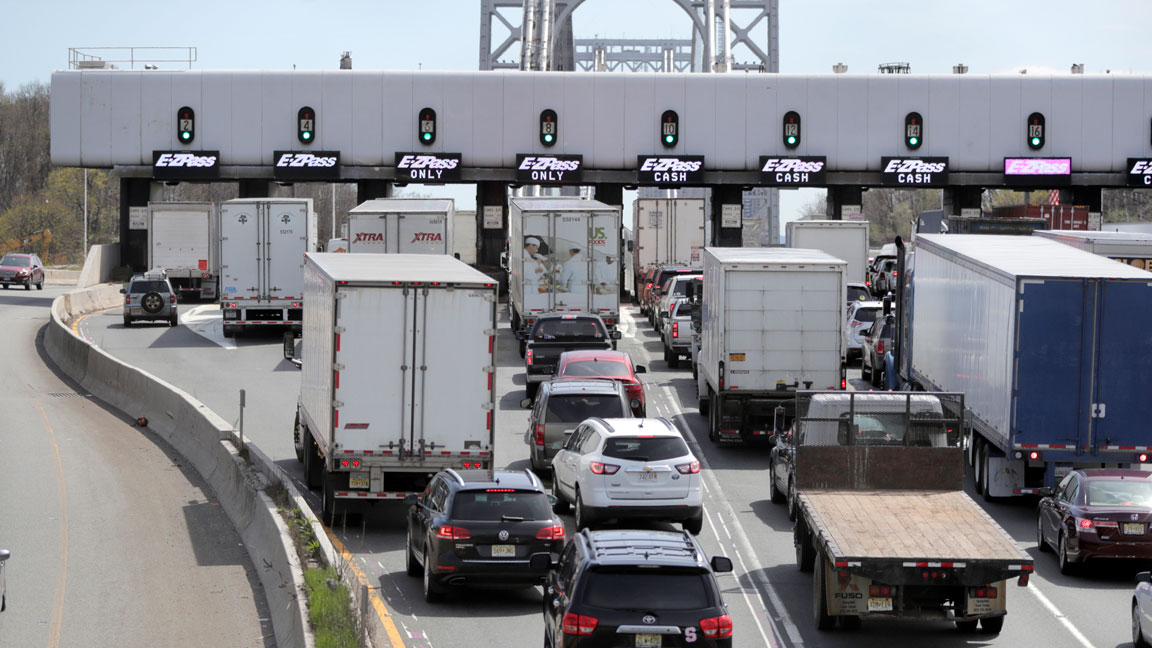
 Credit: (AP Photo/Julio Cortez)
New Jersey lawmakers are once again registering their formal concern with New York’s plan to begin charging a “congestion toll” when motorists enter Manhattan’s central business district, including from New Jersey’s side of the Hudson River.
The state Senate approved a resolution Monday that expresses its opposition to the plan to make New York City the first in the nation to implement what’s commonly referred to as congestion pricing.
The Senate resolution also urges the Federal Highway Administration to give stakeholders in New Jersey a role in the decision-making process as the tolling proposal — which is intended to reduce traffic and improve air quality in Manhattan’s central business district — awaits final approval.

Assembly rebukes New York plan to charge drivers more to enter parts of the city
Though the resolution is only symbolic in nature, copies of it are being sent to a number of key public officials. They include New York’s governor, the mayor of New York City, the chair and chief executive officer of the Metropolitan Transportation Authority and the secretary of the U.S. Department of Transportation, according to the resolution.
Last month, a similar resolution was approved by the New Jersey Assembly in a 72-0 vote.
NJ drivers could pay double tolls
Sponsors in both houses have raised concerns about the fairness of the tolling plan, which could make some New Jersey motorists pay additional tolls on top of those levied at bridges and tunnels that connect the two states.
“This resolution urges federal officials to include New Jersey in the planning process so we have a voice in decisions that impact our drivers and a say in how any revenue the congestion pricing plan generates could be used,” said Sen. Patrick Diegnan (D-Middlesex), a primary sponsor of the resolution.
While the details have not been finalized, the goal of the congestion-pricing initiative, according to a lengthy environmental assessment released in August, is to reduce traffic and emissions in an area of Manhattan south of 60th Street.
The tolling plan — which is formally called the “Central Business District Tolling Program” — also projects that more than $1 billion in new revenue would be raised annually. The revenue would be used to fund planned improvements in transportation infrastructure, including to New York City’s subway system.
The environmental assessment for the tolling initiative was required by the federal government as part of the formal planning process. But it was a state law passed in New York in 2019 that initially authorized implementation of congestion pricing. Final decisions, including on tolls, will be made by New York officials.
Under the various scenarios covered by the environmental assessment, proposed congestion tolls for cars would range from $5 to $23, depending on the hour of travel.
Tolls would be levied on motorists entering the business district using the E-ZPass electronic tolling system, and anyone without E-ZPass would be mailed a bill using the address associated with the vehicle’s registration, according to New York’s Metropolitan Transportation Authority, which recently held a series of public hearings on the plan and collected written comments.
Credits for NJ drivers?
For New York motorists, the initiative could force some to begin paying tolls to enter Manhattan who currently do so for free. For New Jersey motorists, among the alternatives included in the environmental assessment were options that would allow for various forms of credits to be provided to those who already pay tolls when using the George Washington Bridge or the Holland or Lincoln tunnels.
For the thousands of New Jersey residents who take mass transit into New York City, advocates for the plan have said the proposed subway and bus investments could address long-standing concerns related to security and reliability. Reduced congestion could also improve air quality for those living and working in the designated business district.
But New Jersey lawmakers have come to the defense of the motorists who would be forced to pay twice to go to work and attend to other responsibilities in the central business district if full credits are not provided, including to those regularly using the George Washington Bridge, which is located outside of the central business district.

Public hearing on NYC plan that would charge drivers to fund mass transit, cut emissions
The Senate resolution also raises concerns about how the tolling plan would break from the tradition of transportation officials from both states working collaboratively on major transportation initiatives, including through the bistate Port Authority of New York and New Jersey. It also notes, under current plans, all the revenue to be raised from congestion pricing would only benefit the MTA, with no proceeds set aside for New Jersey Transit or the Port Authority’s PATH train system improvements, even though both agencies may have to accommodate more riders once the congestion tolls are levied.
“For over a century, the two states have jointly made decisions through the Port Authority with the ultimate goal of doing what is best for the two states and the region, which is what makes it surprising that New York City, in conjunction with the State of New York and the FHWA, has been authorized to implement a congestion-pricing plan that has the potential to significantly impact New Jersey residents and to undermine the long history of collaborative efforts on transportation, infrastructure, and economic development by the two states,” according to the resolution, which was passed in a voice vote.
