
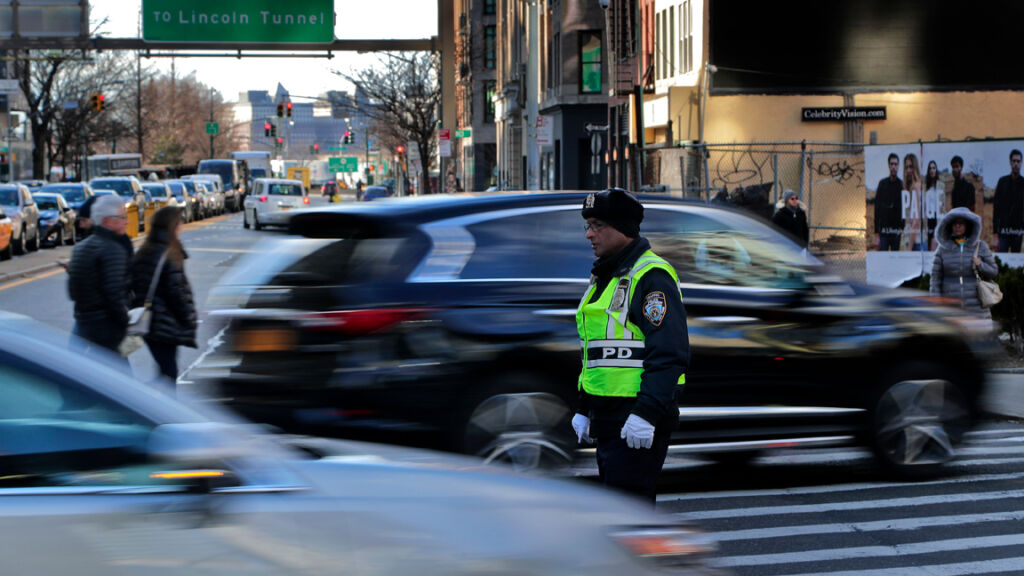
The latest plans by New York officials to charge motorists a “congestion” toll when they enter Manhattan’s central business district are slated for a series of online public hearings beginning Thursday.
The hearings, planned to run through the middle of next week, will be used to detail for the public the recently completed environmental assessment of the proposal to make New York City the first in the nation to implement what’s commonly referred to as congestion pricing.
The hearings will also provide an opportunity for the public to comment on the latest phase of the strategizing effort, according to the Metropolitan Transportation Authority, one of the agencies involved in the planning of what’s formally being called the “Central Business District Tolling Program.”
Tolls would be levied on motorists entering the business district using the E-ZPass electronic tolling system, and anyone without E-ZPass would be mailed a bill using the address associated with the vehicle’s registration, according to the MTA.
While the precise details are still up for discussion, the goal of the congestion-pricing initiative, according to the environmental assessment, is to reduce traffic in a zone of Manhattan south of 60th Street, while also raising new revenue to fund planned transportation-infrastructure improvements, including to the city’s subway system.
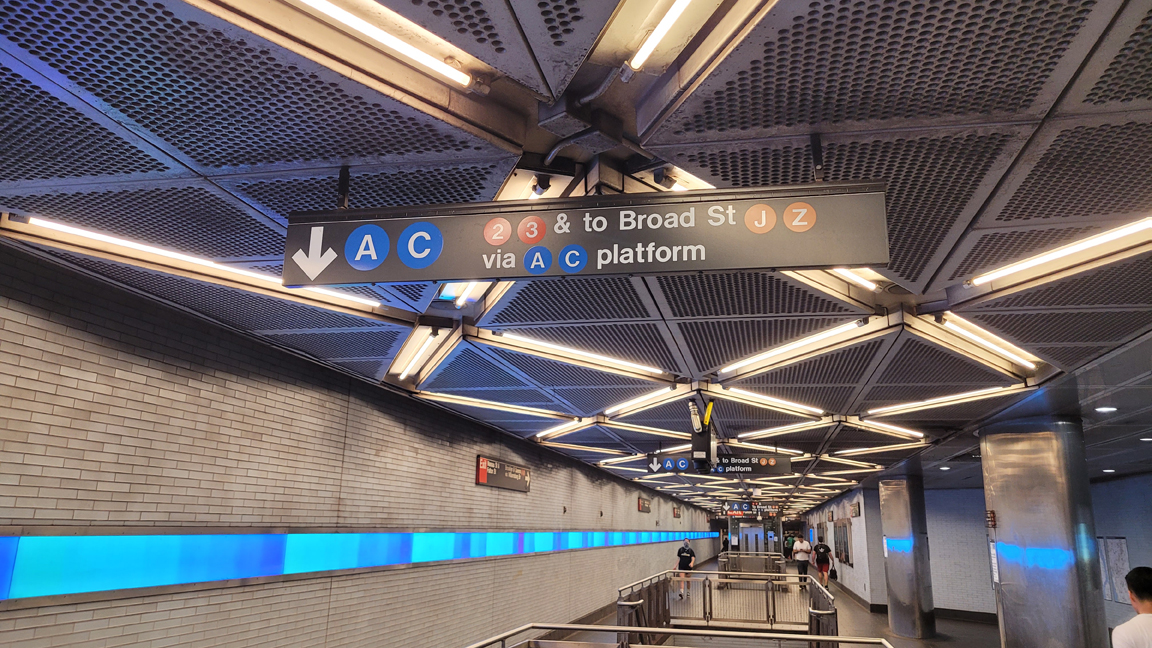
For thousands of New Jersey residents who take mass transit into New York City, the subway investments could address long-standing concerns related to security and reliability. Reduced congestion could also improve air quality for those living and working in the designated business district.
More costs for NJ commuters?
However, with New Jersey residents who commute into Manhattan by car now facing the possibility of another toll, several state politicians have been raising concerns about increased costs for motorists who are already charged when using existing bridge and tunnel crossings.
The environmental assessment, spanning nearly 870 pages, outlines the goals of congestion pricing and also details a number of tolling scenarios or alternatives that could be adopted as the planning process moves forward.
The environmental assessment was required by the federal government as part of a formal planning process, but final decisions, including on tolls, will ultimately be made by New York officials. It was a law passed in New York in 2019 that initially authorized implementation of congestion pricing.
Under the various scenarios covered by the environmental assessment, proposed congestion tolls for cars would range from $5 to $23, depending on the hour of travel.
 Credit: (John Reitmeyer/NJ Spotlight News)
Tolls would be levied on motorists entering the business district using the E-ZPass electronic tolling system, and anyone without E-ZPass would be mailed a bill using the address associated with the vehicle’s registration, according to the MTA.
For New York motorists, the initiative could force some to begin paying tolls to enter Manhattan who currently can do so for free. And for New Jersey motorists, among the alternatives included in the environmental assessment were several options that would allow for various forms of credits to be provided to those who already pay tolls when they enter Manhattan using the George Washington Bridge or the Holland or Lincoln tunnels.
‘No action’
Meanwhile, the environmental assessment, which needs federal approval, also looked at a “no action” option, but noted that would not accomplish any of the stated goals of congestion pricing.
The push to implement congestion pricing in New York City has been backed by numerous advocacy groups who’ve been highlighting the initiative’s projected environmental and transportation benefits.
Included among them is the Regional Plan Association, which published an analysis earlier this month that detailed the transportation-infrastructure investments that would be at risk of not receiving funding if congestion pricing does not go forward.
‘Four out of five New Jersey commuters who are crossing the Hudson are already on (mass) transit, so the vast majority of people won’t be paying this fee for their daily commute.’ — Zoe Baldwin, Regional Plan Association
The improvements include designing the subway system to be better protected against flash floods and other extreme weather events and upgrading security, which includes funding the installation of new security cameras, according to the RPA analysis. Signal modernization that would improve service reliability and upgrades to make stations more accessible are also at risk of not being funded, according to the analysis.
Zoe Baldwin, the New Jersey director for the RPA, said along with the air-quality benefits, the proposal calls for “raising revenue that you are able to put back into the system.”
“Four out of five New Jersey commuters who are crossing the Hudson are already on (mass) transit, so the vast majority of people won’t be paying this fee for their daily commute, and that’s really important to notice,” Baldwin said during a recent interview.
Benefits for NJ motorists?
Meanwhile, motorists who continue to drive into the business district from New Jersey should also see some benefits if congestion pricing is implemented, she said.
“For those that have to or want to still commute by car into Manhattan, they’ll have less traffic,” Baldwin said.
Still, Gov. Phil Murphy and other elected officials from New Jersey have raised concerns about the potential for motorists to effectively be double-charged when entering Manhattan from New Jersey.
Those concerns appear to be underscored by some of the options included in the environmental assessment that call for providing only partial credits or even no credits to motorists entering the defined business district from New Jersey.
The added burden on New Jersey motorists is also among the issues being raised by a group of state lawmakers who recently joined U.S. Rep. Josh Gottheimer (D-5th) in a call to counter the congestion-pricing proposal by creating new tax credits in New Jersey for companies based in New York.
Tax credits for New Jersey ‘hubs’
The tax credits would be provided to companies that set up new “hubs” in New Jersey for their New Jersey-based employees so they would not have to pay the proposed congestion tolls. The workers could also save additional money if they can stay in New Jersey, the lawmakers have argued.
“When you add it all up, the expensive tolls, the cost of parking and gas, and the congestion tax, Jersey commuters would save $20,000 a year,” Gottheimer said in a news release detailing the tax-credit proposal.
Thursday’s online public hearing will be from 5 p.m. to 8 p.m. Hearings are also planned for Saturday (10 a.m. to 1 p.m.); Sunday (1 p.m. to 4 p.m.); Monday (1 p.m. to 4 p.m.); Tuesday (5 p.m. to 8 p.m.); and Wednesday (10 a.m. to 1 p.m.), according to the MTA.
Anyone seeking to participate in the hearings can register ahead of time at mta.info/CBDTP.
‘When you add it all up, the expensive tolls, the cost of parking and gas, and the congestion tax, Jersey commuters would save $20,000 a year.’ — U.S. Rep. Josh Gottheimer
Written comments are also being accepted via a number of formats. They include online at mta.info/CBDTP/comment; via email using the address CBDTP@mtabt.org; and via mail using the address CBD Tolling Program, 2 Broadway, 23rd Floor, New York, NY 10004.
Comments can also be sent to the Federal Highway Administration via email using the address CBDTP@dot.gov, and via mail using the address FHWA – NY Division, RE: CBDTP, Leo W. O’Brien Federal Building, 11A Clinton Ave, Suite 719, Albany, NY 12207.
