Credit: (AP Photo/Eduardo Munoz Alvarez)
State officials are still trying to gather support for an emergency rule on inland flooding first discussed in May and initially scheduled to become effective in mid-June. But despite repeated calls by environmental groups to implement that rule immediately, talk of it has vanished from public view.
The Murphy administration is working on getting buy-in from a range of stakeholders, said Shawn LaTourette, commissioner at the Department of Environmental Protection, and he predicted that skeptics will eventually back the measure, but refused to say how that would be achieved, or how long the process will take.
“This is still in discussion, it’s complicated,” he said in an interview with NJ Spotlight News. “We are continuing to engage with stakeholders, but we’ve got to make sure we bring everybody along. And I believe we’ll get there but we’ve got to do the work.”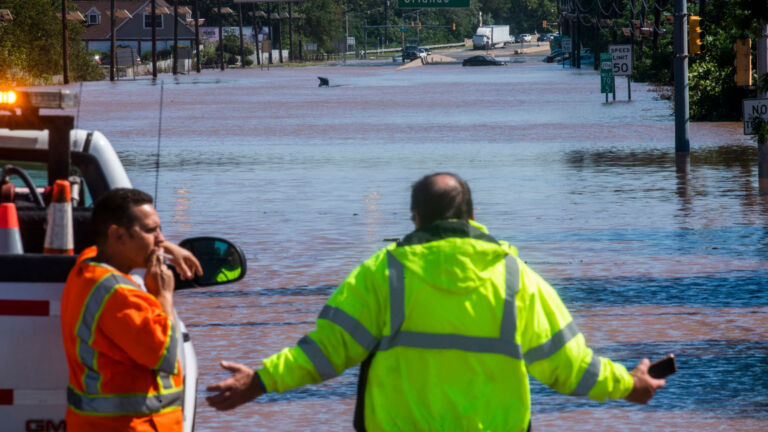
The proposed rule, part of DEP’s regulatory overhaul it calls Protecting Against Climate Threats, would raise inland flood plains by 2 feet, making it harder to build there. If implemented, it would be the DEP’s first emergency rule since one on coastal flooding introduced in the wake of Superstorm Sandy in 2012.
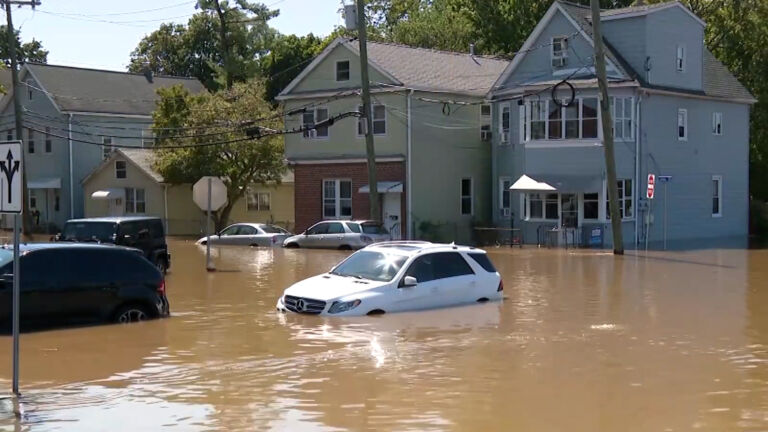
DEP officials say the measure should not have to be subject to the normal regulatory process, which can take months or years, because of the urgency of the climate threat, as shown by record flooding and loss of life caused by Tropical Storm Ida in September 2021.
Business opposition
Environmental groups including Environment New Jersey and Delaware Riverkeeper Network welcomed the proposed emergency action, and 30 of them signed a letter in July, urging the DEP to implement the measure right away. They supported the agency’s argument that the emergency rule is justified because of “imminent peril” to the public from more flooding caused by climate change.
But business groups pushed back hard, rejecting the DEP’s “imminent peril” argument, saying the rule would reduce the state’s buildable area by hundreds of thousands of acres, and telling Gov. Phil Murphy that any new rules on inland flooding should be subject to the normal regulatory process. Critics speculated that Murphy’s office blocked the planned implementation of the rule on June 14.
The Murphy administration should implement the rule immediately, said Doug O’Malley, director of Environment New Jersey.
On Friday, LaTourette denied the rule had been withdrawn but said the administration still needs to get buy-in from some stakeholders, without being more specific.
“It certainly hasn’t vanished without trace,” he said. “It’s a misnomer to call it an emergency flood rule. It is an inland flood protection rule.” Presentations of the plan to business and environmental leaders in May proposed to use emergency adoption procedures but the rule itself is not an emergency rule, he said.
Asked to confirm that the rule had been delayed because of objections from business, LaTourette said not all sections of the business community have a problem with it.
“To lump every commercial and industrial actor into the group of business community or development community, I don’t think that is fair. There are folks within that group that have no problem whatsoever; it’s a matter of making sure that we bring everybody along,” he said.
State wants buy-in
Rather, the delay has been caused by some stakeholders being unfamiliar with the new climate rules, and having to be educated, he said.
“We’ve been talking about the Protecting Against Climate Threats package for two years. Not everyone is as attuned to that conversation. It can sometimes feel to folks that things are coming out of the blue even though they have been teed up for some time, and that just means we need to have greater reach, and we’re working on that,” he said.
He said officials need to obtain buy-in from a full range of stakeholders. “We’ve got to make sure that everyone who has a stake who needs to be engaged in the process is,” he said. “We need to have alignment across all sectors of our state in confronting these really difficult issues, and I do believe we will get there.”
But LaTourette declined to say how much longer the process might last. “I couldn’t tell you that,” he said. “It’s a matter of having confidence that you have reached everyone.”
Doug O’Malley, director of Environment New Jersey, urged the Murphy administration to implement the rule immediately, and noted that the long delay is happening as the 10-year anniversary of Superstorm Sandy approaches on Oct. 29.
“The stakeholder process on NJPACT started before the pandemic and it is imperative the Murphy Administration works to act on climate and follow through on their commitments,” he said. “Flood waters and hurricanes don’t care about endless stakeholder meetings — they are going to come regardless. We need to plan for future flooding and work not to put people and communities in harm’s way,” he said.