
 Credit: NJ Spotlight News
Whatever happened to plans for a rare emergency rule that would raise inland flood zones by 2 feet in an effort to protect homes and businesses from the next big storm?
The Department of Environmental Protection floated the idea to business and environmental groups in late May, and planned to adopt the rule in mid-June. But more than two months after its unveiling, the measure has vanished from public view amid speculation about whether the Murphy administration still plans to publish it, whether it will do so in a modified form, or whether it has just been scrapped.
In early June, the plan stirred a storm of protest from the business community, which said the rule would reduce New Jersey’s buildable area by up to 400,000 acres and hurt developers that are already planning properties in the expanded flood zones. Nineteen business and labor groups wrote to Gov. Phil Murphy, rejecting the DEP’s justification for the emergency rule — that the public faces “imminent peril” from climate change because official flood zones and rainfall projections don’t match current realities.
On June 21, a week after DEP first planned to publish the rule, 30 environmental groups urged Murphy to implement it immediately. They argued that the public is indeed in “imminent peril” from the climate crisis, and so the administration was justified in updating flood maps and stormwater regulations.
In response, the administration said it remains committed to “strong new rules” that protect against inland flooding like that during Tropical Storm Ida. It’s holding more discussions with stakeholders as it integrates climate resilience into land-use regulations.
On Tuesday, the DEP promised stakeholder meetings soon. “The intricacies of DEP’s Inland Flood Protection Rule are a matter of ongoing deliberations and the administration will provide additional stakeholder engagement opportunities soon,” it said.
Storm of speculation
DEP’s failure to publish the rule on June 14, as planned, prompted speculation that Murphy’s office, under pressure from business interests, blocked the rule until more stakeholder meetings could be held.
Now, stakeholders on both sides say they don’t know whether the rule is moving forward on an emergency basis or if it will be modified.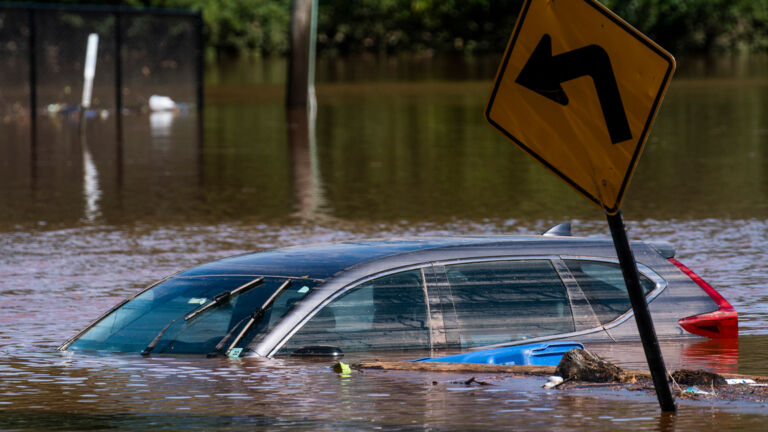
“The entire business community has heard conflicting information,” said Ray Cantor, a spokesman for the New Jersey Business & Industry Association, one of those that wrote to Murphy on June 3. “Not knowing what an emergency rule would be this time around, we can’t even guess on its economic impacts. We do expect a major land-use rule to be proposed in the fall which may have the same standards as the previously announced rule, plus a lot more. That will have tremendous impact if it contains the provisions we think it might.”
Cantor said he expects the DEP at some point to issue an emergency rule and a larger rule, both of which would require stakeholder sessions before they are adopted.
Business coalition ready to fight
If DEP issues an emergency rule, the business coalition would consider “all options” including a lawsuit to stop it, Cantor said. “The precedent of using an emergency rule to address long-term flooding issues and capital expenditures would be problematic as it would open the doors to invoking emergency powers under almost any circumstance and thus cutting off the normal public participation process of rulemaking,” he said.
An emergency rule was last used by the Christie administration in 2013 in the wake of Superstorm Sandy. This time, the rule is designed to anticipate bigger storms by raising the design flood elevation — the height at which a building must be built to meet flood-insurance standards — in inland areas by 2 feet. The rule would also require using rainfall projections when setting flood-zone standards and mandating best practices for stormwater management for runoff from both current and future storms.
A PowerPoint presentation distributed by the DEP in May underlined the state’s earlier climate-change studies by showing that precipitation has increased in New Jersey in the past 20 years and is expected to increase further in future. It noted that the data used to project whether storm drains can cope with heavy rainfall is only relevant up to 1999.
Can you delay an emergency?
Doug O’Malley, director of Environment New Jersey, said he thinks the rule is being postponed rather than killed, but argued that continued delay undermines its status as an emergency action in response to climate change.
“We are clearly seeing the impacts of climate change, and we shouldn’t wait for the next storm to hit us,” said O’Malley, who witnessed the rule’s rollout in May. He said there has already been an “expansive” stakeholder process since the DEP began to overhaul its flood rules more than two years ago, under a process called Protecting Against Climate Threats (NJPACT).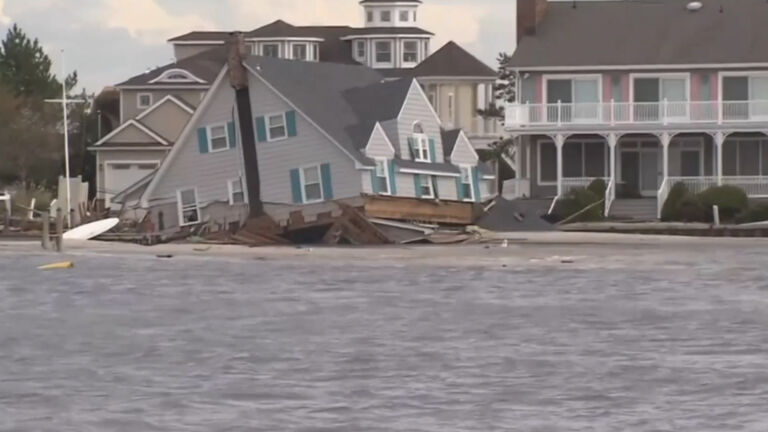
More delay increases the risks that the next major storm will cause as much death and destruction as Ida did last September, he said.
“The Murphy administration should not delay further because these climate rules are ultimately about not putting people in harm’s way,” he said. “We should not be basing our flood rules on outdated data that don’t fully accommodate the impacts of climate change.”
Mike Pisauro, policy director of The Watershed Institute, an environmental group, said any more delay in issuing the emergency rule will result in more flooding, more damage to property and more expense for the state.
“Everything we approve today is going to be built, and everything we approve today under standards that are outdated will contribute to flooding,” he said. When the DEP planned to adopt the rule on June 14, developers probably scrambled to submit their plans before that date, and may be doing the same thing now that the measure has been delayed, he said.
“I am beyond disappointed,” he said. “The governor rightfully has said multiple times that climate is an emergency, and we must take bold action. Unfortunately, I’m not seeing the follow-through.”
