Credit: (AP Photo/Jacquelyn Martin)
The Supreme Court’s decision to overturn Roe v. Wade not only ended the federal right to abortion, but it exacerbates challenges that Black people and other people of color already face in seeking reproductive health care, advocates say.
And with the end of the legal right to an abortion comes a significant burden on Black people, who already face higher rates of maternal and infant mortality — as well as increased instances of reproductive health issues like cancer, endometriosis, polycystic ovarian syndrome (PCOS) and more — that can complicate their pregnancies. Black people could see a 33% increase in pregnancy-related deaths as the result of abortion bans, according to a study by University of Colorado sociologist Amanda Jean Stevenson.
“What this means for women of color is that we continue to be targeted and marginalized by society,” said Dr. Glenmarie Matthews, a practicing OB-GYN and member of the New Jersey Black Women Physicians Association.
Andrea McChristian, director of policy for the New Jersey Institute for Social Justice, agreed long-standing racial inequities in the health care system create a barrier to care, even in a Democratic state like New Jersey. “We can’t divorce the stripping away of a woman’s right … from how Black people and other people of color have been subjected to worse health care outcomes since the founding of our nation,” she said.
“And so when we talk about … reproductive justice, racial justice, I don’t want it to seem like these are isolated charges. These are things that implicate communities of color and should be part of any racial justice, social justice advocacy, as well,” McChristian added.
Racial disparities in health outcomes are widespread and not limited to New Jersey, with Black and Hispanic residents experiencing higher rates of chronic diseases like diabetes and heart failure and a greater COVID-19 burden nationwide. Systemic racism, biases by care providers and other factors continue to fuel these gaps, experts agree.
People of color generally have faced higher risks for COVID-19 than their white neighbors during the pandemic, as they are more likely to hold frontline jobs and live in multi-generational housing, which increase the risk for spread. And with less access to insurance coverage and health care providers, they were more likely to be hospitalized and die.
Existing inequities
The inequity is especially clear in reproductive health outcomes. In New Jersey, Black babies are three times more likely to die in childbirth than white infants and Black people are seven times more likely to die from giving birth than white residents. Nationwide, Black people face higher rates of endometriosis and are more likely to die from endometrial cancer.
The New Jersey Legislative Black Caucus, alongside first lady Tammy Murphy, has sought to eliminate racial gaps in maternal health care and break down barriers to health care caused by systemic racism. Their goal is to cut the maternal death rate overall by half in five years by expanding access to health care and insurance, reducing racial biases in clinical care and giving Black people in particular greater voice in forming policy.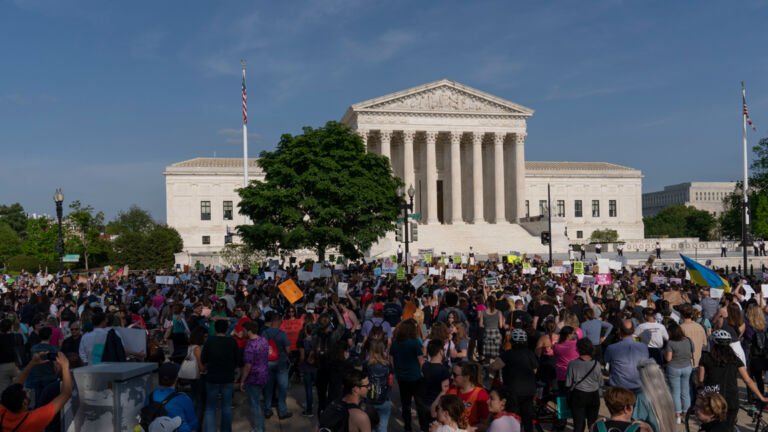
Brittany Holom-Trundy, senior policy analyst for the New Jersey Policy Perspective think tank, said that the attention paid to prenatal care and maternal health is a significant advancement as the state has worked to “improve the disparities in maternal mortality rates and infant mortality rates.” She believes that abortion can be part of prenatal care conversations.
“Considering these maternal mortality rates, and considering what prenatal care people need … there’s no reason that abortion care, which again, is essential to long term health in the same way that prenatal care for a continuing pregnancy, shouldn’t be included in that discussion,” Holom-Trundy said.
New Jersey codified the right to abortion in January, but critics say it can do far more to improve access by further expanding health insurance coverage for the procedure, reducing language barriers to receiving reproductive care or reducing costs for health care.
Lack of access to quality care
Access to quality care can be a matter of life or death for any diagnosis, and racial gaps in health outcomes can underscore the disparities in who gets treatment for reproductive health issues or other conditions. Black women are more likely to die from breast and cervical cancers than white or Hispanic women, even though the former have lower incidences of these diseases. Breast cancer mortality rates for Black women are 40% higher than for non-Hispanic white women, according to Dr. Eleonora Teplinsky, an oncologist specializing in breast and gynecological cancers with Valley Health System, based on Paramus.
“A cancer at any time is devastating. During pregnancy it’s even more terrible,” Teplinsky said, since treatments are largely off-limits during pregnancy, especially during the first trimester. A small percentage of patients opt for abortions in order to get chemotherapy, radiology or other cancer treatments, or when the pregnancy itself is a danger. And with the high court’s ruling, “patients won’t be able to make these (treatment) decisions with their provider. They are limited by what politics and government is telling them to do,” said Teplinsky, who is also an assistant professor at Icahn School of Medicine at Mount Sinai, in New York City.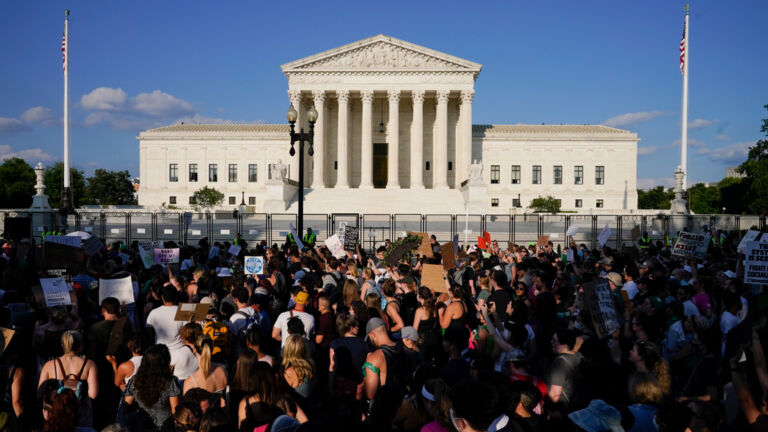
While insurance may cover the cost of abortions, the Guttmacher Institute, a pro-abortion rights research and policy organization, found in 2017 that more than half of those seeking an abortion paid out-of-pocket for the procedure, which costs upward of $500. U.S. law bans the use of federal dollars for abortions, but New Jersey and more than a dozen other states use state tax dollars to cover this cost for Medicaid members. New Jersey Family Care, the state’s Medicaid plan, pays for more than one-third of all births here.
“And so it brings up this question of … if abortion care isn’t covered by insurance, or is out of reach because of the high cost, we really can’t expect that patchwork of charities and nonprofits and stuff to fill in that gap. That’s just not how health care is supposed to work,” said Holom-Trundy.
Insurance issues
Holom-Trundy, who has researched health insurance coverage and racial disparities in health care in New Jersey, added that cost is just one hurdle for nonwhite people to get the care they need. She said that America’s history of racism and discrimination “can foment this fear in people and this trouble getting the health care they need … and being taken seriously in (a doctor’s) office.”
There’s consensus among reproductive justice advocates — including some who are pro-choice — that the end of Roe signifies an even greater need to get rid of barriers to quality reproductive health care, affordable health insurance and more.
In the meantime, though, access to those reproductive health services doesn’t exist for a stark number of Black people and other people of color, say advocates. For Matthews, the practicing OB-GYN, she said the end of federal abortion rights means she will be continuing to fight for reproductive justice.
“This decision … is not going to change how we practice medicine, in the sense that we will rally together as medicine, as a physician, as scientists to make what’s right for women accessible,” Matthews said. “In fact, we’re going to be more united and calm; again, ready to fight just like other countries have done. They’ve done this in South Africa. They’ve done this in Mexico recently. So we’re not giving up.”