
 Credit: (AP Photo/Seth Wenig)
More transparency in election night vote counts and early processing of mail-in-ballots could be in place for the fall midterm elections if New Jersey lawmakers this week pass a package of election reform bills.
The proposed reforms come after difficulties with transparency in the counting and reporting of votes in last year’s gubernatorial election, which led to a rash of conspiracy theories on social media.
Since taking office in 2018, Gov. Phil Murphy has signed a flurry of laws designed to make it easier to vote, but Democrats see a need for more changes in several areas. The most significant of these — improvements in processes and the reporting of results — are designed to give people confidence in the results.
Several hours after the polls closed on the night of last year’s gubernatorial election, Republican candidate Jack Ciattarelli was ahead, and many people went to bed thinking he had unseated Murphy. But not all early, in-person and mail-in ballot votes were counted that night and it was impossible in some counties to know that. By the next morning, Murphy was back in the lead, as the early balloting heavily favored him. He wound up winning by 3.2%. When he conceded the race 10 days after the election, Ciattarelli said, “Sadly, in our current climate, that slow count, and constantly changing online numbers, give rise to doubt in the system and unfounded conspiracy theories.” He joined the calls for the state to standardize the process of tallying and reporting votes to give the public greater clarity and confidence in the results.
The Senate State Government, Wagering, Tourism and Historic Preservation Committee on Thursday passed eight measures related to elections. Two significant bills would increase transparency in the counting of votes on election night and allow for mail-in ballots to be processed early.
Requiring real-time results online
One measure (S-2865) would require county clerks to update their websites in real time with the number of ballots received, counted and remaining after polls close on election night. They would also be required to break down the numbers into categories based on early-in-person ballots, mail-in ballots, provisional ballots and Election Day ballots.
While some counties have made improvements in their reporting of results, there were still a number that on primary election night earlier this month gave no indication of whether the results they were reporting included early, in-person or mail-in votes. The language on some websites that tried to specify that information was confusing. And, by reporting Election Day results in one place and early votes in another, a few required people to do their own calculations on the vote totals.
At least a couple of counties reported that they could not provide full totals for early votes on election night because they did not have enough staff to process all the ballots that day.
The same bill requiring greater transparency in reporting results would also allow counties to start processing mail-in ballots five days early, provided that the tallies are not made public until Election Day. Processing includes verifying signatures and preparing ballots to be tabulated.
Lawmakers amended a provision of the bill that would have decreased the length of time a mail-in ballot could count if received after Election Day, from six days to three, saying it would disenfranchise voters due to no fault of their own.
Concern about leaking of election data
Sen. Vincent Polistina (R-Atlantic) voiced concern over possible leaks of information regarding total tallies for candidates between county chairpersons and boards of elections if people seek information on the ballot count before the end of Election Day.
“Do you believe in your mind that there’s not going to be some leaks of information if we’re opening ballots prior to Election Day?” asked Polistina, who voted against the measure.
Philip Hensley, a policy analyst at the League of Women Voters of New Jersey, said such leaking of information would be considered a criminal offense, which should eliminate any concerns.
Another bill (S-2863) released by the committee would make several changes in procedures. Among other provisions, it would require ballot privacy measures in counties that don’t use machines with a curtain and allow residents to apply for a vote-by-mail ballot and declare or change party affiliation, name and address through an online form. One provision of the bill that had sought to reduce the time voters have to “cure” paper ballots if there’s a problem with them, by certifying a signature, was eliminated.
The committee advanced another controversial bill (S-2912) that would allow police officers to be stationed at senior centers and schools under certain circumstances if they are being used as polling locations. The measure was released the same day it was introduced, meaning the public had no chance to see the bill before it was considered by the committee.
Police at the polls
Henal Patel, director of the democracy and justice program at the New Jersey Institute for Social Justice, had objected to the change, saying that a police presence at polling locations could deter minorities and people on parole or probation from voting.
But Sen. Shirley Turner (D-Mercer), a sponsor of a bill that banned police presence at polling locations, supported the new measure, saying it is necessary to ensure senior citizens and children are protected.
“When [the current law banning police presence] was passed, we did not have the mass shootings that we have experienced recently. And we know that that is something that everybody is concerned about,” Turner said.
The committee also released two bills that aim to increase the number of poll workers. One (S-138) would allow minors to work on Election Day. The other (A-3733) would offer college students academic credit to work a single shift on Election Day.
Trying to get more poll workers
Patel said allowing younger people to staff polls will help increase retention rates for poll workers.
“We’ve seen time and time again that when someone starts to be a poll worker at a young age, they’ll say they’ll stay at the poll workers for a long time, which is what we need — people who know how to run our democracy,” Patel said.
Patel also advocated removing the residency requirement for those who staff polling places. Under current law, people can only work at polling places if they are registered to vote in that county. This makes it difficult for college students since many who attend in-state colleges might be registered to vote in their home county rather than the county where they attend college. That change wasn’t included in any of the bills that passed on Thursday.
Another bill(S-2899) that was released from committee would allow New Jersey voters residing overseas to vote in state elections, depending on their intent to return.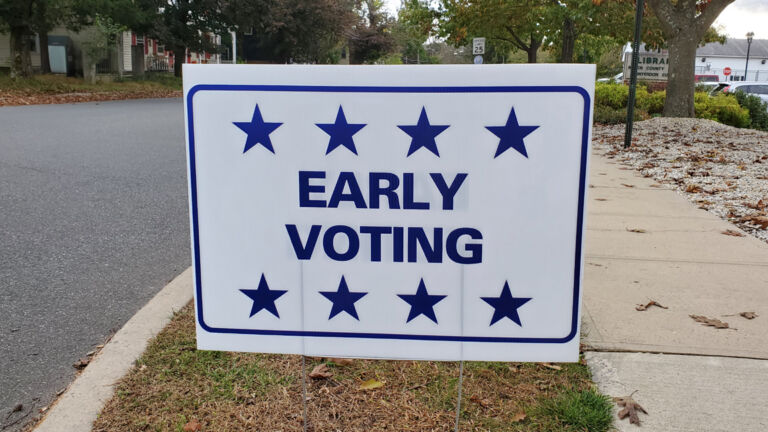
Most of the measures passed with bipartisan support and now head to the full Senate for votes. While most had already passed the Assembly, because they were amended they need to go back to the lower house for agreement on the changes. The goal is to get the most important measures to Murphy’s desk this week so that they can be in place in time for the general election in November. Once the state budget is completed at the end of the month, the Legislature most likely will recess for the summer, and any bill that has not been voted on by then will likely have to wait until September.
At stake in November are all 12 of New Jersey’s seats in the U.S. House of Representatives. With control of Congress up for grabs, the major parties will be battling in at least four districts as Democrats try to keep the 10 seats they now hold and Republicans trying to knock off as many incumbents as they can to give their party a majority in the House.
— Colleen O’Dea contributed to this story.
