Credit: (NJ Spotlight News)
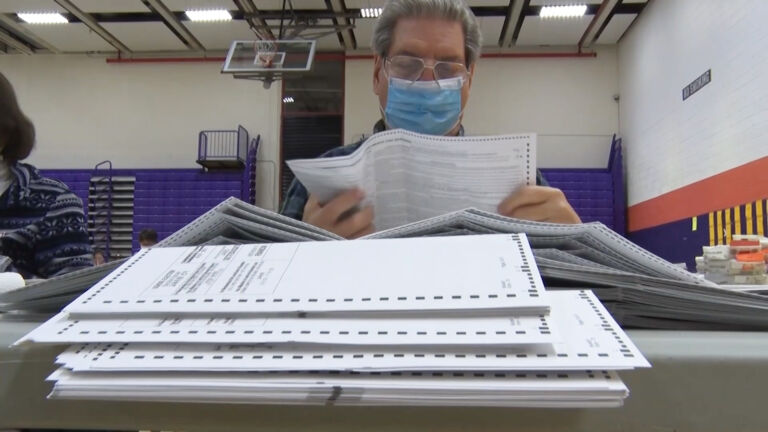
New Jersey lawmakers on Thursday began the task of revising how elections work, including changing the way votes are counted and results reported. The changes are meant to bring greater clarity and inspire more trust among the public six months after a close gubernatorial contest spawned conspiracy theories about the outcome.
The Assembly State and Local Government Committee considered 11 election-related bills in all, with two aiming to increase the pool of poll workers by letting minors work on Election Day and giving college students credit for serving, and others dealing with overseas voters and fire district elections.
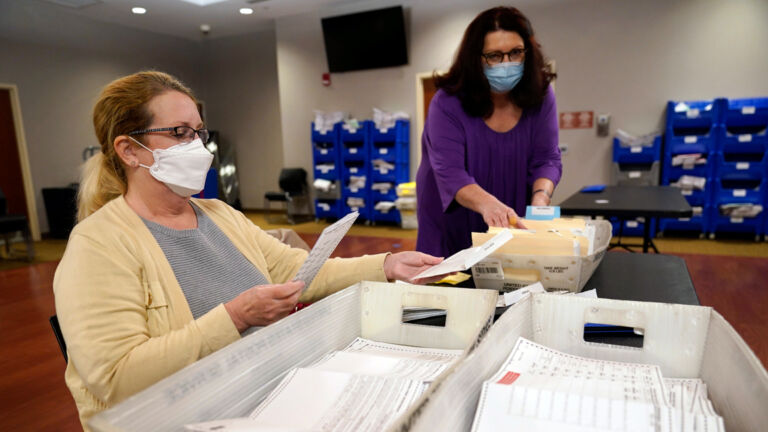
“The way we count ballots and report them to the public hasn’t necessarily caught up with all the advances we’ve made in getting those votes cast,” Coughlin said. “If we do not do more to ensure the average voter can easily understand the process of counting the votes after the polls close, all of the work that we have done to increase trust and participation in our democratic process will not produce the results we’re aiming for, which is strengthening our democracy.”
Suspicions raised last November
Coughlin alluded to suspicions some raised as the votes during last November’s gubernatorial election were counted. Republican Jack Ciattarelli was in the lead when many went to bed on election night but Gov. Phil Murphy ultimately won by 3.2%. That happened because not all the early in-person and mail-in ballots — which heavily favored Murphy — were counted or reported that night. And most counties did not indicate whether early votes were included in the tallies. Both the Murphy and Ciattarelli campaigns called for reforming the process of reporting results.
 Credit: (Edwin J. Torres/NJ Governor’s office; AP Photo/Frank Franklin II, Pool)
Coughlin’s bill, which the committee approved unanimously, was amended to include provisions from one of the other bills in the package. Its major provisions would:
- Require county election officials to post on their websites in real time after the polls close the number of ballots received, counted and remaining to be counted, broken down by those cast in person early and on Election Day, by mail and by provisional ballot;
- Allow counties to open and count mail-in ballots early, as many as five days before Election Day, provided the tallies are kept secret until Election Day and then are reported as soon as possible after the polls close;
- Reduce from six days to three days the length of time a mail-in ballot can be counted if received after Election Day, provided it is postmarked on Election Day.
‘We think that’s an obvious case of disenfranchising voters.’
While they supported the proposed changes in reporting, several advocates said they opposed reducing the length of time that ballots submitted by mail could be received and still count. That could disenfranchise voters due to no fault of their own but because of postal delivery delays, they said. Henal Patel of the New Jersey Institute of Social Justice said that in the last election, some 900 mail-in ballots were received on the sixth day after the election and were counted.
‘Disenfranchising voters’
“These are ballots that individuals followed all the rules, they were postmarked before Election Day,” said Sandra Mattson of the League of Women Voters of New Jersey. “They are certainly still perfectly valid ballots by day six, so we are really opposed. We think that’s an obvious case of disenfranchising voters.”
The changes in counting mail-in ballots and reporting results could be in place for the general election in November.
Another bill (A-3817) would require counties such as Essex that use hand-marked paper ballots provide privacy sleeves and other shields to address voter privacy concerns. The bill would also reduce the length of time a voter would have to “cure” a problem with a mail-in or provisional ballot from typically 13 days to nine days following Election Day. The committee cleared the bill unanimously over advocates’ concerns that shortening that time will disenfranchise some voters.
“Nine days we fear is insufficient for voters to cure their ballots,” Patel said. “While both by-mail and provisional ballots now allow voters to provide their email addresses and phone numbers so counties can contact them, there are still many voters who have only provided a mailing address. Given the realities of mail service, particularly in urban areas, nine days is not enough time to receive and return a cure letter. This is particularly true for provisional ballots … Those ballots aren’t even looked at until all the mail-in [ballots] are in. That gives them a really short time to turn around.”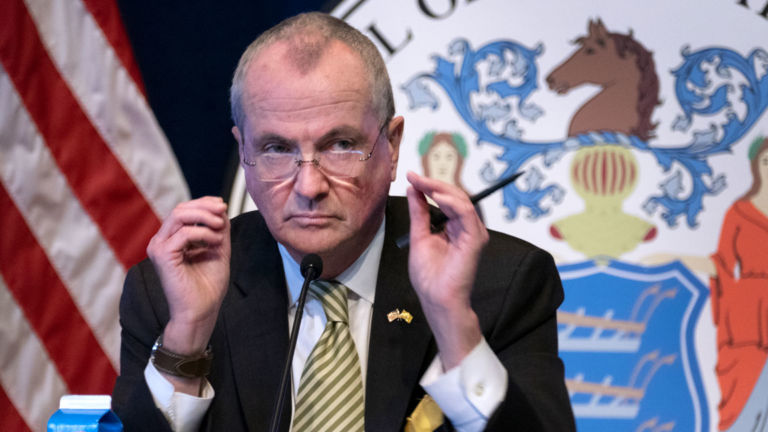
The committee unanimously approved the measure. If it clears the Assembly and Senate and Murphy signs it, most of the new rules would take effect immediately, so the changes in counting mail-in ballots and reporting results could be in place for the general election in November.
Overseas voters
Most of the other bills also received bipartisan support from the committee. One that did not was A-3929, which would allow people living overseas to vote in New Jersey elections as long as they intend to return to the state or continue to maintain ties here, including paying state income taxes or getting health insurance through the state. Several people living in other countries were in Trenton to support the measure, among them William Chapman, chairman of the Democrats Abroad Mexico, who said he flew back to New Jersey to support the bill.
“I think all New Jerseyans care about New Jersey whether or not they’re in New Jersey; they don’t just cross the river or get on a plane and forget about their state,” he said. “And they’re very heavily impacted by what happens here … They’re affected by insurance regulations, and a lot of people living abroad are not able to get insurance in the countries where they live perhaps, because they’re not citizens. They’re affected by tuition rates that are regulated in New Jersey if they have children who they want to send to public higher education in New Jersey. There are obviously tax implications.”
The measure passed 3-2, with the Democrats supporting it, and the Republicans opposing without further comment.
Two other measures cleared on 3-2 party-line votes. Both received at least some opposition from advocates, election officials or both.
A-3821 would mandate changes in early voting and secure placement of ballot drop boxes to require that half are in the municipalities with the lowest voter turnout percentages in that county and half in places accessible by public transportation. Eileen Kean of the Monmouth County Board of Elections said county officials have chosen the best locations for these and “it’s not necessarily easy to find a location within a given community that even works.”
A-3823 would remove board of election staff salaries from the mandated 2% property-tax cap and require more frequent checks of the voter rolls against deaths in the two months immediately preceding a primary or general election. Patel said this could lead to an inadvertent purging of a person from the voter rolls that could lead to disenfranchisement after the voter registration deadline has passed. This could be fixed if the state would pass same-day voter registration, something that Senate President Nicholas Scutari (D-Union) has said he does not support.
Other measures
The other measures the committee passed unanimously include:
A-3819, which would allow for the removal of a voter’s status as automatically receiving a mail-in ballot for every election. It would also change where a ballot is mailed for some voters who have a ballot mailed to an address other than their permanent address — for example, students away at college. In addition, it would provide $5 million to counties to educate voters about mail-in balloting.
A-3820, which would require voters not affiliated with a party to declare party affiliation when requesting a mail-in ballot for a primary election.
A-1969, which would allow people between 16 and 18 years old to work the polls on Election Day.
A-3733, which would allow college students to earn one academic credit toward a degree for each full day working the polls.
A-3915, which would require the state to pay the cost of a new election if the state is at fault for errors during the first election that necessitated the need for a new election.
A-3818, which would set four specific days, and only these four days, each year on which special fire district votes could occur.
The committee’s votes were the first action on all the bills. Most of the bills will get a second hearing before the Assembly Appropriations Committee, while others will proceed directly to the floor of the lower house for a vote.