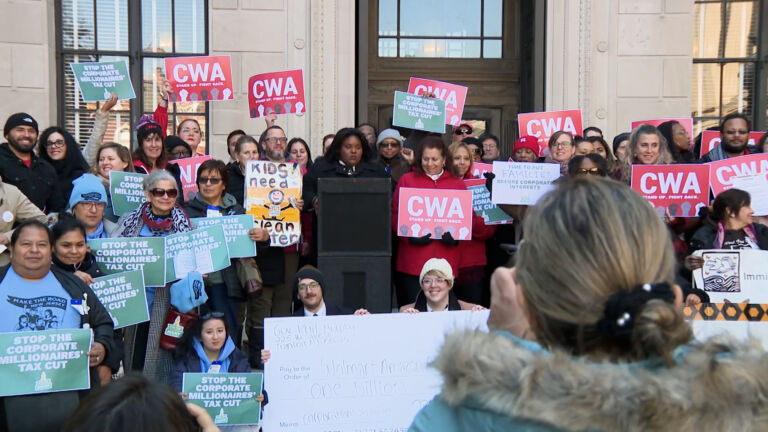
As state lawmakers prepare for the next state budget, they face lagging tax revenues, expiring pandemic aid and built-in deficits — constraints that could throttle spending on programs that progressive groups consider crucial for low- and moderate-income residents to survive if a so-called austerity budget is adopted.
A coalition called For the Many says lawmakers should raise $1 billion by restoring the 2.5% surcharge on New Jersey’s corporate business tax that expired in December. It impacted corporations making more than $1 million in annual profits.
“This is not a penalty on business. It is asking those who make more to pay more. That is fair. That is equitable. That is what we need,” said Maura Collinsgru of New Jersey Citizen Action at a rally Thursday morning in Trenton.
Analysts call the upcoming spending plan a “transitional budget.” New Jersey Transit already announced a 15% fare hike with 3% annual increases to follow. Potential revenue raisers under discussion also include increasing the state sales tax to 7%, up from 6.625% where it’s been since 2016.
But one business group says instead of raising taxes, lawmakers should spend down some of New Jersey’s $8 billion-plus budget surplus. Chris Emigholz, chief government affairs officer with the New Jersey Business and Industry Association, said, “It means you don’t have to cut an important program or cut an important investment. It means you don’t have to increase taxes that will harm taxpayers.”
Murphy, who is scheduled to deliver his budget message on Tuesday, has resisted reimposing a surcharge on the corporate business tax. He has also said that raising NJ Transit fares is fair.
Assembly Republicans have called on Murphy to make drastic spending cuts starting with the $1.4 billion added at the last moment to this year’s record-breaking $55 billion budget.
“Absolute pork spending that should immediately be pulled out,” said Minority Leader John DiMaio (R-Morris), “before we even start talking about what the budget’s going to be. We should be reducing that billion right out of the budget.”