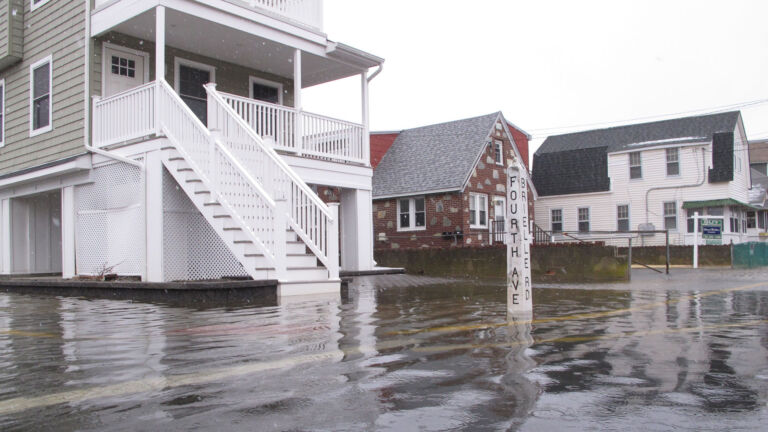
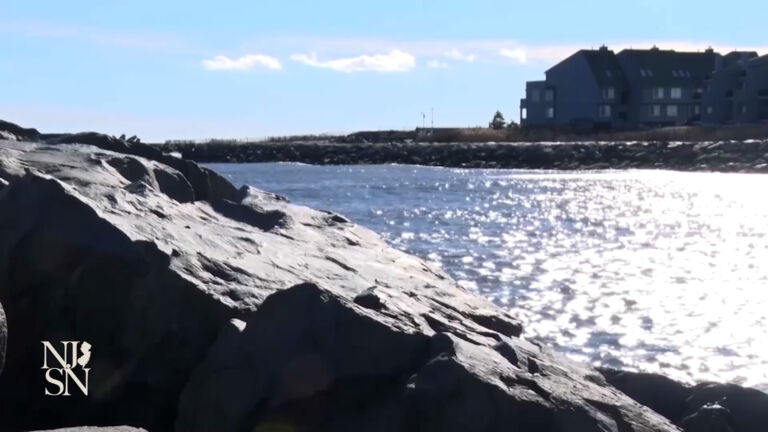
New Jersey Department of Environmental Protection officials have said their 11th-hour decision to ease controversial rules aimed at protecting towns from flooding and sea level rise is based on both hard science and sensitivity to opposition from mayors and business groups.
“At the end of the day, we’ve got to ensure we’re being responsive to all,” said DEP Commissioner Shawn LaTourette.
But few appeared satisfied. New Jersey business leaders have called the changes a “non-starter.”
“This just makes life in New Jersey more expensive and ultimately going to drive businesses and people to more affordable states,” said Ray Cantor, vice president of government affairs for the New Jersey Business & Industry Association.
Meanwhile, disappointed environmental advocates called the changes “reprehensible.”
“I absolutely think it’s motivated by politics. I think that Governor Murphy has bent to the will of developers calling for a weakening of the regulations,” said Jen Coffey, executive director of the Association of New Jersey Environmental Commissions.
Among the major changes to the proposed REAL Rules was a lowering of building elevation requirements by a foot. DEP officials cited climate models now forecast sea levels will rise 4.4 feet by the year 2100, almost a foot lower than its initial estimate.
A Rutgers scientist whose research guided these rules explained the DEP’s rationale. “Global carbon emissions don’t seem to be as on as high a trajectory as they seemed a decade ago,” said Bob Kopp, director of the Rutgers Institute of Earth, Ocean & Atmospheric Sciences.
LaTourette said that mayors — especially down the Jersey Shore — have lobbied for less stringent rules. “When I say communities are more comfortable with a higher level of risk, it does come out of direct conversations with mayors, many of whom have written into us or passed resolutions in their communities that indicate their belief that five feet is too much,” he said.
Jason Cilento, president of the New Jersey Conference of Mayors, thanked LaTourette “for acknowledging the concerns raised by local leaders and for proposing amendments to the REAL rules”
“The engagement of more than 130 mayors from communities across New Jersey brought municipal voices to the forefront of this critical discussion,” he said. “We are encouraged that these collective efforts prompted a formal response and a willingness by the department to revisit aspects of the proposed rules.”
Still, many in the business community said even the relaxed, four-foot standard is too high.
“Really, it should be a two-foot sea level rise level,” Cantor said. “That’s what all the science is showing. So [the revisions] are still an outlier nationally, they’re an outlier internationally. And that’s still going to cause significant problems, not only in complying with the rule, but in bringing so many more people into flood zones who don’t belong in flood zones.”
Proposed revisions also would redraw the DEP’s so-called “Inundation Risk Zone” and permit possible exemptions for affordable housing, as long as builders provide proper health and safety protections.
Environmental advocates said they were appalled by that change.
“After tragically losing lives due to the flash flooding last night, allowing affordable housing to be built in flood-prone areas without stronger safeguards is unconscionable,” said Ed Potosnak, executive director of the New Jersey League of Conservation Voters,
“The changes seem to say it’s OK to put poor people in hazardous areas,” added Tim Dillingham, executive director of the American Littoral Society. “You would hope that we would be wise enough to be trying to protect people from being located in those places where their lives might be in danger.”
Environmental groups also said the higher risk levels will come with a higher recovery costs.
“What a lot of people may not be paying attention to is that with FEMA, the federal government is taking a big step back from bailing out these kind of disasters, which means more and more of it is going to fall on the New Jersey taxpayer,” said Peter Kasabach, executive director of New Jersey Future.
The DEP will introduce the revised rules on Monday, July 21, with a virtual public hearing on Sept. 3, and final adoption now rescheduled for early January. The previous Aug. 4 date for adoption has been scrapped.
“Nobody seems to be happy, and I would say that what we’re least happy about is that it’s delayed,” Kasabach said.