
Homeowners in New Jersey and beyond are rushing to install solar panels on their rooftops in order to qualify for a federal tax credit that expires at the end of the year.
Congress zeroed out that tax credit, which covers 30% of a new residential solar project, as part of a broader Republican budget law.
The loss of that federal incentive is one several threats facing the domestic solar industry, as our correspondent in Washington, Ben Hulac, explains. This interview has been excerpted and lightly edited.
Briana Vannozzi, anchor: So, Ben, this tax credit was supposed to last until 2032. Why then did Congress decide to cut it nearly a decade short?
Ben Hulac: The short answer, the technical answer is Republicans were looking for ways to pay for their broader tax breaks for corporations. This was part, if we remember back to the summer, there was a lot of debate here on the Hill about how to pass and how to pay for this massive trillion dollar bill now law.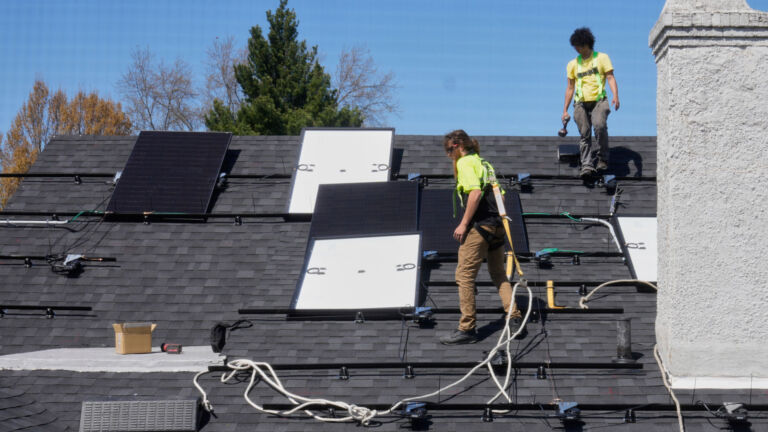
And this was an item that Republicans wanted. So they essentially went through lots of Biden-era tax breaks for renewables, for wind, for solar, and phased them out early in order to pay for their broader package.
BV: So I know you write, you report that demand has just gone through the roof. This really lit a fire under people. What does that looked like on the ground? I mean, how many people are actually calling and requesting quotes? And we should note this is, you know, really for residential homes.
BH: Right. So I talked with two people I mentioned Lyle Rawlings, who’s a business owner owns his own solar company. And he said salespeople are just swamped. And then I talked to a woman named Emily Walker, who works for a company called EnergySage. And EnergySage crunches data and numbers about solar demand. Their numbers show that just within New Jersey, from June to July, people requesting quotes for what it would cost to put solar on their homes, which skyrocketed 109%.
So that’s a huge jump. And that coincides with Congress debating this broader law. So the interest. And New Jersey is not an outlier in this. There is a race nationwide. If you are interested in putting solar on your home, you are pedal to the metal now.
BV: Yeah, 109% that’s significant. I mean, okay, if I’m a homeowner and I want to get this installed connected before the deadline, is that even possible? And what do I need to know then?
BH: Right. It is possible. You should probably do it now. And I actually talked with a solar advocate in Philadelphia, a woman named Elowyn Corby with a solar advocacy group called Vote Solar. And this is what she said.
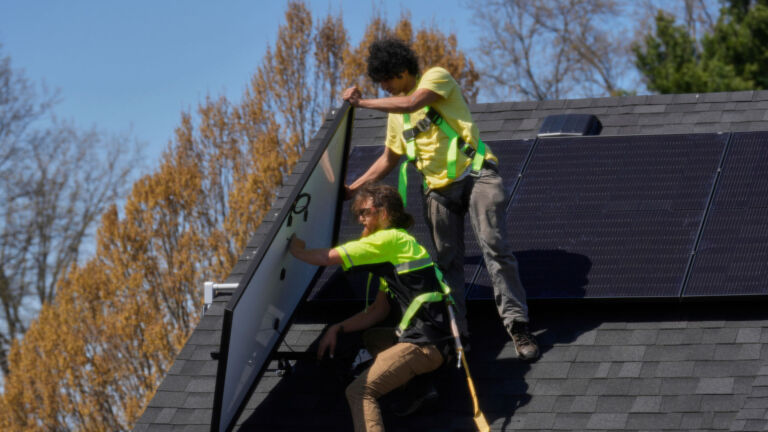
Elowyn Corby: If you’re interested in going solar, you should start soon. The process of getting solar is much more than the, you know, two or three days it can take to put the actual solar on your roof. It includes permitting. It includes a number of logistical steps that I would recommend not rushing. You also want to make sure that you’re taking the time to make sure you’re working with a reputable installer, someone who you trust, someone who’s done a lot of work in the community. So start now because there can be more steps than, you know, starting five days before the deadline isn’t going to work out the way you hope it will.
BV: Yeah. And so, Ben, then what happens if someone is not connected in time for the deadline?
BH: If someone is not connected, then they are likely out this tax credit, which on average could defray about $9,000 worth of the cost. So it costs tens of thousands of dollars to install panels on your home. That’s a ballpark figure. Maybe about $30,000 is a good sort of rule of thumb. This $9,000 chunk of that money could be massive and could mean the difference between someone saying, yes, I’d like to take this plunge and go solar and try to maybe in theory, go off the grid and be my own little electrical island. Or going back and canceling those plans. So it’s a big deal.
BV: How does all of this play into the broader energy policy that we’re seeing from the White House and also some retroactive tariffs that could really impact the industry, as you note? How does this all play together?
BH: The tenor on science and on renewables out of this administration has been extremely aggressive and negative. The energy secretary actually recently assembled an anti-climate science report that purported to debunk well-established climate science that is of course, not true. Humans are warming the planet by burning fossil fuels oil, coal and gas. But this is this is sort of one tendril.
This solar, this anti-solar approach, this one tendril out of Congress, out of the Republican-led administration to slow efforts to clean up the power grid, to decarbonize the broader U.S. energy system. I would say it just it fits the pattern in a lot of ways and a lot of the money. Remember, Congress is in charge of writing tax law and administrations carry out tax law. But this cut that we’ve been talking about, Bri, is just one of many that this Congress has doled out so far.
BV: Yeah. And I wonder just about the long term impact here. What did some of the advocates say who you spoke with about how this affects the industry in the long term and maybe even some of these policies in the long term, you know, the appetite for it all?
BH: Right. It’s really put a damper on the appetite. There is a lot of frenetic energy in this moment to get people hooked up to the grid, to get people on solar before the year is out. But also, I should mention a commercial scale solar tax credit will be phased out next summer. And that was also a Biden-era tax credit that was going to go for about a decade.
Now, they’re nine years roughly short of that original target. And so people are scrambling on the commercial solar side as well. And then, of course, we haven’t really delved into this, but tariffs are another massive sort of ax hanging over this industry. The administration has floated retroactive tariffs, which would be extremely destabilizing for the industry and could go back two years and charge importers on what is already on U.S. shores. So there are a lot of serious landmines here for solar in the U.S.
